


When Zimbabwean lawmaker Job Sikhala settles down to sleep at night, he does so on the floor of an aging maximum-security prison in Harare.
The 50-year-old opposition lawmaker has been held in solitary confinement for almost two months.
Jail is hardly a novel experience for the 50-year-old firebrand, who in a political career spanning more than two decades has been arrested 67 times, but never been convicted, his lawyer said.
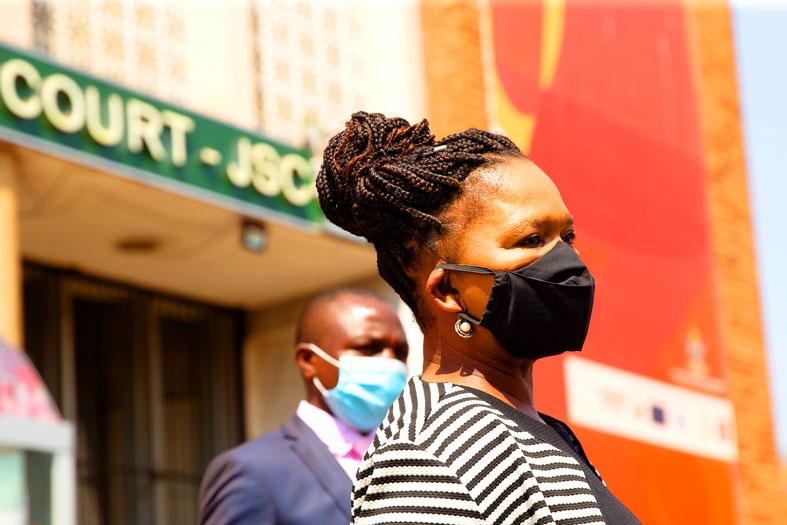
Photo: EPA-EFE
Under former Zimbabwean president Robert Mugabe — a liberation hero who ruled with an iron fist for 37 years — the southern African country gained lengthy experience with arrests of dissenters and abuse.
However, rights groups have said that the clampdown has stepped into new territory, often featuring repeated detentions and exceptionally harsh custody as elections loom.
“It’s worse than under Mugabe right now,” said Sikhala’s lawyer, Beatrice Mtetwa.
Sikhala was arrested in June along with fellow opposition politician and lawmaker Godfrey Sithole over a speech he gave at the memorial service for another opposition activist whose mutilated body was found in a well days earlier.
A practicing lawyer, Sikhala told mourners that the woman’s spirit would come back to avenge her death, his lawyer said.
The day was marked by what police has described as an “orgy of public violence.”
TRAVESTY
Supporters of the ruling ZANU-PF party reportedly harassed funeral-goers. In turn, opponents torched the house of a ruling party official.
Sikhala was charged with inciting violence and obstructing the course of justice over his speech, and for having allegedly suggested that ZANU-PF members were behind the murder. Police have arrested a man for the killing, saying he was the victim’s ex-lover. Sikhala’s lawyers have denied any link between their client and the violence.
Amnesty International has described the case as “political” and a “travesty of justice.”
The rights group’s director for Zimbabwe, Lucia Masuka, said the case is part of a pattern that has seen a string of opposition figures arrested in recent years, often on charges of inciting violence.
The Zimbabwe Human Rights NGO Forum, a coalition of rights groups, logged 114 cases of arbitrary arrest across the country in the first six months of this year alone.
High-profile cases include award-winning novelist Tsitsi Dangarembga, who was arrested in 2020 over a protest, and three young female activists held the same year on accusations of having faked their own abduction.
ECONOMIC ANGER
The crackdown comes as the government of Zimbabwean President Emmerson Mnangagwa, who replaced Mugabe in 2017, is struggling to rein in inflation, which reached more than 250 percent in July, while attempting to end Zimbabwe’s chronic power cuts and ease entrenched poverty.
General elections are due to be held next year, likely in the spring or earlier.
Mtetwa, a veteran defender of dissenters in Zimbabwe, said she expects the situation to worsen as the vote nears.
“There is no question about it,” she said. “There’s an economic meltdown, things are not working at all... People are disgruntled.”
By going after the likes of Sikhala, the government was sending a message to discourage others who might want to engage in activism and speak out, Masuka said.
“He has to sleep on the floor and we have had a very cold winter,” she said.
Sikhala is being held in a single cell typically used for prisoners considered dangerous, she said, and was shackled every time he was moved to a new location.
An activist in the Movement for Democratic Change and now a senior official in the Citizens Coalition for Change, Sikhala faces up to 10 years behind bars if convicted.
He is due in court for a bail hearing today, after several failed bids to secure his release.
However, Mtetwa is skeptical of his chances, saying that independent judges had been sidelined, disciplined or dismissed under Mnangagwa.
“The point is not so much to have him prosecuted, but to harass him and to keep him in custody for as long as possible,” she said.
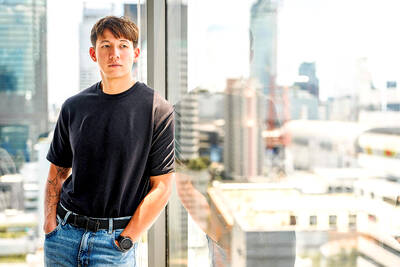
SPEAKING OUT: After Siranudh Scott’s allegations surfaced, celebrities and public figures took to social media to share their own experiences of sexual misconduct and abuse A high-profile alleged sexual abuse case within a wealthy Thai beer brewing family has prompted a wave of painful accounts from survivors of unconnected abuse in the conservative nation. Siranudh Scott, a member of the billionaire Thai family that founded the ubiquitous Singha beer brand, posted an emotional video this month accusing his elder brother Sunit of repeatedly abusing him when he was a teenager. Sunit, who is in his 30s, later denied the allegations in a video posted online, but Singha parent Boonrawd dismissed him from his executive role with the company on Tuesday last week. “I felt I needed to speak

SEEKING ORDER: Rodrigo Paz said that ‘anyone who wants to destroy the nation will have to deal with this president and the full force of the constitution’ Bolivian President Rodrigo Paz on Wednesday said that the nation was at a “breaking point” after nearly a month of protests that have caused shortages of food, fuel and medicine. Paz, who took office six months ago amid the worst economic crisis there in four decades, is battling a groundswell of fury over his policies. The political capital, La Paz, has been besieged by low-income workers and members of the indigenous majority calling for his resignation. “The country needs order and is reaching breaking point,” the 58-year-old said at a public event in La Paz, renewing his appeal for dialogue. On Tuesday, the Bolivian

‘CROSSING THE LINE’: China’s embassy in Seoul criticized US Forces Korea Commander General Xavier Brunson, asking if his ‘hostile’ remarks were authorized by Washington South Korea and the US are in talks over recent public remarks by the commander of US Forces Korea, Seoul’s presidential office said yesterday, after the comments drew sharp criticism from China. In a recent podcast interview, US Forces Korea Commander General Xavier Brunson described South Korea as “the dagger in the heart of Asia” from China’s east coast, prompting the Chinese embassy in Seoul to say that he had “truly crossed the line.” The interview came amid growing speculation that Washington might seek to expand the role of US Forces Korea in countering the growing regional influence of China, a key

Forecasters in Europe yesterday warned of exceptional heat as record temperatures driven by a “heat dome” push temperatures well above seasonal norms across the continent. The surge follows a record-breaking Monday, with France logging its hottest day in the month of May on record, its weather agency said, and the UK also posting unprecedented highs. A so-called “heat dome” of warm air from northern Africa trapped under a high-pressure system over western Europe is behind the high temperatures not usually seen until high summer. Restrictions on outdoor work were imposed in parts of Italy, beaches in southwest France filled earlier than usual and


 RSS
RSS