


China is racing to quash a new COVID-19 flareup that risks spilling over into one of its most economically significant regions, raising the specter of disruptions that could roil global supply chains for solar panels, medicines and semiconductors.
Infections have surged in Si County in the eastern province of Anhui, with officials reporting 287 cases for Sunday and nearly 1,000 since late last week. Authorities locked down Si and a neighboring county late last week to try and stop the virus from spreading to Jiangsu Province, the second-biggest contributor to China’s economic output and a globally important manufacturing hub for the solar sector.
However, cases there are already increasing. The city of Wuxi, a biotech hub, reported 35 infections and suspended dine-in services at restaurants and closed entertainment venues.
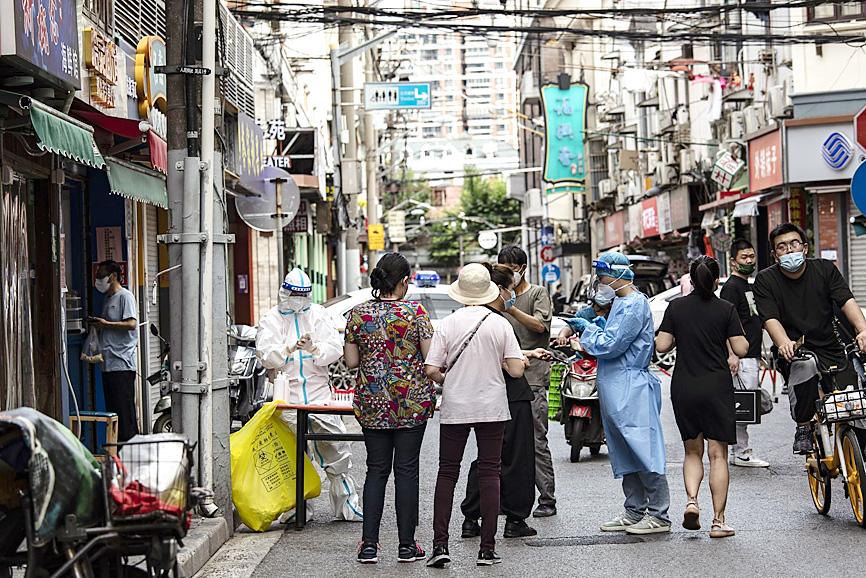
Photo: Bloomberg
Zhejiang Province and Shanghai have also reported COVID-19-positive patients, fueling concerns about the broader impact across the Yangtze River Delta region that accounts for one-quarter of China’s economy.
The fresh outbreaks will be a major test for Chinese President Xi Jinping’s (習近平) virus strategy. He last week reaffirmed that China would stick to “zero COVID” — which relies on lockdowns and frequent mass testing to stamp out infections — and said the country would rather endure some temporary impact on economic development than let the virus hurt people’s safety and health.
China is only starting to show signs of a nascent recovery from its most recent run of outbreaks, including the bruising two-month lockdown of Shanghai that caused massive manufacturing disruptions and snarled global supply chains.
While the epicenter of the latest outbreak is so far only one small county, and authorities have not imposed lockdowns in any of the major regional hubs, any escalation in restrictions has the potential to ripple worldwide.
More than one-third of global solar panel manufacturing capacity is in Jiangsu, according to BloombergNEF data, and it is also the leading producer of solar cells and wafers. The Yangtze River Delta is also a key maker of components for the iPhone and Mac laptops, semiconductors, as well as home to drugmakers and e-commerce operations. Some manufacturers still are not back to normal after earlier outbreaks.
China reported 380 cases for Sunday, bringing nationwide infections to a level last seen in late May, when Shanghai was on the verge of lifting its lockdown.
The financial hub, which neighbors Jiangsu, reported three local cases on Sunday. One was found outside government quarantine after six days of the city reporting no community infections.
Zhao Dandan, a vice director at Shanghai’s municipal health commission, cautioned in a briefing on Sunday that the city still faces risks of a rebound in COVID-19 cases. Beijing reported no new cases.
Elsewhere, Ningde City in Fujian Province found 10 new COVID-19 cases and implemented control measures. The city is the headquarters of Contemporary Amperex Technology Co, the largest maker of batteries for electric cars.


Showcasing phallus-shaped portable shrines and pink penis candies, Japan’s annual fertility festival yesterday teemed with tourists, couples and families elated by its open display of sex. The spring Kanamara Matsuri near Tokyo features colorfully dressed worshipers carrying a trio of giant phallic-shaped objects as they parade through the street with glee. The festival, as legend has it, honors a local blacksmith in the Edo Period (1603-1868) who forged an iron dildo to break the teeth of a sharp-toothed demon inhabiting a woman’s vagina that had been castrating young men on their wedding nights. A 1m black steel phallus sits in the courtyard of

JAN. 1 CLAUSE: As military service is voluntary, applications for permission to stay abroad for over three months for men up to age 45 must, in principle, be granted A little-noticed clause in sweeping changes to Germany’s military service policy has triggered an uproar after it emerged that the law requires men aged up to 45 to get permission from the armed forces before any significant stay abroad, even in peacetime. The legislation, which went into effect on Jan. 1 aims to bolster the military and demands all 18-year-old men fill out a questionnaire to gauge their suitability to serve in the armed forces, but stops short of conscription. If the “modernized” model fails to pull in enough recruits, parliament will be compelled to discuss the reintroduction of compulsory service, German
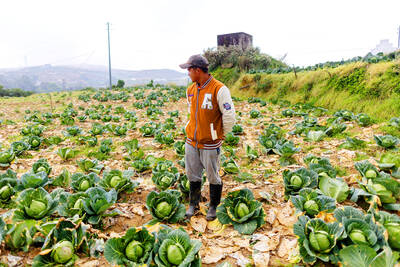
Filipino farmers like Romeo Wagayan have been left with little choice but to let their vegetables rot in the field rather than sell them at a loss, as rising oil prices linked to the Iran war drive up the cost of harvesting, labor and transport. “There’s nothing we can do,” said Wagayan, a 57-year old vegetable farmer in the northern Philippine province of Benguet. “If we harvest it, our losses only increase because of labor, transportation and packing costs. We don’t earn anything from it. That’s why we decided not to harvest at all,” he said. Soaring costs caused by the Middle East

Hungarian Prime Minister Viktor Orban’s officially declared wealth is fairly modest: some savings and a jointly owned villa in Budapest. However, voters in what Transparency International deems the EU’s most corrupt country believe otherwise — and they might make Orban pay in a general election this Sunday that could spell an end to his 16-year rule. The wealth amassed by Orban’s inner circle is fueling the increasingly palpable frustration of a population grappling with sluggish growth, high inflation and worsening public services. “The government’s communication machine worked well as long as our economic situation remained relatively good,” said Zoltan Ranschburg, a political analyst


 RSS
RSS