

A start-up entrepreneur from South Africa wants to change the way edible caterpillars, popularly known as “mopane worms,” are viewed and eaten.
For many people, particularly from western European backgrounds, the idea of eating insects is riddled with fear and inhibition.
However, insects can be a valuable source of nutrition, and farming them is not detrimental to the environment.
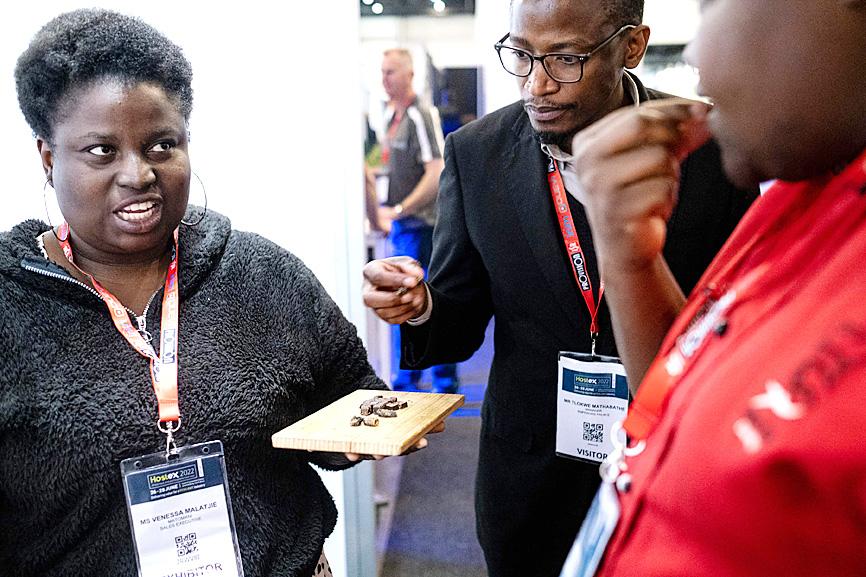
Photo: AFP
South African chemical engineer Wendy Vesela has found ways of turning the spiky green and black caterpillars — which are packed with protein and iron — into a flour that can be used in savory biscuits, sweet chocolate protein bars, cereals or smoothies. When steamed and sliced, mopane pieces can also be used as pizza toppings.
Vesela said that she has found domestic and international customers for her organic products.
Edible insects and worms might be gaining popularity in Western cultures, but food anthropologist Anna Trapido said that the trend should not be seen as just another dietary fad, a “kind of adventure tourism, where you get a badge” for eating them.
“Mopane need to be treated with respect because they are part of people’s emotional, spiritual, culinary genres,” she said.
In Vesela’s home province of Limpopo, where she grew up in a town not far from the world-famous Kruger National Park, mopane is a staple food, cooked in a sauce of onions and tomatoes.
The caterpillars are “a healthier option of protein,” she said, adding that it is “not a worm. So people have just to get over that fear.”
Vesela tried to woo reluctant customers with biscuits and protein bars at a food fair in Johannesburg’s upmarket Sandton area.
“I won’t eat a worm. I’m sorry, it’s disgusting, but if you give it to me in the form of a chocolate ... it’s really delicious,” said Gail Odendaal, 38.
Mopanes are environmentally friendly, too, requiring no extra water or land, as they breed and feed on mopane trees, which grow in hot and dry regions of southern Africa.
They are a better source of protein than many foods on the market, dietitian Mpho Tshukudu said.
“It has more iron than the most expensive piece of steak,” she said.
With demand rising since she started her venture seven months ago, Vesela said she plans to have multiple harvests a year.
She hires rural women to gather mopanes when they are in season in December and April. The mopanes are gutted, boiled and dried to then be used whole or milled.
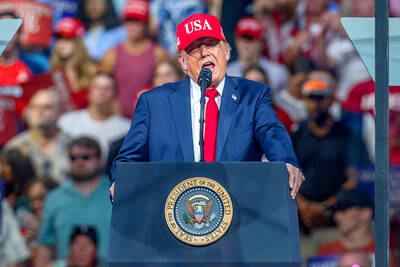
US President Donald Trump on Wednesday threatened to take action against the EU if it moves forward with European Commission President Ursula von der Leyen’s proposal to make Canada the bloc’s first associate member. “If they do that, if I think it’s at all a hostile act; I will put very serious tariffs or stop trading with Europe on many things,” Trump told reporters en route to an event in North Carolina, calling the proposal “laughable.” “If it’s a good intention, that’s fine. If it’s a bad intention, we’ll put very heavy tariffs on Europe,” he said. Von der Leyen made the proposal
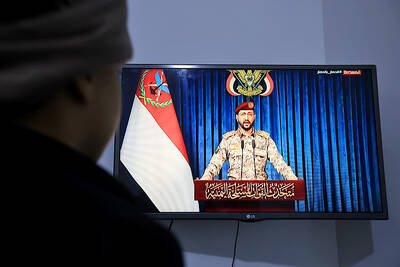
ON THE MOVE: Trump unexpectedly cut short a trip to return to the White House, while the State Department warned Americans to avoid travel to the Middle East The US on Saturday warned that hostilities between Saudi Arabia and Iran-backed Houthis could “escalate rapidly” after a missile attack targeted Riyadh for the first time since the Yemen conflict resumed. US President Donald Trump on Saturday cut short a weekend at Camp David, a secluded presidential complex in rural Maryland, to return unexpectedly to the White House. The White House gave no explanation for the early return, which comes as a new threshold was crossed in the conflict between Saudi Arabia and the Houthis, who control a large part of Yemen and are fighting government forces backed by a coalition led

The US military came close to boarding a Chinese vessel in the Middle East earlier this year based on a flawed intelligence report prepared with the help of artificial intelligence (AI), CNN said on Friday. US intelligence indicated the ship was carrying nuclear weapons-related components, leading US forces to prepare to intercept it, the broadcaster reported, citing four anonymous sources familiar with the incident. However, the operation was called off after officials determined that an AI chatbot used by an analyst had misidentified the material the ship was carrying. The report was “entirely false,” but “almost started a war,” CNN quoted one source

World leaders gather in New York this week for the UN General Assembly, bracing for US President Donald Trump’s return to the rostrum for a second year running, with talks centering on the widening conflicts in the Middle East and Ukraine and the risks of artificial intelligence (AI). Nearly 130 heads of state meet with the post-World War II order under strain and with the UN itself struggling to remain relevant and weathering attacks from Trump, who has slashed the US’ contributions and withdrawn from dozens of UN bodies. Chinese President Xi Jinping (習近平), who last addressed the diplomatic jamboree via video


 RSS
RSS