


India has reopened its borders to mass foreign tourism, ending a 20-month clampdown as COVID-19 infections across the country remain low and vaccination rates rise.
After halting tourist visas in March last year, India is now allowing quarantine-free entry to fully inoculated travelers from 99 reciprocating countries. The government only requires such visitors to monitor their health for 14 days after arrival.
From last month, tourists on chartered flights were already being granted entry and Indian authorities expanded that to arrivals on commercial flights yesterday.
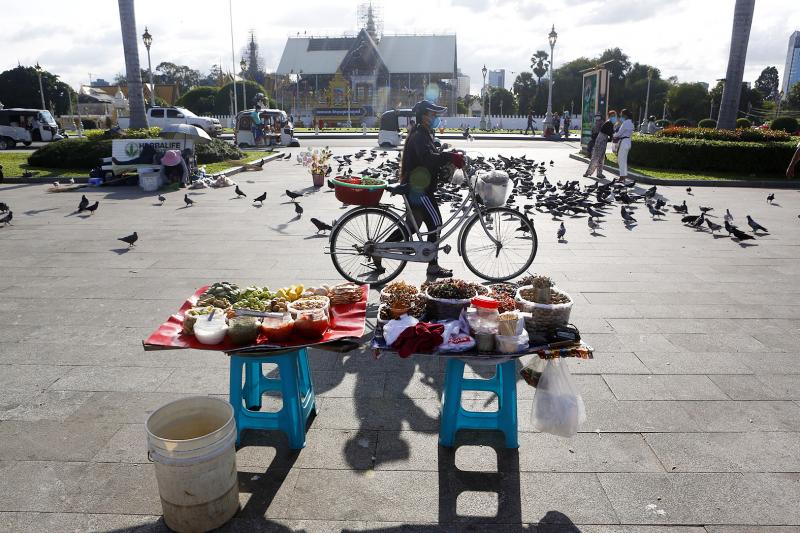
Photo: EPA-EFE
Many Indians have already been flocking to domestic tourist hot spots in the past few weeks, such as the western coastal state of Goa and the mountainous north, as a deadly second COVID-19 wave faded out after triggering peak infection rates of more than 400,000 cases a day in early May.
Families also gathered together this month to celebrate Diwali, the country’s largest festival, with new cases staying well below 15,000 a day.
India’s immunization campaign has also gathered pace, with more than 1 billion vaccine doses administered, while antibody surveys say that most Indians have already been exposed to COVID-19.
While national infection levels have in the past few weeks touched lows last seen earlier in the year, there are concerns that the easing of curbs risks a complacency similar to when India experienced an ebb between its two major waves.
Cambodia yesterday also reopened its borders to fully vaccinated travelers, two weeks earlier than originally planned, as it emerges from a lengthy lockdown bolstered by one of the world’s highest rates of immunization against COVID-19.
The program allows visitors to skip quarantine measures if they are fully vaccinated, test negative 72 hours before they enter the country and test negative upon their arrival.
Cambodian Prime Minister Hun Sen decided to move up the opening from Nov. 30 to start revitalizing the country’s economic and social activity as soon as possible, buoyed by the fact that 88 percent of Cambodians are now fully vaccinated.
“The situation has changed,” Hun Sen said in an audio message shared on social media.
The previous plan had been to phase in the reopening by initially restricting travelers to two seaside provinces, but the new scheme means fully vaccinated travelers are free to visit anywhere in the country after a negative test.
Unvaccinated travelers would still have to undergo a strict 14-day quarantine upon arrival and undergo a series of COVID-19 tests before they can travel further.
In 2019, before the COVID-19 pandemic, Cambodia received 6.6 million foreigners who accounted for nearly US$5 billion in revenue. Most of them visited the famous Angkor Wat temples in Siem Reap Province and seaside destinations, Cambodian Tourism Ministry said.
Last year, the number of visitors dropped sharply to 1.3 million, and earnings from them plunged to about US$1 billion.
The Cambodian Ministry of Health yesterday reported 52 new COVID-19 cases and five deaths.
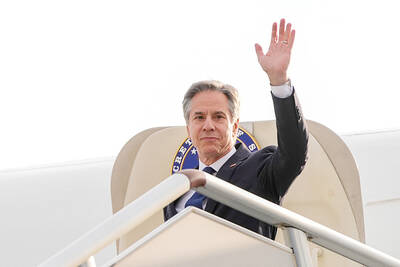
‘IN A DIFFERENT PLACE’: The envoy first visited Shanghai, where he attended a Chinese basketball playoff match, and is to meet top officials in Beijing tomorrow US Secretary of State Antony Blinken yesterday arrived in China on his second visit in a year as the US ramps up pressure on its rival over its support for Russia while also seeking to manage tensions with Beijing. The US diplomat tomorrow is to meet China’s top brass in Beijing, where he is also expected to plead for restraint as Taiwan inaugurates president-elect William Lai (賴清德), and to raise US concerns on Chinese trade practices. However, Blinken is also seeking to stabilize ties, with tensions between the world’s two largest economies easing since his previous visit in June last year. At the

UNSETTLING IMAGES: The scene took place in front of TV crews covering the Trump trial, with a CNN anchor calling it an ‘emotional and unbelievably disturbing moment’ A man who doused himself in an accelerant and set himself on fire outside the courthouse where former US president Donald Trump is on trial has died, police said yesterday. The New York City Police Department (NYPD) said the man was declared dead by staff at an area hospital. The man was in Collect Pond Park at about 1:30pm on Friday when he took out pamphlets espousing conspiracy theories, tossed them around, then doused himself in an accelerant and set himself on fire, officials and witnesses said. A large number of police officers were nearby when it happened. Some officers and bystanders rushed
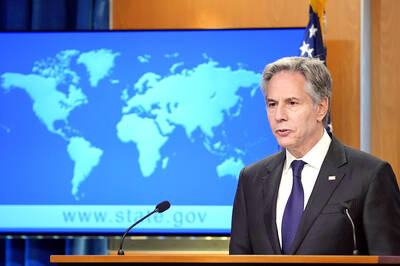
Beijing is continuing to commit genocide and crimes against humanity against Uyghurs and other Muslim minorities in its western Xinjiang province, U.S. Secretary of State Antony Blinken said in a report published on Monday, ahead of his planned visit to China this week. The State Department’s annual human rights report, which documents abuses recorded all over the world during the previous calendar year, repeated language from previous years on the treatment of Muslims in Xinjiang, but the publication raises the issue ahead of delicate talks, including on the war in Ukraine and global trade, between the top U.S. diplomat and Chinese
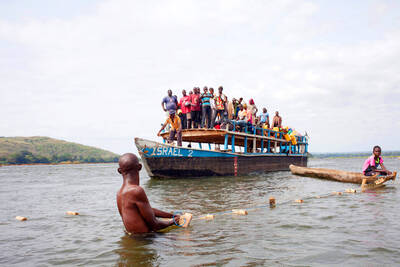
RIVER TRAGEDY: Local fishers and residents helped rescue people after the vessel capsized, while motorbike taxis evacuated some of the injured At least 58 people going to a funeral died after their overloaded river boat capsized in the Central African Republic’s (CAR) capital, Bangui, the head of civil protection said on Saturday. “We were able to extract 58 lifeless bodies,” Thomas Djimasse told Radio Guira. “We don’t know the total number of people who are underwater. According to witnesses and videos on social media, the wooden boat was carrying more than 300 people — some standing and others perched on wooden structures — when it sank on the Mpoko River on Friday. The vessel was heading to the funeral of a village chief in


 RSS
RSS