


US President Joe Biden on Wednesday addressed a COVID-19 summit of world leaders with a promise to donate a “historic” extra 500 million vaccines to countries struggling to overcome the pandemic.
“This is an all-hands-on-deck crisis. America will become the arsenal for vaccines as we were the arsenal for democracy in World War II,” Biden said at the summit, which was held virtually at the White House.
The pledge brings the total US commitment of donated vaccines to 1.1 billion — more than the rest of the world combined.
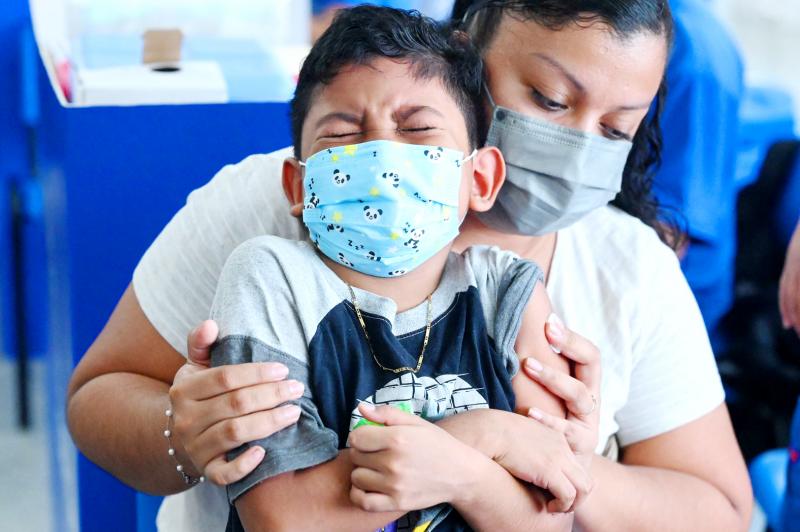
Photo: AFP
“We’ve already shipped 160 million of these doses to 100 countries,” Biden said. “For every one shot we’ve administered to date in America, we’ve now committed to do three shots to the rest of the world.”
The 500 million doses of the Pfizer vaccine would go to low-income and middle-income countries, he said.
Biden is also challenging world leaders to vaccinate 70 percent of every country by September next year, the White House said in a statement.
“We need other high-income countries to deliver on their own ambitions,” he said in his opening remarks. “We’re not going to solve this crisis with half measures.”
Biden said that the vaccines must be donated, with no “political” strings attached — a veiled dig at China in particular.
After he spoke, Spain announced at the UN General Assembly in New York that it was boosting its commitment to 30 million vaccines, while Japan said it would increase its contribution to 60 million.
Wealthy countries have been criticized by the WHO for their plans to roll out booster shots, with the US on Wednesday authorizing third doses of the Pfizer vaccine for elderly and at-risk populations, while much of the world faces a severe shortage of doses.
However, a senior US administration official told reporters that Washington is “proving that you can take care of your own, while helping others as well.”
On Tuesday, in his first speech to the UN as president, Biden told delegates that Washington had put more than US$15 billion toward the global COVID-19 response.
Despite the development of safe and highly effective vaccines in record-breaking time, huge disparities exist between countries with ample supply and others that have barely begun their immunization campaigns.
Just 3.6 percent of Africa’s eligible population has been inoculated — compared with an average of more than 60 percent in western Europe.
Addressing the General Assembly, Malawian President Lazarus Chakwera urged donations of more vaccine doses and a lifting of patent rights to allow local production, a move supported by Biden, but rejected by Germany amid fierce opposition from pharmaceutical companies.
“You can imagine our disappointment to be at an assembly like this rubbing shoulders with nations that are now administering booster shots while most of our people have yet to get their first,” Chakwera said. “This form of vaccine nationalism is wrong. It is insensitive. It must end.”
Biden’s summit — technically held on the sidelines of the General Assembly — included foreign leaders and the head of the Gavi vaccine alliance, which is working to distribute vaccines to poor countries.
The White House asked governments to close the gap in funding and supply to meet a UN-backed goal of fully vaccinating 70 percent of the world by this time next year.
While the latest global COVID-19 wave peaked late last month, the virus continues to spread rapidly, particularly in the US, which is officially the worst-hit country.
About 4.7 million people worldwide have died since the pandemic began in central China’s Wuhan in December 2019, according to an Agence France-Presse tally from official sources.
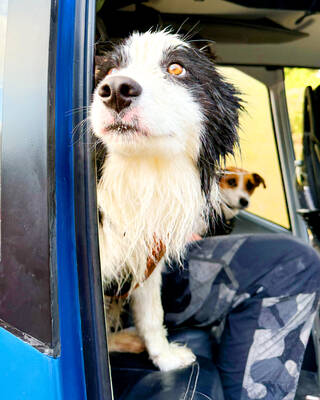
When a hiker fell from a 55m waterfall in wild New Zealand bush, rescuers were forced to evacuate the badly hurt woman without her dog, which could not be found. After strangers raised thousands of dollars for a search, border collie Molly was flown to safety by a helicopter pilot who was determined to reunite the pet and the owner. A week earlier, an emergency rescue helicopter found the woman with bruises and lacerations after a fall at a rocky spot at the waterfall on the South Island’s West Coast. She was airlifted on March 24, but they were forced to
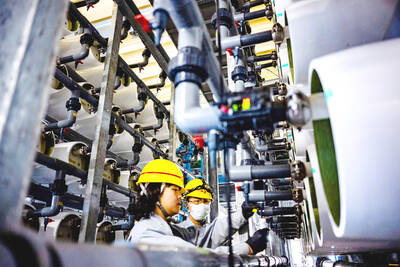
HIGH HOPES: The power source is expected to have a future, as it is not dependent on the weather or light, and could be useful for places with large desalination facilities A Japanese water plant is harnessing the natural process of osmosis to generate renewable energy that could one day become a common power source. The possibility of generating power from osmosis — when water molecules pass from a less salty solution to a more salty one — has long been known. However, actually generating energy from that has proved more complicated, in part due the difficulty of designing the membrane through which the molecules pass. Engineers in Fukuoka, Japan, and their private partners think they might have cracked it, and have opened what is only the world’s second osmotic power plant. It generates
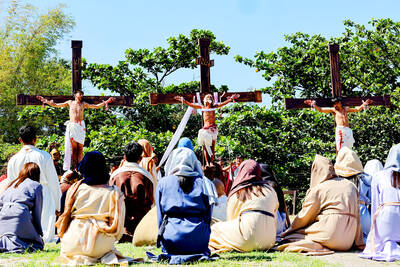
Hundreds of Filipinos and tourists flocked to a sun-bleached field north of Manila yesterday, on Good Friday, to witness one of the country’s most blood-soaked displays of religious fervor, undeterred by rising fuel prices. Scores of bare-chested flagellants with covered faces walked barefoot through the dusty streets of Pampanga Province’s San Fernando as they flogged their backs with bamboo whips in the scorching heat. Agence France-Presse (AFP) journalists said they saw devotees deliberately puncturing their skin with glass shards attached to a small wooden paddle to ensure their bleeding during the ritual, a way to atone for sins and seek miracles from
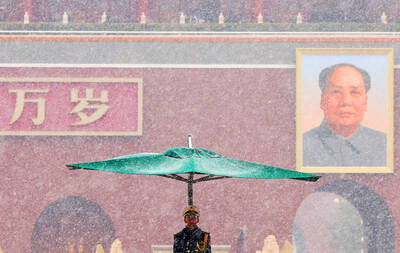
Chinese dissident artist Gao Zhen (高兟), famous for making provocative satirical sculptures of former Chinese leader Mao Zedong (毛澤東), was tried on Monday over accusations of “defaming national heroes and martyrs,” his wife and a rights group said. Gao, 69, who was detained in 2024 during a visit from the US, faces a maximum three-year prison sentence, said his wife, Zhao Yaliang (趙雅良), and Shane Yi, a researcher at the Chinese Human Rights Defenders group which operates outside the nation. The closed-door, one-day trial took place at Sanhe City People’s Court in Hebei Province neighboring the capital, Beijing, and ended without a


 RSS
RSS