


Australian authorities yesterday began doling out emergency COVID-19 vaccine supplies in the Sydney suburbs worst hit by an outbreak of the fast-moving Delta variant of SARS-CoV-2, as the country reported its biggest daily tally of COVID-19 infections.
New South Wales Premier Gladys Berejiklian said the acceleration of inoculations in Sydney, the state’s capital, was providing some hope as it faces its worst outbreak since the COVID-19 pandemic began.
“The next few weeks will be hard, but no doubt that once we get those high vaccination rates, life will feel much better, it will look much rosier,” Berejiklian told reporters in Sydney. “I know these are challenging times, but I can see the light at the end of the tunnel.”
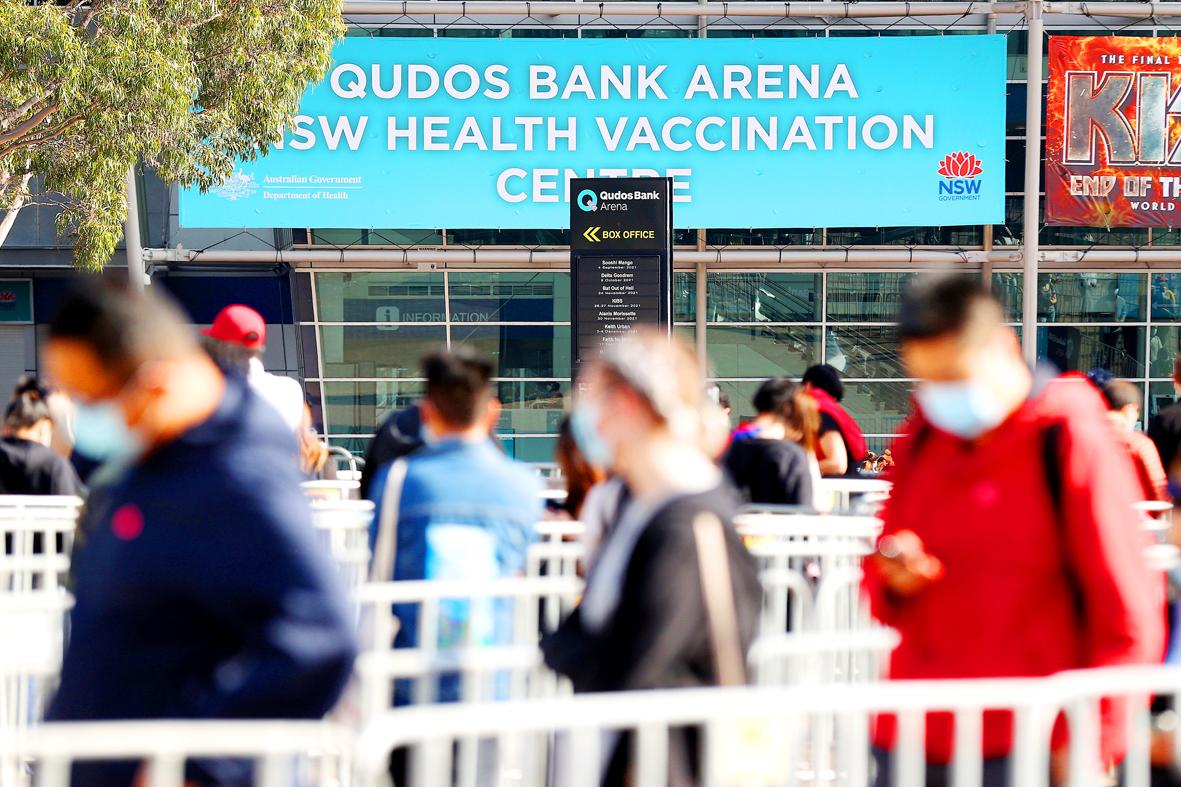
Photo: Bloomberg
Officials across the country reported a daily combined total of 754 cases yesterday, surpassing the previous daily high of 738 cases recorded on Aug. 5 last year.
New South Wales accounted for the bulk of the cases, with 681 infections, and most of those were found in Sydney’s western suburbs. The state recorded one new death.
Officials are racing to increase vaccination rates across New South Wales as a prerequisite for lifting lockdown measures in the state.
Berejiklian has yet to formally extend the shutdown, which is due to end at the end of the month, but has made it clear that 70 percent of the state’s population aged 16 or older must be vaccinated, a target she expects to reach by the end of October.
The state’s vaccination rate stands at 28.5 percent fully vaccinated, slightly higher than the national numbers, while about 52 percent have received at least one dose.
Officials allocated more than half of an emergency supply of Pfizer vaccines bought from Poland, equivalent to about 500,000 doses, to the 12 worst-hit suburbs in Sydney to vaccinate people aged 40 or younger over the next two weeks.
LIVING WITH DELTA
More than half of Australia’s population of 25 million people is living under lockdown measures, including Sydney, Melbourne and the capital, Canberra.
While the country’s overall exposure to the pandemic has been far lower than many other countries, the latest outbreaks are threatening to push its A$2 trillion (US$1.43 trillion) economy into its second recession in as many years.
Yesterday in Melbourne, the country’s second-largest city, cases more than doubled to 57.
The Australian Capital Territory, home to Canberra, reported 16 local cases, with territory Chief Minister Andrew Barr saying that the capital is at a “crucial” period in its fight against the virus, and urging residents to stay home except for urgent reasons.
“We either stop this virus now or we live like Sydney for the rest of this year,” Barr said.
Health officials have warned that the country is vulnerable to more deaths and hospitalizations, given that just 27.5 percent of the national population is fully vaccinated. About half of the population has received at least one dose.
State leaders have increasingly diverged on their approach to the pandemic, with some still pushing for elimination, while others advocate finding an acceptable level of exposure.
“Everyone will have to learn to live with Delta and in New South Wales, we are learning that earlier than others,” Berejiklian said.

Shamans in Peru on Monday gathered for an annual New Year’s ritual where they made predictions for the year to come, including illness for US President Donald Trump and the downfall of Venezuelan President Nicolas Maduro. “The United States should prepare itself because Donald Trump will fall seriously ill,” Juan de Dios Garcia proclaimed as he gathered with other shamans on a beach in southern Lima, dressed in traditional Andean ponchos and headdresses, and sprinkling flowers on the sand. The shamans carried large posters of world leaders, over which they crossed swords and burned incense, some of which they stomped on. In this
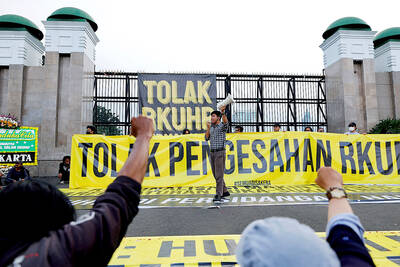
Indonesia yesterday began enforcing its newly ratified penal code, replacing a Dutch-era criminal law that had governed the country for more than 80 years and marking a major shift in its legal landscape. Since proclaiming independence in 1945, the Southeast Asian country had continued to operate under a colonial framework widely criticized as outdated and misaligned with Indonesia’s social values. Efforts to revise the code stalled for decades as lawmakers debated how to balance human rights, religious norms and local traditions in the world’s most populous Muslim-majority nation. The 345-page Indonesian Penal Code, known as the KUHP, was passed in 2022. It

Near the entrance to the Panama Canal, a monument to China’s contributions to the interoceanic waterway was torn down on Saturday night by order of local authorities. The move comes as US President Donald Trump has made threats in the past few months to retake control of the canal, claiming Beijing has too much influence in its operations. In a surprising move that has been criticized by leaders in Panama and China, the mayor’s office of the locality of Arraijan ordered the demolition of the monument built in 2004 to symbolize friendship between the countries. The mayor’s office said in
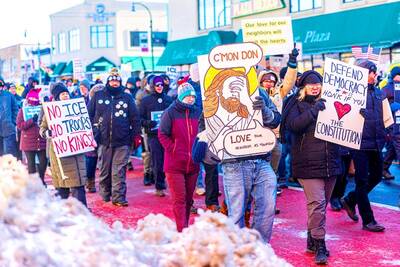
‘TRUMP’S LONG GAME’: Minnesota Governor Tim Walz said that while fraud was a serious issue, the US president was politicizing it to defund programs for Minnesotans US President Donald Trump’s administration on Tuesday said it was auditing immigration cases involving US citizens of Somalian origin to detect fraud that could lead to denaturalization, or revocation of citizenship, while also announcing a freeze of childcare funds to Minnesota and demanding an audit of some daycare centers. “Under US law, if an individual procures citizenship on a fraudulent basis, that is grounds for denaturalization,” US Department of Homeland Security Assistant Secretary Tricia McLaughlin said in a statement. Denaturalization cases are rare and can take years. About 11 cases were pursued per year between 1990 and 2017, the Immigrant Legal Resource


 RSS
RSS