


From fake medicines to fire extinguishers disguised as oxygen cylinders and recycled personal protective equipment, India’s COVID-19 hell has been lucrative for its ever-inventive army of scammers, with sometimes deadly consequences.
Komal Taneja’s husband, Chandrakant, died gasping for breath at his New Delhi home last month after the oxygen canister that they paid US$200 for on the Internet never arrived.
“We desperately tried to find a hospital bed for a week... Two private hospitals asked us for a million rupees [US$13,671] in advance,” Komal, her voice cracking on the telephone, told reporters. “Then we came across a contact online promising an oxygen cylinder delivery within an hour of making the 15,000 rupees payment. When we did, they asked for more money, and then stopped responding,” Komal added.

Photo: Reuters
Chandrakant, 36, who worked at the stock market, died on May 1, leaving his homemaker wife looking for a job to help look after his ailing parents.
India has a long history of scams ripping off ordinary people, including beyond its borders.
In just one typical case, in December last year police busted a call center that allegedly defrauded 4,500 Americans out of US$14 million.
Impersonating US officials, they told victims that their bank accounts were being used by drug cartels and that the only option was to convert their assets into bitcoin — which the gang would then cash in.
One elaborate scam involving police and doctors that emerged in 2019 saw hundreds of villagers in Haryana declared dead in road accidents to claim insurance.
Investigators say many scammers have turned their attention to ripping off desperate COVID-19 patients and relatives as India suffers a devastating coronavirus surge.
Narang, a private company executive in Noida, said he was swindled by a sophisticated scam when he was desperately looking for an oxygen concentrator for a sick friend.
“I came across a link for a supplier which looked genuine, and even had a catalogue with different models. The prices too were competitive,” Narang told reporters. “I spoke with a person on the phone. He asked for about 45,000 rupees in two installments. I was sure it was genuine and even recommended this supplier to another acquaintance.”
The device never arrived.
His case is one of at least 600 investigations launched by police in New Delhi alone in the past few weeks with people desperately looking for oxygen, hospital beds and drugs.
“These criminals saw it as an opportune moment to make an entry,” senior New Delhi police officer Shibesh Singh told reporters.
His Crime Branch teams have already arrested many scammers, including a gang that made and sold counterfeit doses of the antiviral drug remdesivir for up to 40 times the market price.
“These people were producing fake vials, which cost them about 20 rupees, and [they] sold it in the market for anything above 10,000 rupees,” Singh said.
In another case, a gang repainted fire extinguishers and sold them as oxygen cylinders, while another posed as doctors offering non-existent hospital beds.
This week, six men were reportedly arrested on suspicion of washing, repackaging and selling several tonnes of used surgical gloves from hospitals.
“We can only urge the people to be extra cautious while approaching such contacts for online help,” Singh said.

ROCKY RELATIONS: The figures on residents come as Chinese tourist numbers drop following Beijing’s warnings to avoid traveling to Japan The number of Chinese residents in Japan has continued to rise, even as ties between the two countries have become increasingly fractious, data released on Friday showed. As of the end of December last year, the number of Chinese residents had increased by 6.5 percent from the previous year to 930,428. Chinese people accounted for 22.6 percent of all foreign residents in Japan, making them by far the largest group, Japanese Ministry of Justice data showed. Beijing has criticized Tokyo in increasingly strident terms since Japanese Prime Minister Sanae Takaichi last year suggested that a military conflict around Taiwan could

A pro-Iran hacking group claimed to breach FBI Director Kash Patel’s personal e-mail inbox and posted some of the contents online. The e-mails provided by the hacking group include travel details, correspondence with leasing agents in Washington and global entry, and loyalty account numbers. The e-mail address the hackers claim to have compromised has been previously tied to Patel’s personal details, and the leaked e-mails contain photos of Patel and others, in addition to correspondence with family members and colleagues. “The FBI is aware of malicious actors targeting Director Patel’s personal email information,” the agency said in a statement on
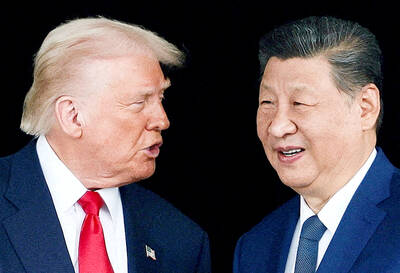
RIVALRY: ‘We know that these are merely symbolic investigations initiated by China, which is in fact the world’s most profligate disrupter of supply chains,’ a US official said China has started a pair of investigations into US trade practices, retaliating against similar probes by US President Donald Trump’s administration as the superpowers stake out positions before an expected presidential summit in May. The move, announced by the Chinese Ministry of Commerce on Friday, is a direct mirror of steps Trump took to revive his tariff agenda after the US Supreme Court last month struck down some of his duties. “China expresses its strong dissatisfaction and firm opposition to these actions,” a ministry spokesperson said in a statement, referring to the so-called Section 301 investigations initiated on March 11.

When a hiker fell from a 55m waterfall in wild New Zealand bush, rescuers were forced to evacuate the badly hurt woman without her dog, which could not be found. After strangers raised thousands of dollars for a search, border collie Molly was flown to safety by a helicopter pilot who was determined to reunite the pet and the owner. A week earlier, an emergency rescue helicopter found the woman with bruises and lacerations after a fall at a rocky spot at the waterfall on the South Island’s West Coast. She was airlifted on March 24, but they were forced to


 RSS
RSS