


WHO Director-General Tedros Adhanom Ghebreyesus on Friday said that all hypotheses on the origins of the COVID-19 pandemic remained on the table following the WHO’s investigation in China.
The mission to Wuhan, China, where the first cases were spotted, failed to identify the source of the novel coronavirus, but poured cold water on the theory that it leaked from a virology laboratory in the city.
At a news conference in Geneva, Switzerland, alongside Wuhan mission leader Peter Ben Embarek, Tedros said the team had conducted a “very important scientific exercise in very difficult circumstances.”
“Some questions have been raised as to whether some hypotheses have been discarded. Having spoken with some members of the team, I wish to confirm that all hypotheses remain open and require further analysis and studies,” Tedros said.
“Some of that work may lie outside the remit and scope of this mission. We have always said that this mission would not find all the answers, but it has added important information that takes us closer to understanding the origins of the virus,” he said.
At a news conference in Wuhan on Tuesday concluding the team of experts’ visit, Ben Embarek quashed the theory that a leak from a virology laboratory in the city could have caused the pandemic — a notion propagated by former US president Donald Trump.
“The laboratory incident hypothesis is extremely unlikely,” Ben Embarek said. It “is not in the hypotheses that we will suggest for future studies.”
In Geneva on Friday, he said the team had been told by the Wuhan laboratories they visited and spoke to that none of them had been working on or had SARS-CoV-2 — the virus that causes COVID-19 — in their collections.
“It’s of course always possible that the virus is and was present in samples that have not yet been processed, or among viruses that have not yet been characterized,” he said. “But knowingly, apparently from all the labs we’ve talked with, nobody has seen this virus before.”
Ben Embarek added that the common practice for scientists discovering new viruses was to publish their findings immediately.
Experts believe the disease originated in bats and could have been transmitted to humans via another mammal.
The first COVID-19 cases were reported in Wuhan in December 2019. More than 2.3 million people worldwide have since been killed by the virus.
The international investigation in the city only began last month.
Ben Embarek on Friday said that had the team gone much earlier, “we wouldn’t have had the same material to look at,” which researchers had put together in the interim.
“It was not a mission to go and chase an animal in the market or chase a patient somewhere. That would have been something that could have been done perhaps back in December [2019] when the outbreak ... was detected,” he said.
He said when disease outbreaks occur, the first reaction is to treat patients, not to try to figure out how it happened.
“But maybe that’s something we should look at in the future on how better to respond to emerging disease outbreaks,” Ben Embarek added.

PHISHING: The con might appear convincing, as the scam e-mails can coincide with genuine messages from Apple saying you have run out of storage For a while you have been getting messages from Apple saying “your iCloud storage is full.” They say you have exceeded your storage plan, so documents are no longer being backed up, and photos you take are not being uploaded. You have been resisting Apple’s efforts to get you to pay a minimum of £0.99 (US$1.33) a month for more storage, but it seems that you cannot keep putting off the inevitable: You have received an e-mail which says your iCloud account has been blocked, and your photos and videos would be deleted very soon. To keep them you need
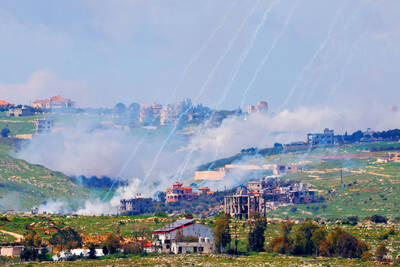
The Israeli military has demolished entire villages as part of its invasion of south Lebanon, rigging homes with explosives and razing them to the ground in massive remote detonations. The Guardian reviewed three videos posted by the Israeli military and on social media, which showed Israel carrying out mass detonations in the villages of Taybeh, Naqoura and Deir Seryan along the Israel-Lebanon border. Lebanese media has reported more mass detonations in other border villages, but satellite imagery was not readily available to verify these claims. The demolitions came after Israeli Minister of Defense Israel Katz called for the destruction of

A US YouTuber who caused outrage for filming himself kissing a statue commemorating Korean wartime sex slaves has been sentenced to six months in prison, a court in Seoul said yesterday. Johnny Somali, 25, gained notoriety several years ago for recording himself doing a series of provocative stunts in South Korea and Japan, and streaming them on platforms such as YouTube and Twitch. South Korean authorities indicted Somali — whose real name is Ramsey Khalid Ismael — in 2024 on public order violations and obstruction of business, and banned him from leaving the country. “The court has sentenced him to six months in

The death toll from a shooting in western Afghanistan rose to 11 on Saturday, after gunmen targeted civilians at a picnic spot in Herat, the provincial authority said. Bullet marks were visible on a wall of the Sayed Mohammad Agha Shia shrine, while bloodstains marked a blanket abandoned at the scene. “Eleven people have been recorded dead and eight others wounded from Friday’s incident, with the condition of two of the wounded reported as critical,” Herat’s information office said in a statement. The update raises a toll of seven killed provided on Friday by the Afghan Ministry of Interior Affairs


 RSS
RSS