


Fifty years since Egypt’s ground-breaking Aswan High Dam was inaugurated with much fanfare, harnessing the Nile for hydropower and irrigation, the giant barrier is still criticized for its human and environmental toll.
It is also a stark reminder — amid high tensions today as Addis Ababa fills its Grand Ethiopian Renaissance Dam (GERD) upstream — of just how volatile politics over the life-giving, but finite, Nile water resources can be.
The Aswan High Dam was spearheaded in the early 1950s by then-Egyptian president Gamal Abdel Nasser.
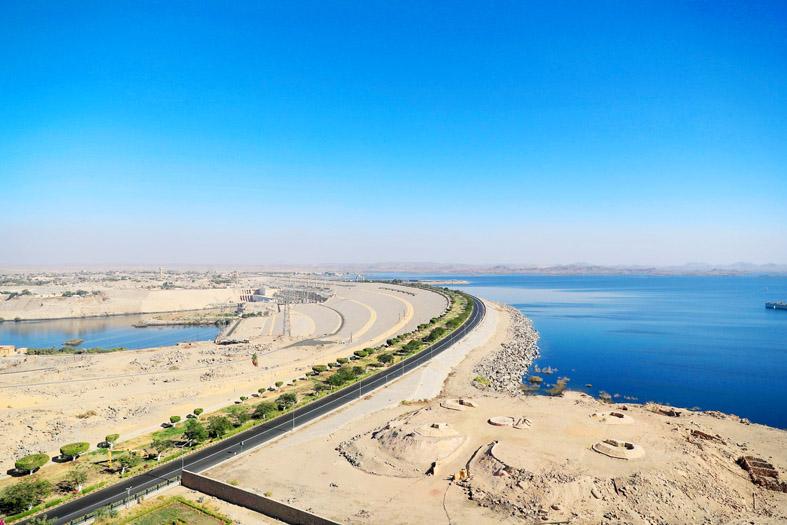
Photo: AFP
Egypt, where the river provides about 97 percent of water for more than 100 million people, is the final section of the Nile’s 6,650km, 10-nation journey to the Mediterranean Sea.
For millennia, Egypt was at the mercy of the seasonal rise and fall of the river, dependent on rainfall in nations far upstream.
However, the 111m-high and 3.6km-wide Aswan High Dam, dwarfing the far smaller Aswan Low Dam built under British rule in 1902, crucially gave Cairo power to regulate the flow.
It was a “very important hydro-political act,” said geographer and author Habib Ayeb, a Nile expert who has taught at universities in Cairo and Paris.
The dam was inaugurated on Jan. 15, 1971, by then-Egyptian president Anwar al-Sadat, three months after Nasser’s death.
For the first time, “an Egyptian president decided to manage the Nile within Egypt,” to develop agriculture and the economy in the country, Ayeb added.
For Egypt, an otherwise desert nation where 97 percent of the population lives along the fertile Nile banks, the dam revolutionized its relationship with the land.
“The dam offered a reprieve to Egyptians by giving them enough water ... and protecting them from the hazards of floods, which could be absolutely catastrophic,” Ayeb said.
It also brought electricity to much of the country, a move that Nasser said was key to developing the nation.
Abdel Hakim Hassanein, who can overlook the river from his home close to the dam, praised its construction.
“We didn’t have electricity before. We used oil lamps,” the 68-year-old said, adding that work at the dam remains a key source of local jobs.
Ethiopia, the second-most populous nation in Africa, today uses similar arguments, saying that its 145m GERD Blue Nile barrier — set to be Africa’s largest hydro-electric dam — is vital to provide power for its 110 million people.
However, Egypt, with the Arab world’s largest population, sees the GERD as an existential threat.
In the 1960s, many Egyptians also saw the Aswan High Dam as a threat to their lives, but in a different way.
The lake behind the dam flooded the homeland of Egypt’s Nubian people, forcing tens of thousands to leave.
“For the Nubians, the High Dam is a symbol of oppression,” rights advocate Fawzi Gayer said.
“It wiped out a civilization,” he added.
Gayer was born just after his family was relocated to a dusty town its Nubian residents call Abu Simbel, or “Displacement.”
“We’re talking about a community with a Nilotic identity that breathes the Nile ... and we have been thrown into the belly of the desert,” Gayer said. “The elderly people died of shock.”
The Nubians’ long-running demand for a “right of return” was included in the 2014 constitution, but their lands have been swallowed by the 355km-long Lake Nasser, which stretches south into Sudan.
For Ayeb, the dam also “proved to be a political bomb.”
Today, Addis Ababa, Cairo and Khartoum are mired in fractious talks over the filling and operation of the GERD.
Ayeb believes Cairo needs a new water policy.
“Egypt must change everything,” he said.


When a hiker fell from a 55m waterfall in wild New Zealand bush, rescuers were forced to evacuate the badly hurt woman without her dog, which could not be found. After strangers raised thousands of dollars for a search, border collie Molly was flown to safety by a helicopter pilot who was determined to reunite the pet and the owner. A week earlier, an emergency rescue helicopter found the woman with bruises and lacerations after a fall at a rocky spot at the waterfall on the South Island’s West Coast. She was airlifted on March 24, but they were forced to
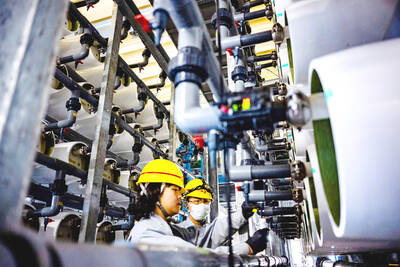
HIGH HOPES: The power source is expected to have a future, as it is not dependent on the weather or light, and could be useful for places with large desalination facilities A Japanese water plant is harnessing the natural process of osmosis to generate renewable energy that could one day become a common power source. The possibility of generating power from osmosis — when water molecules pass from a less salty solution to a more salty one — has long been known. However, actually generating energy from that has proved more complicated, in part due the difficulty of designing the membrane through which the molecules pass. Engineers in Fukuoka, Japan, and their private partners think they might have cracked it, and have opened what is only the world’s second osmotic power plant. It generates
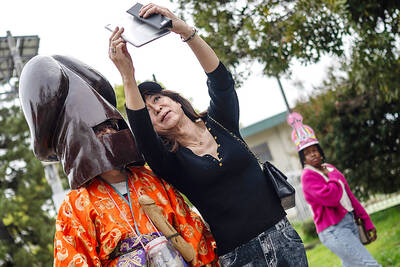
Showcasing phallus-shaped portable shrines and pink penis candies, Japan’s annual fertility festival yesterday teemed with tourists, couples and families elated by its open display of sex. The spring Kanamara Matsuri near Tokyo features colorfully dressed worshipers carrying a trio of giant phallic-shaped objects as they parade through the street with glee. The festival, as legend has it, honors a local blacksmith in the Edo Period (1603-1868) who forged an iron dildo to break the teeth of a sharp-toothed demon inhabiting a woman’s vagina that had been castrating young men on their wedding nights. A 1m black steel phallus sits in the courtyard of
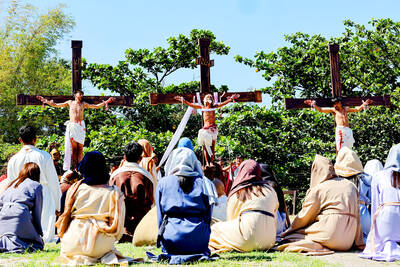
Hundreds of Filipinos and tourists flocked to a sun-bleached field north of Manila yesterday, on Good Friday, to witness one of the country’s most blood-soaked displays of religious fervor, undeterred by rising fuel prices. Scores of bare-chested flagellants with covered faces walked barefoot through the dusty streets of Pampanga Province’s San Fernando as they flogged their backs with bamboo whips in the scorching heat. Agence France-Presse (AFP) journalists said they saw devotees deliberately puncturing their skin with glass shards attached to a small wooden paddle to ensure their bleeding during the ritual, a way to atone for sins and seek miracles from


 RSS
RSS