


A pregnant Frenchwoman who died while walking a dog in the woods during a deer hunt was killed by her partner’s dog and not the hunting hounds, prosecutors said on Tuesday.
Elisa Pilarski, 29, lost her life while out walking her partner’s pitbull, Curtis, in Retz forest northeast of Paris in November last year.
She was six months pregnant at the time.
A post-mortem showed that Pilarski died of bleeding after several dog bites to her limbs and head.
Suspicion initially fell on the hunting hounds, but DNA tests and veterinary examinations showed that the “sole involvement” of her partner’s dog in the attack, Amiens prosecutor Eric Boussuge said.
Boussuge said that the dog had been illegally imported into France from the Netherlands and trained to attack using techniques banned in France.
A source close to the investigation, who asked not to be named, told reporters that the pitbull’s DNA was found on Pilarski’s bites and that her DNA was also found on his leash.
Just before the attack Pilarski had telephoned her partner, Christophe Ellul, to tell him that she had come across threatening dogs and had difficulty keeping Curtis on his leash.
Ellul arrived on the scene about 45 minutes later to find her body in a ravine, next to Curtis and a pack of hounds.
Her clothes had been ripped off.
Ellul blamed the hounds for her death, but two veterinary reports concluded that only the pitbull’s jaw could have produced the marks on Pilarski’s body.

JAN. 1 CLAUSE: As military service is voluntary, applications for permission to stay abroad for over three months for men up to age 45 must, in principle, be granted A little-noticed clause in sweeping changes to Germany’s military service policy has triggered an uproar after it emerged that the law requires men aged up to 45 to get permission from the armed forces before any significant stay abroad, even in peacetime. The legislation, which went into effect on Jan. 1 aims to bolster the military and demands all 18-year-old men fill out a questionnaire to gauge their suitability to serve in the armed forces, but stops short of conscription. If the “modernized” model fails to pull in enough recruits, parliament will be compelled to discuss the reintroduction of compulsory service, German

For two decades, researchers observed members of the Ngogo chimpanzee group of Kibale National Park in Uganda spend their days eating fruits and leaves, resting, traveling and grooming in their tropical rainforest abode, but this stable community then fractured and descended into years of deadly violence. The researchers are now describing the first clearly documented example of a group of wild chimpanzees splitting into two separate factions, with one launching a series of coordinated attacks against the other. Adult males and infants were targeted, with 28 deaths. “Biting, pounding the victim with their hands, dragging them, kicking them — mostly adult males,

PHISHING: The con might appear convincing, as the scam e-mails can coincide with genuine messages from Apple saying you have run out of storage For a while you have been getting messages from Apple saying “your iCloud storage is full.” They say you have exceeded your storage plan, so documents are no longer being backed up, and photos you take are not being uploaded. You have been resisting Apple’s efforts to get you to pay a minimum of £0.99 (US$1.33) a month for more storage, but it seems that you cannot keep putting off the inevitable: You have received an e-mail which says your iCloud account has been blocked, and your photos and videos would be deleted very soon. To keep them you need
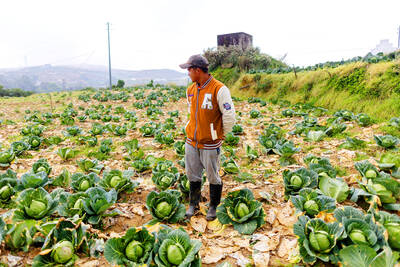
Filipino farmers like Romeo Wagayan have been left with little choice but to let their vegetables rot in the field rather than sell them at a loss, as rising oil prices linked to the Iran war drive up the cost of harvesting, labor and transport. “There’s nothing we can do,” said Wagayan, a 57-year old vegetable farmer in the northern Philippine province of Benguet. “If we harvest it, our losses only increase because of labor, transportation and packing costs. We don’t earn anything from it. That’s why we decided not to harvest at all,” he said. Soaring costs caused by the Middle East


 RSS
RSS