


Sheikh Sabah Al Ahmad Al Sabah, the ruler of Kuwait who drew on his decades as the oil-rich nation’s top diplomat to push for closer ties to Iraq after the 1990 Gulf War and solutions to other regional crises, died on Tuesday. He was 91.
Crown prince Sheikh Nawaf Al Ahmad Al Sabah, his 83-year-old half brother, was yesterday sworn in as the new emir.
In a Middle East replete with elderly rulers, Sheikh Sabah stood out for his efforts at pushing for diplomacy to resolve a bitter dispute between Qatar and other Arab nations that continues to this day.
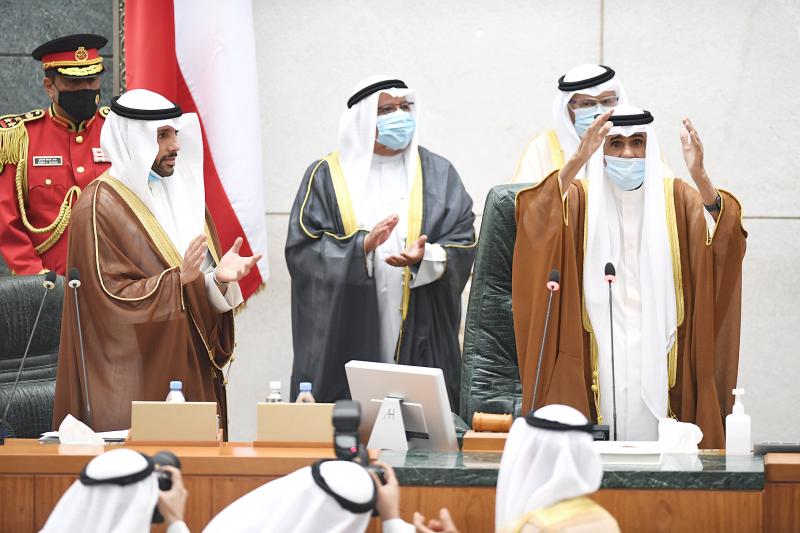
Photo: EPA-EFE
His 2006 ascension in Kuwait, a staunch US ally since the US-led war that expelled occupying Iraqi troops, came after parliament voted unanimously to oust his predecessor, the ailing Sheikh Saad Al Abdullah Al Sabah, just nine days into his rule.
Yet as Kuwait’s ruling emir, he struggled with internal political disputes, the fallout of the 2011 Arab Spring protests and seesawing crude oil prices that chewed into a national budget providing cradle-to-grave subsidies.
“He represents the older generation of Gulf leaders who valued discretion and moderation, and the importance of personal ties amongst fellow monarchs,” said Kristin Diwan, a senior resident academic at the Arab Gulf States Institute in Washington who studies Kuwait. “No question he has suffered from the lack of deference and respect shown by the younger and more brash young princes holding power today.”
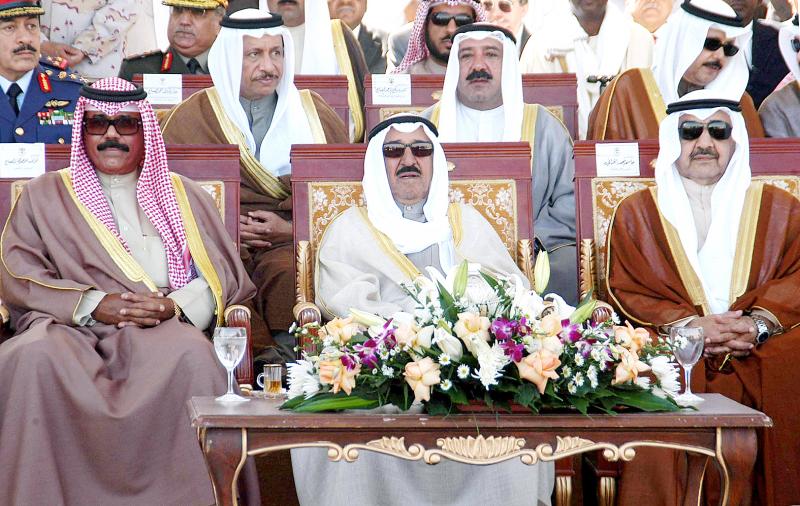
Photo: AFP
State television announced his death after playing Koranic prayers, with Royal Court Minister Sheikh Ali Jarrah Al Sabah reading a brief statement, his hands shaking.
“With great sadness and sorrow, the Kuwaiti people, the Arab and Islamic nations, and the friendly peoples of the world mourn the death of the late His Highness Sheikh Sabah Al Ahmad Al Jaber Al Sabah, emir of the state of Kuwait who moved to the realm of the Lord,” Sheik Ali Jarrah said, without offering a cause of death.
The high regard for Sheikh Sabah could be seen in the outpouring of support for him across the Middle East after he suddenly fell ill in July, leading to a quick hospitalization and surgery in Kuwait City amid the ongoing COVID-19 pandemic. Authorities did not say what ailed him.
A US Air Force C-17 flying hospital then transported Sheikh Sabah from Kuwait to Rochester, Minnesota, home of the flagship campus of the Mayo Clinic — an extraordinary gesture by the US government for a foreign head of state.
The Mayo Clinic did not immediately respond to requests for comment.
Sheikh Sabah’s life spanned two very different Kuwaits. He was born on June 16, 1929, just as the country’s pearl-diving industry would collapse. Within the decade, Kuwait would strike oil. Engineers would eventually confirm that the tiny country, slightly smaller than the US state of New Jersey, had the world’s sixth-largest known oil reserves.
Sheikh Sabah became Kuwait’s foreign minister in 1963 after holding a number of other government posts. He would remain in that position for four decades, making him one of the world’s longest-serving foreign ministers.
His country’s greatest crisis came in 1990, when then-Iraqi president Saddam Hussein invaded Kuwait and occupied the nation for seven months.
Fleeing with other Kuwaiti officials to neighboring Saudi Arabia, Sheikh Sabah collapsed and lost consciousness at one particularly stormy meeting of Arab leaders.
On Feb. 24, 1991, US troops and their allies stormed into Kuwait. It ended 100 hours later.
The US suffered only 148 combat deaths during the whole campaign, while more than 20,000 Iraqi soldiers were killed.
Even before the US entered Kuwait, Sheikh Sabah and others began suggesting a permanent US presence in the region might provide them protection from Iraq and others.
“One learns from the past and learns about it for the future,” Sheikh Sabah reportedly said. “One has to consider arrangements that would make not only my country stable but make the whole area stable.”
Today, Kuwait hosts about 13,500 US troops, many at Camp Arifjan south of Kuwait City, which is also home to the forward command of US Army Central.
In 2003, his half brother and Kuwait’s then-emir, Sheikh Jaber Al Ahmad Al Sabah, named Sheikh Sabah as prime minister.
Although the move kept members of the Al Sabah family firmly in control of Kuwait, it was seen as a modest step toward reform, as it marked the first time that the roles of prime minister and crown prince were split.
It also formalized Sheikh Sabah’s role in running the daily affairs of the country — a responsibility he had increasingly assumed while the former prime minister, Sheikh Saad, struggled with health problems.
Despite those health problems, Sheikh Saad took power in 2006 after the death of Sheikh Jaber. Concerns mounted during his brief reign as he was seen in public only in a wheelchair and did not speak.
Parliament ended up voting 64-0 to have Sheikh Sabah become emir, following a similar Cabinet decision.
Additional reporting by Reuters
ROCKY RELATIONS: The figures on residents come as Chinese tourist numbers drop following Beijing’s warnings to avoid traveling to Japan The number of Chinese residents in Japan has continued to rise, even as ties between the two countries have become increasingly fractious, data released on Friday showed. As of the end of December last year, the number of Chinese residents had increased by 6.5 percent from the previous year to 930,428. Chinese people accounted for 22.6 percent of all foreign residents in Japan, making them by far the largest group, Japanese Ministry of Justice data showed. Beijing has criticized Tokyo in increasingly strident terms since Japanese Prime Minister Sanae Takaichi last year suggested that a military conflict around Taiwan could
A pro-Iran hacking group claimed to breach FBI Director Kash Patel’s personal e-mail inbox and posted some of the contents online. The e-mails provided by the hacking group include travel details, correspondence with leasing agents in Washington and global entry, and loyalty account numbers. The e-mail address the hackers claim to have compromised has been previously tied to Patel’s personal details, and the leaked e-mails contain photos of Patel and others, in addition to correspondence with family members and colleagues. “The FBI is aware of malicious actors targeting Director Patel’s personal email information,” the agency said in a statement on
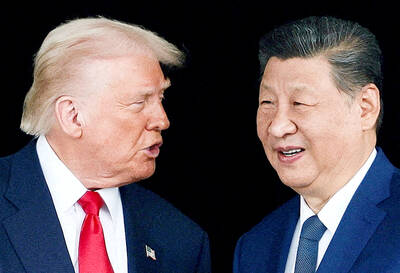
RIVALRY: ‘We know that these are merely symbolic investigations initiated by China, which is in fact the world’s most profligate disrupter of supply chains,’ a US official said China has started a pair of investigations into US trade practices, retaliating against similar probes by US President Donald Trump’s administration as the superpowers stake out positions before an expected presidential summit in May. The move, announced by the Chinese Ministry of Commerce on Friday, is a direct mirror of steps Trump took to revive his tariff agenda after the US Supreme Court last month struck down some of his duties. “China expresses its strong dissatisfaction and firm opposition to these actions,” a ministry spokesperson said in a statement, referring to the so-called Section 301 investigations initiated on March 11.

When a hiker fell from a 55m waterfall in wild New Zealand bush, rescuers were forced to evacuate the badly hurt woman without her dog, which could not be found. After strangers raised thousands of dollars for a search, border collie Molly was flown to safety by a helicopter pilot who was determined to reunite the pet and the owner. A week earlier, an emergency rescue helicopter found the woman with bruises and lacerations after a fall at a rocky spot at the waterfall on the South Island’s West Coast. She was airlifted on March 24, but they were forced to


 RSS
RSS