


Disney’s Mulan live-action remake is facing fresh boycott calls after it emerged some of the blockbuster’s scenes were filmed in China’s Xinjiang region, where widespread rights abuses against the region’s Muslim population have been widely documented.
The lavish US$200 million film about a legendary female warrior was already tangled in political controversy after star Liu Yifei (劉亦菲) voiced support for Hong Kong’s police as they cracked down on democracy protests last year.
However, the latest furor exploded as soon as the credits stopped rolling after the movie began showing on the Disney+ channel last week.
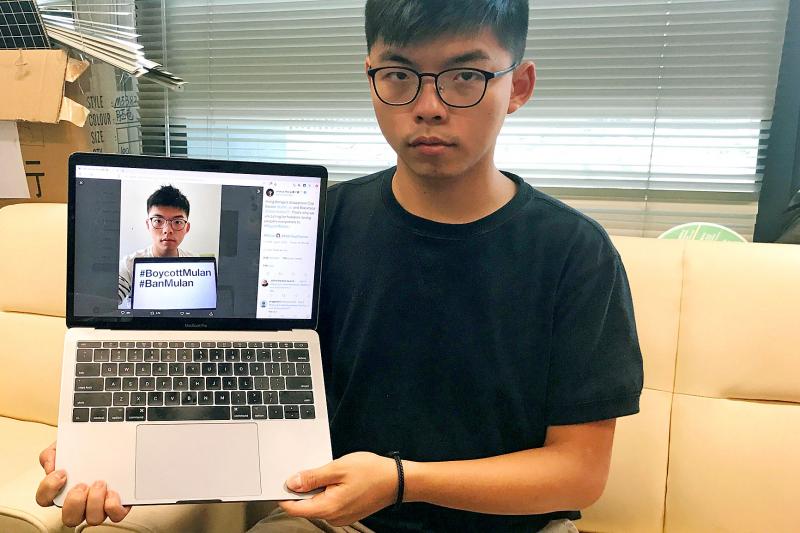
Photo: Reuters
Viewers spotted that Disney included “special thanks” to eight government entities in Xinjiang — including the public security bureau in the city of Turpan, where multiple internment camps have been documented.
Another entity thanked was the Chinese Communist Party’s propaganda department in Xinjiang.
The revelation has sparked renewed anger at a time of heightened scrutiny over Hollywood’s willingness to bow to China.
Rights groups, academics and journalists have exposed a harsh crackdown against Uighur and Kazakh Muslims in Xinjiang, including mass internments, enforced sterilizations, forced labor as well as intense religious and movement restrictions.
Isaac Stone Fish, a senior fellow at the Asia Society, said the film was now “arguably Disney’s most problematic movie” since Song of the South — a 1946 glorification of antebellum plantation life that the company has since pulled.
“It’s sufficiently astonishing that it bears repeating,” he wrote in a Washington Post column published yesterday. “Disney has thanked four propaganda departments and a public security bureau in Xinjiang, a region in northwest China that is the site of one of the world’s worst human rights abuses happening today.”
Badiucao (巴丟草), a dissident Chinese artist living in Melbourne, Australia, said he was working on a new cartoon portraying Mulan as a guard at one of the internment camps in Xinjiang to satirize Disney’s new film.
“It’s very problematic and there’s no excuse. I mean, it’s clear, we have all the evidence showing what is going on in Xinjiang,” he said.
Baduicao accused Disney of “double standards,” embracing Western social justice movements such as #MeToo and Black Lives Matter, while turning a blind eye to China’s rights abuses.
Hollywood has been increasingly accused of hypocrisy over its relationship with China.
The anti-censorship group Pen America last month published a report which said screenwriters, producers and directors often change scripts, delete scenes and alter content to avoid offending Chinese censors.
The actions include everything from deleting the Republic of China flag from Tom Cruise’s bomber jacket in the upcoming Top Gun: Maverick, to removing China as the source of a zombie virus in 2013’s World War Z.
It also means completely avoiding sensitive issues such as Taiwan, Tibet, Hong Kong politics, Xinjiang and the portrayal of LGBTQ characters, the report said.
Even before the latest Xinjiang controversy the hashtag #BoycottMulan had been trending in Taiwan, Hong Kong and Thailand.
Activists in all three places have launched multiple online campaigns critical of China’s authoritarianism.
They seized on social media comments made last year by actress Liu supporting Hong Kong’s police, and also noted the resemblance of Chinese-American actor Tzi Ma (馬泰), who plays Mulan’s heroic father, to Chinese President Xi Jinping (習近平).
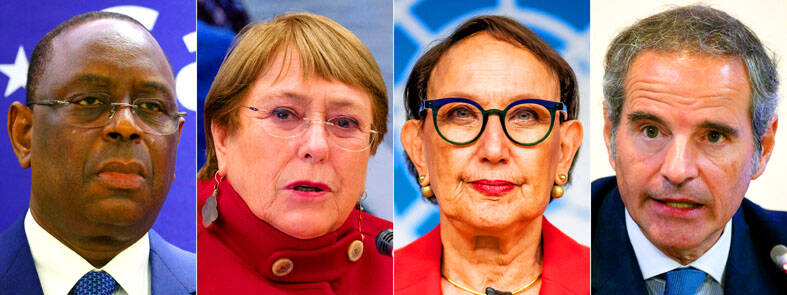
Four contenders are squaring up to succeed Antonio Guterres as secretary-general of the UN, which faces unprecedented global instability, wars and its own crushing budget crisis. Chile’s Michelle Bachelet, Argentina’s Rafael Grossi, Costa Rica’s Rebeca Grynspan and Senegal’s Macky Sall are each to face grillings by 193 member states and non-governmental organizations for three hours today and tomorrow. It is only the second time the UN has held a public question-and-answer, a format created in 2016 to boost transparency. Ultimately the five permanent members of the UN’s top body, the Security Council, hold the power, wielding vetoes over who leads the
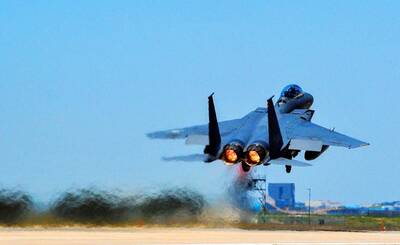
South Korea’s air force yesterday apologized for a 2021 midair collision involving two fighter jets, a day after auditors said the pilots were taking selfies and filming during the flight and held them responsible for the accident. “We sincerely apologize to the public for the concern caused by the accident that occurred in 2021,” an air force spokesman told a news conference, adding that one of the pilots involved had been suspended from flying duties, received severe disciplinary action and has since left the military. The apology followed a report released on Wednesday by the South Korean Board of Audit and Inspection,
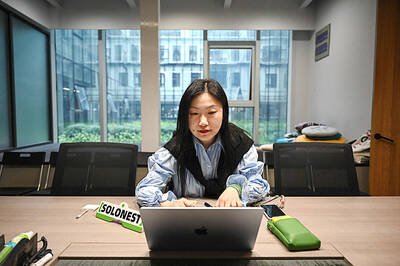
Young Chinese, many who fear age discrimination in their workplace after turning 35, are increasingly starting “one-person companies” that have artificial intelligence (AI) do most of the work. Smaller start-ups are already in vogue in Silicon Valley and elsewhere, with rapidly advancing AI tools seen as a welcome teammate even as they threaten layoffs at existing firms. More young people in China are subscribing to the model, as cities pledge millions of dollars in funding and rent subsidies for such ventures, in alignment with Beijing’s political goal of “technological self-reliance.” “The one-person company is a product of the AI era,” said Karen Dai

About 240 Indians claiming descent from a Biblical tribe landed at Tel Aviv airport on Thursday as part of a government operation to relocate them to Israel. The newcomers passed under a balloon arch in blue and white, the colors of the Israeli flag, as dozens of well-wishers welcomed them with a traditional Jewish song. They were the first “bnei Menashe” (“sons of Manasseh”) to arrive in Israel since the government in November last year announced funding for the immigration of about 6,000 members of the community from the states of Manipur and Mizoram in northeast India. The community claims to descend from


 RSS
RSS