


Young people in the South Pacific islands of Bougainville are seizing the opportunity to help reshape the future of the autonomous region of Papua New Guinea as they head to the polls this month to elect a new leader.
The general election is the first since Bougainville voted overwhelmingly for independence from Papua New Guinea (PNG) at the end of last year, and the winner is to preside over negotiations on the terms of separation.
For Bougainville’s younger “lost generation,” who grew up either under or in the shadow of a bloody 10-year civil war, it gives them a chance to break from the past and elect a civilian president with no ties to the previous unrest.

Photo: Reuters / Calvin Caspar / The Bougainvillean
Two decades after combatants snapped arrows to signal the end of hostilities, there is anger among the younger generation that there has been little economic progress for the resources rich region.
“It has been wasted on mere politics, and there’s nothing on the ground to show for it,” Pajomile Minaka, a 37-year-old law student, said by telephone.
“In terms of bringing sustainable economic development there is nothing. Young people like me believe the government has failed the people,” he said.
Bougainville’s 250,000-strong population has a median age of just 20, a demographic that is likely bad news for the ex-combatants among the open field of 25 candidates vying for the top political office.
Younger voters are likely to push for a fresh face, even though prominent figures from the conflict had the advantage of widespread name recognition, said Paul Barker, executive director of Port Moresby-based Institute of National Affairs think tank.
“There is a strong element of the lost generation missing out and wanting change,” Barker said, ahead of two weeks of polling that began yesterday for the five-yearly election.
Bougainville descended into a decade-long conflict in 1988, sparked by a dispute over how the profits from the lucrative Panguna gold and copper mine should be shared and the environmental damage it had caused.
As many as 20,000 died during the fighting between the region’s rebel guerilla army and PNG forces, and Panguna was closed.
Last year’s non-binding independence poll was part of the peace process that ended the conflict, but competing claims over development rights to Panguna still hang over its future.
Bougainville Vice President Raymond Masono said Panguna should “play a major role in revitalizing Bougainville’s economy.”
Younger voters, such as Augustine Teboro, 30, said it was time to dispense with the “old view” that Bougainville’s future relied on reopening Panguna when it should be making use of its physical and natural beauty by cultivating its tourism, agriculture and fisheries industries.
“Our hope is that this generation will transform our society and not be a generation that will make the same mistakes of the past,” said Teboro, who heads a Bougainville youth federation. “We are looking for a civilian leader with integrity.”
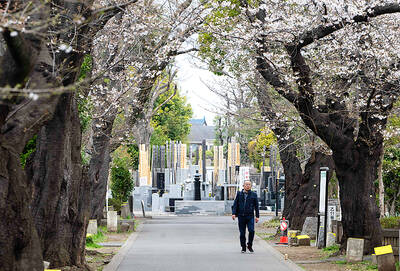
ROCKY RELATIONS: The figures on residents come as Chinese tourist numbers drop following Beijing’s warnings to avoid traveling to Japan The number of Chinese residents in Japan has continued to rise, even as ties between the two countries have become increasingly fractious, data released on Friday showed. As of the end of December last year, the number of Chinese residents had increased by 6.5 percent from the previous year to 930,428. Chinese people accounted for 22.6 percent of all foreign residents in Japan, making them by far the largest group, Japanese Ministry of Justice data showed. Beijing has criticized Tokyo in increasingly strident terms since Japanese Prime Minister Sanae Takaichi last year suggested that a military conflict around Taiwan could

Germany is considering Australia’s Ghost Bat robot fighter as it looks to select a combat drone to modernize its air force, German Minister of Defense Boris Pistorius said yesterday. Germany has said it wants to field hundreds of uncrewed fighter jets by 2029, and would make a decision soon as it considers a range of German, European and US projects developing so-called “collaborative combat aircraft.” Australia has said it will integrate the Ghost Bat, jointly developed by Boeing Australia and the Royal Australian Air Force, into its military after a successful weapons test last year. After inspecting the Ghost Bat in Queensland yesterday,

A pro-Iran hacking group claimed to breach FBI Director Kash Patel’s personal e-mail inbox and posted some of the contents online. The e-mails provided by the hacking group include travel details, correspondence with leasing agents in Washington and global entry, and loyalty account numbers. The e-mail address the hackers claim to have compromised has been previously tied to Patel’s personal details, and the leaked e-mails contain photos of Patel and others, in addition to correspondence with family members and colleagues. “The FBI is aware of malicious actors targeting Director Patel’s personal email information,” the agency said in a statement on
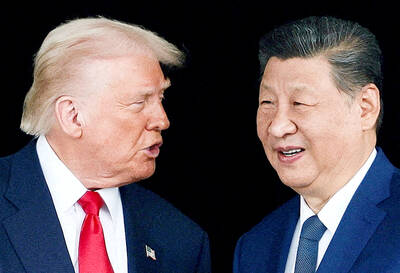
RIVALRY: ‘We know that these are merely symbolic investigations initiated by China, which is in fact the world’s most profligate disrupter of supply chains,’ a US official said China has started a pair of investigations into US trade practices, retaliating against similar probes by US President Donald Trump’s administration as the superpowers stake out positions before an expected presidential summit in May. The move, announced by the Chinese Ministry of Commerce on Friday, is a direct mirror of steps Trump took to revive his tariff agenda after the US Supreme Court last month struck down some of his duties. “China expresses its strong dissatisfaction and firm opposition to these actions,” a ministry spokesperson said in a statement, referring to the so-called Section 301 investigations initiated on March 11.


 RSS
RSS