


Philippine President Rodrigo Duterte yesterday defended his government’s policy to fight its COVID-19 outbreak and said early intervention had prevented as many as 1.3 million to 3.5 million infections.
Speaking during his annual address to the nation before a sparse audience of lawmakers in Quezon City, as the country’s cases grew to 82,040 and nearly 2,000 deaths, Duterte said a lengthy lockdown that was one of the world’s strictest might have hurt the economy, but had kept numbers in check.
The Philippines eased restrictions on June 1, but cases have since quadrupled and critics say the country was too slow in detecting infections due to weak testing, which Duterte acknowledged started slowly.
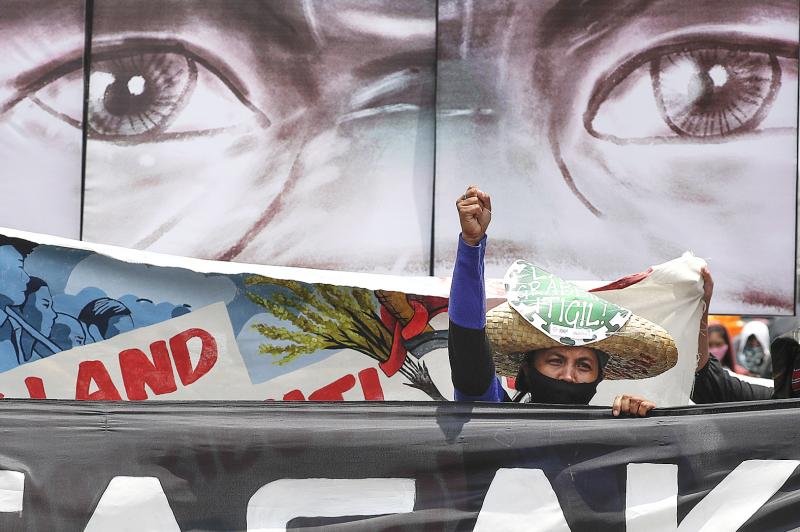
Photo: AP
“To me, even if the numbers were much lower, it would still be and would have been worth the sacrifice we made,” he said of the measures.
“Life first before everything,” he said, adding “we initially encountered difficulties ramping up our testing capacity.”
Duterte also reiterated that he would not allow schools to reopen for face-to-face classes until a vaccine was available and had earlier believed one could be ready as early as September.
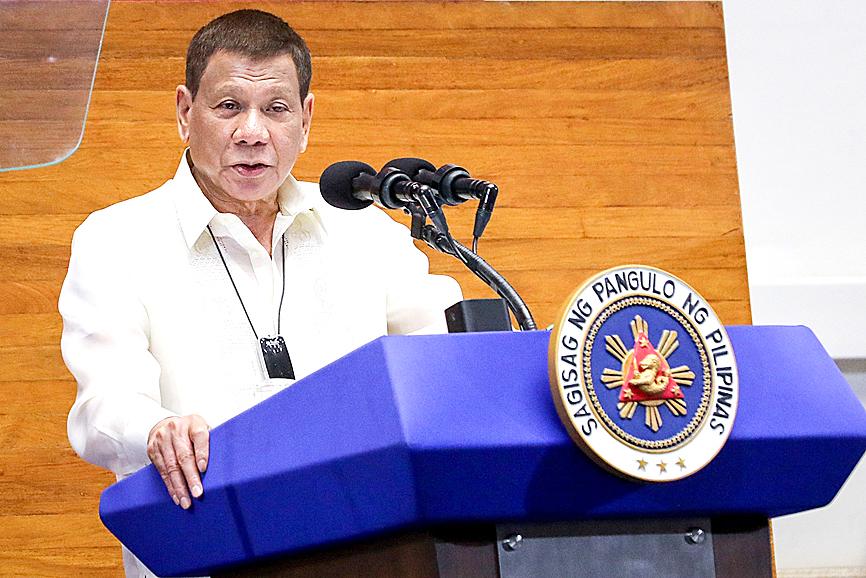
Photo: EPA-EFE / Robinson Ninal Jr / Presidential Photographers Division
He said he asked Chinese President Xi Jinping (習近平) four days ago to make the Philippines a top priority once Beijing had developed its own vaccine for COVID-19.
“I made a plea to President Xi if they have the vaccine can they allow us to be one of the first ... so that we can normalize as fast as possible,” he said.
He also said that he had no choice but to treat disputes in the South China Sea as diplomatic endeavors, because the alternative was to go to war with China.
Defending his government’s decision not to press a 2016 decision by the Permanent Court of Arbitration, which went in favor of the Philippines in a case against China, Duterte said China was in possession of territory that the nation did not have the capability to challenge militarily, adding “we cannot go to war.”
However, he also promised not relent in a bloody war on drugs that has alarmed the international community and said the Philippines “will not dodge our obligation” to human rights, adding that included protecting people from drugs and corruption.
“Do not do it in my country because I will really kill you that is a commitment,” he said, warning drug dealers.
The president began his speech by criticizing Senate Minority Leader Franklin Drilon, an opposition lawmaker, for questioning his push to go against the elites.
He also threatened the closure or government expropriation of telecom firms for what he called “lousy” services, and gave providers until December to improve.
He pushed lawmakers to back corporate tax cuts and targeted support for pandemic-hit industries as part of a recovery plan.
He also sought to revitalize his 8 trillion peso (US$162.44 billion) infrastructure program to lift the economy that is facing its deepest contraction in three decades.
“A dream of prosperity for our country was snapped by a pandemic,” Duterte said.
Duterte also called on banks to extend loan repayments without incurring charges and asked landlords to renegotiate lease agreements with tenants hit by the pandemic.
Additional reporting by Bloomberg
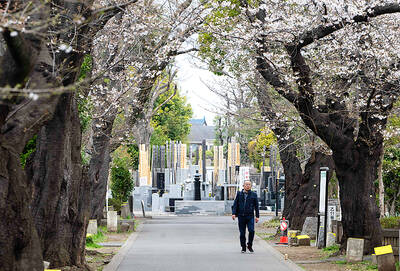
ROCKY RELATIONS: The figures on residents come as Chinese tourist numbers drop following Beijing’s warnings to avoid traveling to Japan The number of Chinese residents in Japan has continued to rise, even as ties between the two countries have become increasingly fractious, data released on Friday showed. As of the end of December last year, the number of Chinese residents had increased by 6.5 percent from the previous year to 930,428. Chinese people accounted for 22.6 percent of all foreign residents in Japan, making them by far the largest group, Japanese Ministry of Justice data showed. Beijing has criticized Tokyo in increasingly strident terms since Japanese Prime Minister Sanae Takaichi last year suggested that a military conflict around Taiwan could
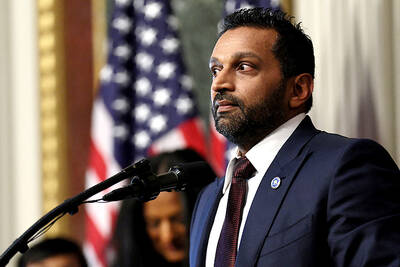
A pro-Iran hacking group claimed to breach FBI Director Kash Patel’s personal e-mail inbox and posted some of the contents online. The e-mails provided by the hacking group include travel details, correspondence with leasing agents in Washington and global entry, and loyalty account numbers. The e-mail address the hackers claim to have compromised has been previously tied to Patel’s personal details, and the leaked e-mails contain photos of Patel and others, in addition to correspondence with family members and colleagues. “The FBI is aware of malicious actors targeting Director Patel’s personal email information,” the agency said in a statement on
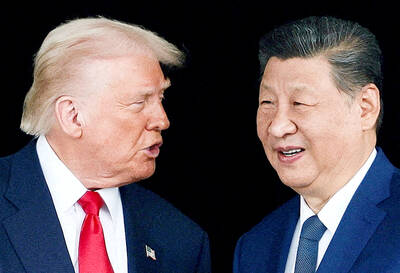
RIVALRY: ‘We know that these are merely symbolic investigations initiated by China, which is in fact the world’s most profligate disrupter of supply chains,’ a US official said China has started a pair of investigations into US trade practices, retaliating against similar probes by US President Donald Trump’s administration as the superpowers stake out positions before an expected presidential summit in May. The move, announced by the Chinese Ministry of Commerce on Friday, is a direct mirror of steps Trump took to revive his tariff agenda after the US Supreme Court last month struck down some of his duties. “China expresses its strong dissatisfaction and firm opposition to these actions,” a ministry spokesperson said in a statement, referring to the so-called Section 301 investigations initiated on March 11.

When a hiker fell from a 55m waterfall in wild New Zealand bush, rescuers were forced to evacuate the badly hurt woman without her dog, which could not be found. After strangers raised thousands of dollars for a search, border collie Molly was flown to safety by a helicopter pilot who was determined to reunite the pet and the owner. A week earlier, an emergency rescue helicopter found the woman with bruises and lacerations after a fall at a rocky spot at the waterfall on the South Island’s West Coast. She was airlifted on March 24, but they were forced to


 RSS
RSS