


From an eponymous cocktail to eager buyers following the shipping routes of long-awaited vehicles, Tesla is having a moment in South Korea, particularly among tech-savvy professionals.
Kang Sung-mo, who runs an advertising production agency in Seoul, is a convert.
“I am not interested in cars, but I am interested in the Tesla brand and its technology,” the 39-year-old said.
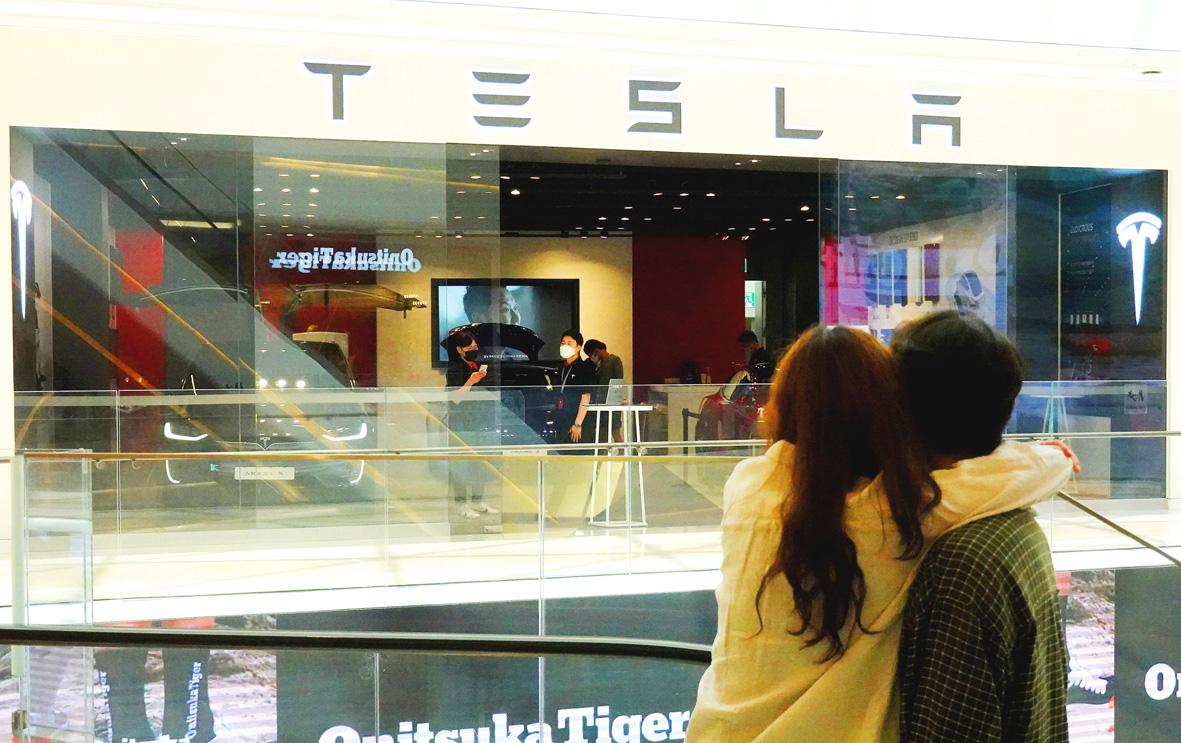
Photo: Reuters
Kang bought a Tesla Model 3 in December last year, ditching the Hyundai crossover that he had bought only in the summer.
Being associated with Tesla’s reputation for innovation is good for his image, he said.
The US electric-vehicle maker last month had its best month for South Korea, selling 2,827 vehicles and bouncing back from weak sales in April and May, which were hit by US production disruptions due to COVID-19.
The Model 3 is now the nation’s No. 2 imported vehicle, ahead of the BMW 5 series and the Audi A6, and just behind the Mercedes E-Class.
By contrast, Hyundai, the dominant automaker in South Korea, saw sales of its Kona EV slump 31 percent last month to 2,513 vehicles.
Another 4,000 to 5,000 South Korean customers have the Model 3 on order, although most of them might have to wait until at least September for delivery, a source familiar with the matter said.
The source was not authorized to speak to the media and declined to be identified.
Tesla’s rising popularity among affluent professionals in South Korea, who have been relatively unscathed by the pandemic, is one of many feathers in the company’s cap.
Highlighting the threat it poses to established brands, Tesla last week surpassed Toyota as the world’s most valuable automaker, while its second-quarter deliveries smashed expectations at a time when sales at rivals have been laid low by the pandemic.
South Korea’s generous subsidies of 12.43 million won (US$10,409) for the Model 3 have definitely helped sales, bringing the vehicle’s price down to less than US$40,000, but the Silicon Valley automaker has also generated a genuine buzz.
In social media posts, South Korean Tesla fans avidly track the routes of ships bringing their vehicles to Asia, while at the nation’s bars, the latest trendy cocktail is a mix of HiteJinro’s Terra-brand beer and the Korean traditional liquor soju. Smashed together, their names are pronounced “Tesla” in Korean.
The automaker has additionally benefited from free advertising after popular South Korean actor Yoo Ah-in, known for his sense of style, drove his Tesla Model X SUV to go grocery shopping on a reality show that aired last month.
That has led to a spike in orders for the vehicle, a second person familiar with the matter said, without elaborating.
Some new South Korean owners said that they bought a Tesla for practical reasons.
Kim Dong-hwan, who works in IT in Seoul, wanted to avoid public transportation during the pandemic and driving fatigue on his long commute.
Not everything is perfect — his Model 3 has a panel gap and he has to wait several months before it can be fixed — but Kim said that the benefits and emotional appeal of a technologically advanced brand are worth it.
“I am very satisfied given that Tesla’s self-driving feature has reduced fatigue,” he said.
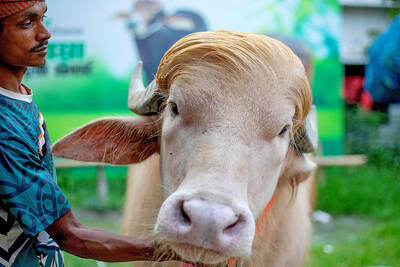
Crowds in Bangladesh are flocking to snap photographs with an unlikely social media star — an albino buffalo with flowing blond hair nicknamed “Donald Trump” that is due to be sacrificed within days. Owner Zia Uddin Mridha, 38, said his brother named the 700kg bull over its flowing helmet of hair resembling the signature look of the US president. “My younger brother picked this name because of the buffalo’s extraordinary hair,” he said at his farm in Narayanganj, just outside the capital, Dhaka. Mridha said that a constant stream of curious visitors — social media fans, onlookers and children — have come throughout

It began as a satirical online project. Now millions of young people in India are flocking to it as an outlet for their frustration. A parody political party called the Cockroach Janta Party, with the insect as its symbol, has exploded across India’s social media by turning absurdist humor into protest. Memes and short videos mocking corruption, joblessness and political dysfunction have flooded social media sites, where millions of users are embracing the cockroach — known for its ability to survive harsh conditions — as a tongue-in-cheek symbol of endurance. The online movement’s rise has been unusually rapid. The Cockroach Janta Party (CJP)
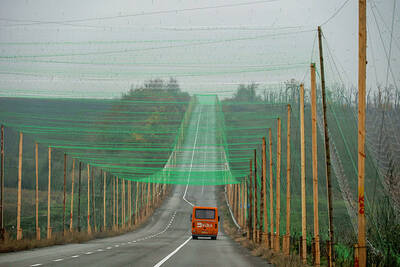
BIGGER ROLE: Beijing has said it maintains an impartial stance on the war in Ukraine, but by training Russian troops, China is far more involved than previously known China’s armed forces secretly trained about 200 Russian military personnel in China late last year, and some have since returned to fight in Ukraine, according to three European intelligence agencies and documents seen by Reuters. While China and Russia have held a number of joint military exercises since Moscow’s full-scale invasion of Ukraine in 2022, Beijing has repeatedly said that it is neutral in the conflict and presents itself as a peace mediator. The covert training sessions, which predominantly focused on the use of drones, were outlined in a dual-language Russian-Chinese agreement signed by senior Russian and Chinese officers in Beijing on
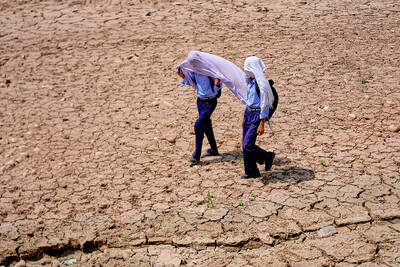
HOTTER: While Indians are accustomed to summer heat, climate change has caused northwestern India to warm faster than other parts of the country, an academic said Roads and markets have emptied during afternoons and some farmers have switched to nighttime work to avoid scorching temperatures as a heat wave grips large parts of India. The India Meteorological Department forecast maximum temperatures for yesterday of about 45°C in the capital, New Delhi, where authorities have opened temporary “cooling zones” to help people cope. The weather department warned that conditions would likely persist across several northern regions in the coming days, with temperatures staying well above seasonal averages. Authorities urged people to stay indoors during the hottest hours and take precautions against heat-related illnesses. India declares a heat wave whenever maximum temperatures


 RSS
RSS