


Leaning on the aft deck of the Ocean Viking, a humanitarian ship that picked them up in the Mediterranean on Thursday, a group of Pakistanis look back to watch the Libyan coast receding behind them and with it the nightmare of torture, ill-treatment and kidnappings that they have witnessed or suffered.
“For them, we are not human beings,” said Imran, one of 31 Pakistanis in the group of 51 migrants whose wooden boat was rescued off the Italian island of Lampedusa during an operation by the SOS Mediterranean ambulance boat.
“All the Pakistanis here [on the boat] were captive during their passage in Libya,” said the 30-year-old bricklayer who left the north African country after a year trapped there. “We were all kidnapped. We came to work, but all we found was war, torture and extortion.”
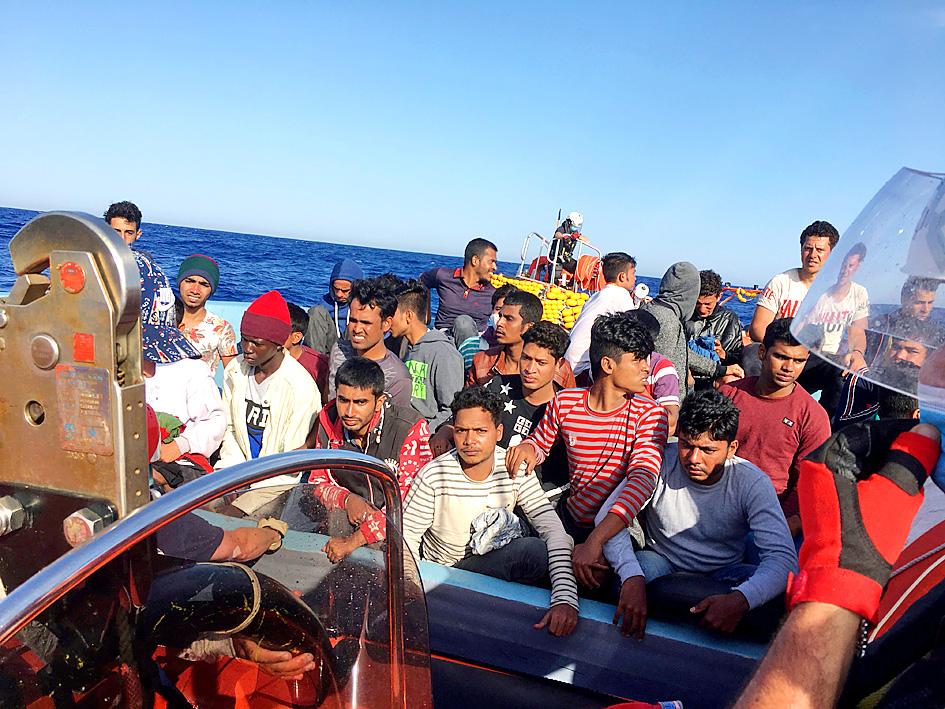
Photo: AFP
“For blacks, it’s almost the same as for us, but with the Bangladeshis, the Pakistanis, they are the ones who suffer the most,” he said.
Like Imran, who passed through Dubai before coming to work in construction near Tripoli, all of them told stories of the beatings and kidnappings.
For him, it was “from the airport,” Imran said.
“I was sold to someone who locked me up,” he said. “There were 35, 40 of us crammed into a room, we were not allowed to go out. Then he sold me to someone else who also locked me up. It was like that all the time. I was a slave.”
“They give you just enough to eat so you stay alive, not one more bite,” said Naeem, 35, who managed to “escape,” but made the “mistake” of going to the police.
“The police took me back to the kidnappers,” he said. “It was worse. There was not a single person who helped us in Libya. I did not find a single good person in the whole country.”
Mohammad Arshad, dressed in a blue traditional shalwar kameez, recounted how he spent two years in the port city of Khoms and explained the mechanics of the ransom note.
“They come in groups,” Arshad said. “They can catch you anywhere, at work, in the street. They blindfold you. They hit you and call your parents, saying: ‘If you don’t pay, he’ll die.’”
His father had to find US$10,000, a fortune in Pakistan, by going into debt with relatives, he said.
“And if we don’t manage to collect the money, we are hit with the butt of a rifle,” added an emotionless Arslan Ahmid whose beard escapes as a long thread from under his protective mask. “There are also electric shocks. Or else we will be starved, for days, and if we want to drink, it is water from the toilets.”
“The tortures, the sufferings which I lived, I cannot put words on it,” the 24-year-old said.
Leaving Libya in these numbers is unusual for Pakistani nationals. According to the UN High Commissioner for Refugees, Pakistanis do not even figure in the top 10 in terms of numbers attempting the crossing, the list dominated by the Sudanese, followed by Bangladeshis.
Arslan Ahmid had been in Libya for only seven or eight months when he decided to risk his life by taking the boat from Zouara.
“Here in the Mediterranean, we can die once. In Libya, we die every day,” he said in a low voice, after a long silence.
They preferred to pay US$2,000 “maximum” to buy a ticket out of the country, they said.
“We took the boat knowingly, but death, we have already seen it very closely,” Naeem said. “The sea is dangerous, but it is better to drown than to stay in Libya.”
For Naeem, their rescue by the Ocean Viking is offering them “a second life” in Europe.
“This is the happiest day of my life,” said 40-year-old Mudassar Ghalib.
They all ask for confirmation that the boat will not take them back to Libya.
Reassured, they begin to dream of where this “second life” might play out. In Malta? In Italy or in France?
“In fact, it doesn’t matter,” Imran said. “I am sure that in Europe, no one will torture us.”
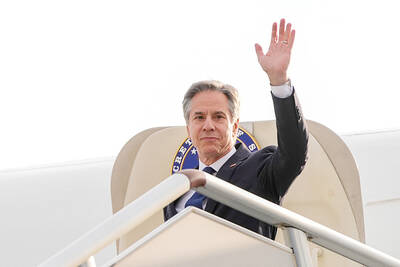
‘IN A DIFFERENT PLACE’: The envoy first visited Shanghai, where he attended a Chinese basketball playoff match, and is to meet top officials in Beijing tomorrow US Secretary of State Antony Blinken yesterday arrived in China on his second visit in a year as the US ramps up pressure on its rival over its support for Russia while also seeking to manage tensions with Beijing. The US diplomat tomorrow is to meet China’s top brass in Beijing, where he is also expected to plead for restraint as Taiwan inaugurates president-elect William Lai (賴清德), and to raise US concerns on Chinese trade practices. However, Blinken is also seeking to stabilize ties, with tensions between the world’s two largest economies easing since his previous visit in June last year. At the
Nearly half of China’s major cities are suffering “moderate to severe” levels of subsidence, putting millions of people at risk of flooding, especially as sea levels rise, according to a study of nationwide satellite data released yesterday. The authors of the paper, published by the journal Science, found that 45 percent of China’s urban land was sinking faster than 3mm per year, with 16 percent at more than 10mm per year, driven not only by declining water tables, but also the sheer weight of the built environment. With China’s urban population already in excess of 900 million people, “even a small portion

UNSETTLING IMAGES: The scene took place in front of TV crews covering the Trump trial, with a CNN anchor calling it an ‘emotional and unbelievably disturbing moment’ A man who doused himself in an accelerant and set himself on fire outside the courthouse where former US president Donald Trump is on trial has died, police said yesterday. The New York City Police Department (NYPD) said the man was declared dead by staff at an area hospital. The man was in Collect Pond Park at about 1:30pm on Friday when he took out pamphlets espousing conspiracy theories, tossed them around, then doused himself in an accelerant and set himself on fire, officials and witnesses said. A large number of police officers were nearby when it happened. Some officers and bystanders rushed
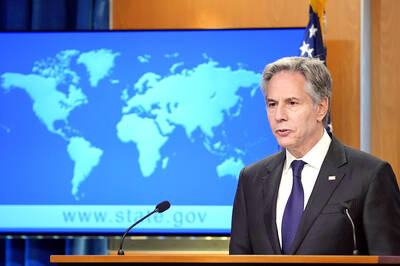
Beijing is continuing to commit genocide and crimes against humanity against Uyghurs and other Muslim minorities in its western Xinjiang province, U.S. Secretary of State Antony Blinken said in a report published on Monday, ahead of his planned visit to China this week. The State Department’s annual human rights report, which documents abuses recorded all over the world during the previous calendar year, repeated language from previous years on the treatment of Muslims in Xinjiang, but the publication raises the issue ahead of delicate talks, including on the war in Ukraine and global trade, between the top U.S. diplomat and Chinese


 RSS
RSS