


Doctors Without Borders (MSF) is designing a 400-bed facility for homeless people in Toronto in its first Canadian project, a top official said on Tuesday, prompted by the risks posed by COVID-19 to vulnerable sections of society.
MSF’s move comes as advocates are calling for faster action to prevent the spread of the virus among a population uniquely at risk of being infected and infecting others.
“Rarely do we consider actually doing operations in the context where there are healthy, functional health systems and standards of living are generally high,” MSF Canada executive director Joseph Belliveau said. “But COVID is changing the playing field.”
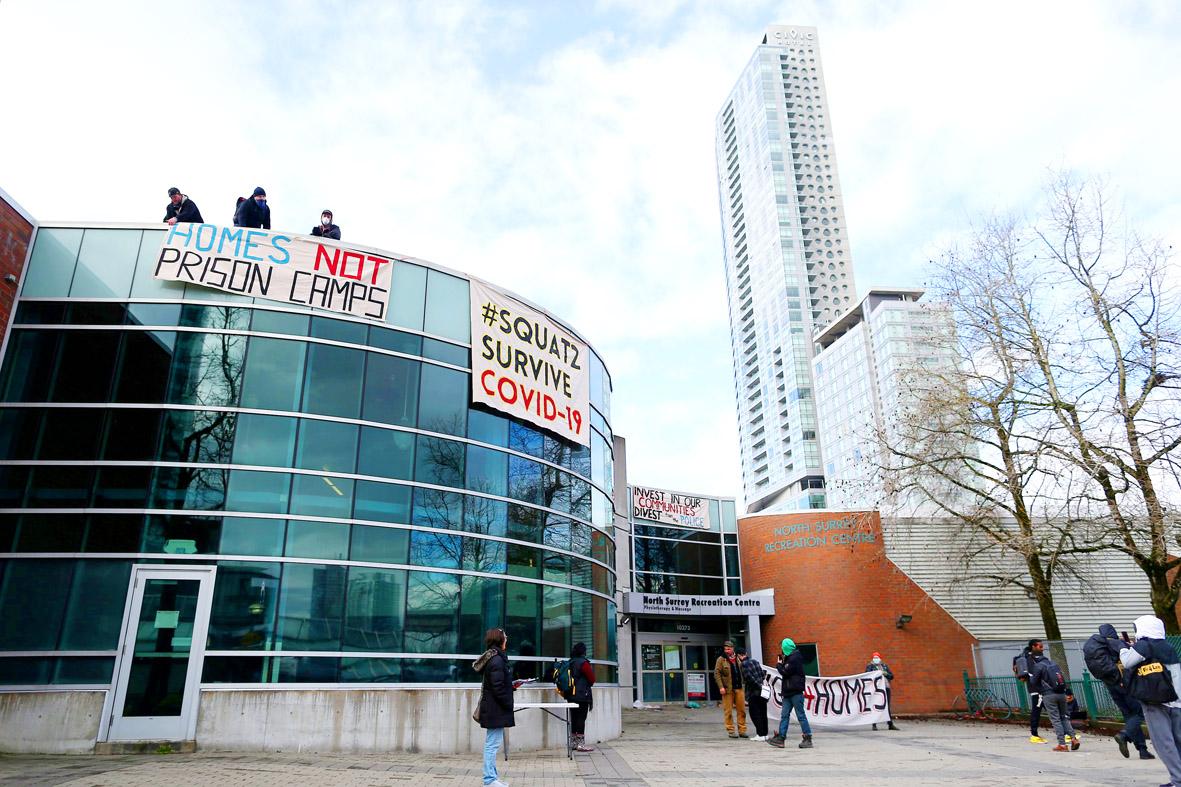
Photo: Reuters
A spokeswoman for Inner City Health Associates, which will provide clinical services at the facility, said it would be up and running in about 10 days.
The city and province of Ontario are sharing the cost, which has yet to be determined.
MSF is sharing its expertise with local health workers to design the coronavirus facility for the homeless, Belliveau said.
The group is also considering taking on projects with other vulnerable populations in Canada — indigenous communities and the elderly in long-term care facilities, which have been hardest hit by COVID-19.
Thirty homeless people in Toronto have already tested positive for COVID-19, including 11 people in a shelter specifically for refugees, the city said on Tuesday.
The death toll in Canada from the coronavirus outbreak reached 900, the latest government data showed.
Homeless individuals cannot meet the demands of social distancing. They share washrooms and sleep on bunk beds or mats centimeters away from one another, making contagion likely.
They also often suffer underlying medical conditions that make the illness more serious when it does break out.
A study by Health Providers Against Poverty found Toronto’s shelters were staffed by workers who often lack basic personal protective equipment, making them more likely to be infected and infect others.
“This is a public health emergency on top of a public health emergency,” said Janice Abbott, chief executive of Atira, which works with homeless and at-risk women in Vancouver.
With coffee shops and 24-hour fast-food restaurants, where those without homes often spend time, shut down to prevent the spread of the virus, some doctors are keeping homeless people longer in emergency rooms, putting a greater burden on already stretched hospitals, Toronto doctor Kate Hayman said.
“For many, many years, we’ve been discharging people into homelessness without hesitating. And homelessness is a life-threatening condition. But with COVID, homelessness has become acutely a life-threatening condition,” she said.
Toronto, which is Canada’s most-populous city, has placed just over 6 percent of its more than 7,000 homeless people in hotel rooms, a city spokeswoman said in an e-mail.
That is not enough, said family physician Samantha Green, who helped author the study that found unsafe conditions in many city shelters, adding: “They need to move much, much, much faster... These are extraordinary times and the city needs to be taking extraordinary measures.”

School bullies in Singapore are to face caning under new guidelines, but the education minister on Tuesday said it would be meted out only as a last resort with strict safeguards. Human rights groups regularly criticize Singapore for the use of corporal punishment, which remains part of the school and criminal justice systems, but authorities have defended it as a deterrent to crime and serious misconduct. Caning was discussed in the parliament after legislators asked how it would be used in relation to bullying in schools. The debate followed stricter guidelines on serious student misconduct, including bullying, unveiled by the Singaporean Ministry of
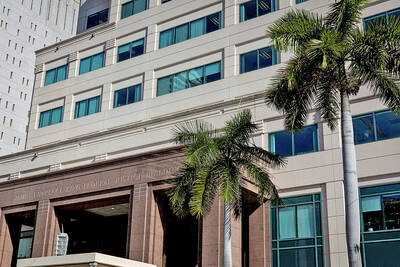
‘GROSS NEGLIGENCE?’ Despite a spleen typically being significantly smaller than a liver, the surgeon said he believed Bryan’s spleen was ‘double the size of what is normal’ A Florida surgeon who is facing criminal charges after allegedly removing a patient’s liver instead of his spleen has said he is “forever traumatized” by that person’s death. In a deposition from November last year that was recently obtained by NBC, 44-year-old Thomas Shaknovsky described the death of 70-year-old William Bryan as an “incredibly unfortunate event that I regret deeply.” Bryan died after the botched surgery; and last month, a grand jury in Tallahassee indicted Shaknovsky on a charge of manslaughter. “I’m forever traumatized by it and hurt by it,” Shaknovsky added, also saying that wrong-site surgeries can happen “during

A MESSAGE: Japan’s participation in the Balikatan drills is a clear deterrence signal to China not to attack Taiwan while the US is busy in the Middle East, an analyst said The Japan Self-Defense Forces yesterday fired a Type 88 anti-ship missile during a joint maritime exercise with US, Australian and Philippine forces, hitting a decommissioned Philippine Navy ship in waters facing the disputed South China Sea, in drills that underscore Tokyo’s rising willingness to project military power on China’s doorstep. The drill took place as Manila and Tokyo began talks on a potential defense equipment transfer, made possible by Japan’s decision to scrap restrictions on military exports. The discussions include the possible early transfer of Abukuma-class destroyers and TC-90 aircraft to the Philippines, Japanese Minister of Defense Shinjiro Koizumi said. Philippine Secretary of

A South Korean judge who last week more than doubled former South Korean first lady Kim Keon-hee’s prison sentence was found dead yesterday, police said. Shin Jong-o was found unconscious at about 1am at the Seoul High Court building, an investigator at the Seocho District Police Station in Seoul said. Shin was taken to a hospital and pronounced dead, he said. “There is no sign of foul play in the death,” the investigator added. Local media reported that Shin had left a suicide note, but the investigator said there was none. On Tuesday last week, Shin presided over 53-year-old Kim’s appeal trial, finding her guilty


 RSS
RSS