


US health regulators are watching for potential drug shortages after India restricted the export of some raw pharmaceutical ingredients, a move that could disrupt the industry’s globe-spanning supply chain.
India on Tuesday said that it would limit exports of some common medicines as concerns grow over shortages of chemical ingredients.
Many manufacturers of those ingredients in China are shut or making less medicine than usual due to the COVID-19 outbreak.
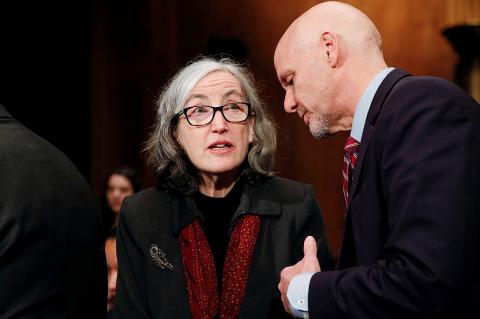
Photo: Reuters
The drugs include over-the-counter painkiller and fever reducer paracetamol and finished pills that include it.
Similar restrictions have been placed on the common antibiotic metronidazole, various versions of vitamin B and eight other medicinal chemicals, a notice from the Indian government said.
“India has restricted the export of 26 active pharmaceutical ingredients for export, which represents about 10 percent of their export capacity,” US Food and Drug Administration (FDA) Commissioner Stephen Hahn told the US Congress at a hearing in Washington on Tuesday.
“We’re working very closely to look at that list to determine how that will affect the medical supply chain,” Hahn said.
So far, the FDA has only identified one drug that has gone into short supply because of coronavirus-related supply chain issues, although it has contacted 180 manufacturers.
Hahn declined to identify the drug, and said that alternatives are available.
Although India is the source of about 20 percent of the world’s generic-drug supply, the country relies on China for about 66 percent of the chemical components needed to make them.
A recent analysis by the Indian government found that as many as 450 drug ingredients could be affected by China’s virus containment efforts, which include a complete lockdown of Hubei Province, a center of the country’s drug industry.
The FDA has long grappled with drug shortages as drugmakers consolidated, shifted production overseas, and curtailed sales of unprofitable medicines.
Global health experts have encouraged US drugmakers to diversify their sources of pharmaceutical materials to avoid overdependence on any given country.
However, even diversification might not be a safeguard, said Yanzhong Huang (黃嚴忠), a senior fellow for global health at the New York-based Council on Foreign Relations.
“Manufacturing pharmaceuticals nowadays is so globalized and this is a worldwide pandemic,” Huang said. “This is the first time we’re facing a convergence of factors like this.”
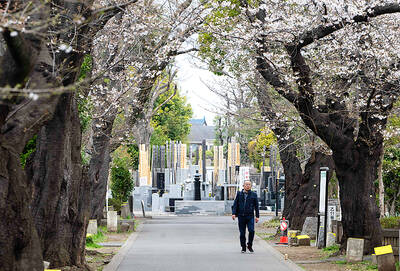
ROCKY RELATIONS: The figures on residents come as Chinese tourist numbers drop following Beijing’s warnings to avoid traveling to Japan The number of Chinese residents in Japan has continued to rise, even as ties between the two countries have become increasingly fractious, data released on Friday showed. As of the end of December last year, the number of Chinese residents had increased by 6.5 percent from the previous year to 930,428. Chinese people accounted for 22.6 percent of all foreign residents in Japan, making them by far the largest group, Japanese Ministry of Justice data showed. Beijing has criticized Tokyo in increasingly strident terms since Japanese Prime Minister Sanae Takaichi last year suggested that a military conflict around Taiwan could
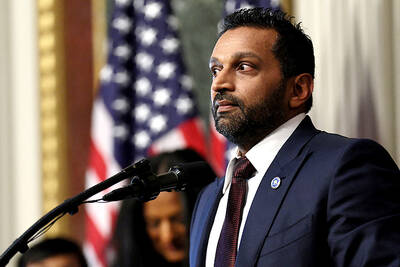
A pro-Iran hacking group claimed to breach FBI Director Kash Patel’s personal e-mail inbox and posted some of the contents online. The e-mails provided by the hacking group include travel details, correspondence with leasing agents in Washington and global entry, and loyalty account numbers. The e-mail address the hackers claim to have compromised has been previously tied to Patel’s personal details, and the leaked e-mails contain photos of Patel and others, in addition to correspondence with family members and colleagues. “The FBI is aware of malicious actors targeting Director Patel’s personal email information,” the agency said in a statement on
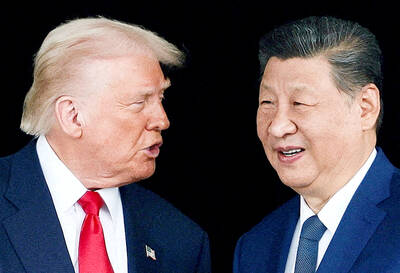
RIVALRY: ‘We know that these are merely symbolic investigations initiated by China, which is in fact the world’s most profligate disrupter of supply chains,’ a US official said China has started a pair of investigations into US trade practices, retaliating against similar probes by US President Donald Trump’s administration as the superpowers stake out positions before an expected presidential summit in May. The move, announced by the Chinese Ministry of Commerce on Friday, is a direct mirror of steps Trump took to revive his tariff agenda after the US Supreme Court last month struck down some of his duties. “China expresses its strong dissatisfaction and firm opposition to these actions,” a ministry spokesperson said in a statement, referring to the so-called Section 301 investigations initiated on March 11.

When a hiker fell from a 55m waterfall in wild New Zealand bush, rescuers were forced to evacuate the badly hurt woman without her dog, which could not be found. After strangers raised thousands of dollars for a search, border collie Molly was flown to safety by a helicopter pilot who was determined to reunite the pet and the owner. A week earlier, an emergency rescue helicopter found the woman with bruises and lacerations after a fall at a rocky spot at the waterfall on the South Island’s West Coast. She was airlifted on March 24, but they were forced to


 RSS
RSS