


The future of German Chancellor Angela Merkel’s coalition was thrown into question on Saturday as her deputy chancellor and finance minister lost the leadership race of his center-left Social Democratic Party (SPD).
The humiliating defeat for German Minister of Finance Olaf Scholz marks another sign of discontent within the Social Democrats over their partnership with Merkel’s center-right party.
It was also a prelude to expected high drama in the coming week with the party poised to vote on whether to stay in the coalition as delegates meet for their annual congress, starting on Friday.
Scholz and his running mate Klara Geywitz, who back staying in the coalition until 2021, obtained only 45.33 percent of the vote of the party’s rank and file.
They were soundly beaten by challengers Norbert Walter-Borjans and Saskia Esken, who won with 53.06 percent, and who have been highly critical of the alliance with the conservatives.
Scholz said the party must now “stand behind the new leadership.”
For the business-friendly Free Democratic Party (FDP), the shock result means that “Germany stands before new elections or a minority government.”
The far-right Alternative for Germany (AfD) party also predicted an end of the coalition, with its coleader Joerg Meuthen forecasting that “it will break up.”
Anxious to calm jitters, Christian Democratic Union (CDU) General Secretary Paul Ziemiak came out to say that “the decision today has changed nothing” about the alliance — a message echoed by the Christian Social Union in Bavaria.
Wounded by an election rout in 2017, the SPD had initially sought to go into opposition, but allowed itself reluctantly to be coaxed into renewing an alliance with Merkel.
However, many in the SDP are wary of continuing to govern in Merkel’s shadow, and the coalition has lurched from crisis to crisis.
The SPD has also been battered by a series of regional and European election setbacks this year.
After voters handed the party its worst outcome in European elections in May, the party’s then-leader Andreas Nahles threw in the towel, triggering the leadership contest.
In an attempt to shake up its image, the SPD has turned to a new leadership format — a male-female duo for the first time since its founding in 1890 — a model copied from the surging Greens.
In the latest opinion polls, the SPD, which came second in the 2017 federal election, is struggling for third place with the AfD, behind the CDU and the Greens.
Relatively unknown in Germany’s political scene, the SPD’s new leaders Esken and Walter-Borjans stand further left on the spectrum within the party.
They have been critical of the government’s “black zero” policy of not taking on new debt — something that Scholz has championed — and its perceived timidity in tackling climate change.
The duo has said they will push the coalition to agree to billions more in investments on the climate and infrastructure. Failing that, they have threatened to pull the plug on the coalition.
Analysts say the SPD needs to quit the government if it wants to survive.
“The SPD cannot renew itself unless it is in opposition and has new people,” political expert Klaus Schroeder said.

ROCKY RELATIONS: The figures on residents come as Chinese tourist numbers drop following Beijing’s warnings to avoid traveling to Japan The number of Chinese residents in Japan has continued to rise, even as ties between the two countries have become increasingly fractious, data released on Friday showed. As of the end of December last year, the number of Chinese residents had increased by 6.5 percent from the previous year to 930,428. Chinese people accounted for 22.6 percent of all foreign residents in Japan, making them by far the largest group, Japanese Ministry of Justice data showed. Beijing has criticized Tokyo in increasingly strident terms since Japanese Prime Minister Sanae Takaichi last year suggested that a military conflict around Taiwan could
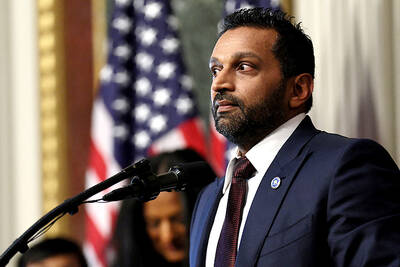
A pro-Iran hacking group claimed to breach FBI Director Kash Patel’s personal e-mail inbox and posted some of the contents online. The e-mails provided by the hacking group include travel details, correspondence with leasing agents in Washington and global entry, and loyalty account numbers. The e-mail address the hackers claim to have compromised has been previously tied to Patel’s personal details, and the leaked e-mails contain photos of Patel and others, in addition to correspondence with family members and colleagues. “The FBI is aware of malicious actors targeting Director Patel’s personal email information,” the agency said in a statement on
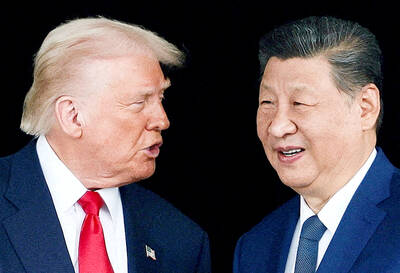
RIVALRY: ‘We know that these are merely symbolic investigations initiated by China, which is in fact the world’s most profligate disrupter of supply chains,’ a US official said China has started a pair of investigations into US trade practices, retaliating against similar probes by US President Donald Trump’s administration as the superpowers stake out positions before an expected presidential summit in May. The move, announced by the Chinese Ministry of Commerce on Friday, is a direct mirror of steps Trump took to revive his tariff agenda after the US Supreme Court last month struck down some of his duties. “China expresses its strong dissatisfaction and firm opposition to these actions,” a ministry spokesperson said in a statement, referring to the so-called Section 301 investigations initiated on March 11.

When a hiker fell from a 55m waterfall in wild New Zealand bush, rescuers were forced to evacuate the badly hurt woman without her dog, which could not be found. After strangers raised thousands of dollars for a search, border collie Molly was flown to safety by a helicopter pilot who was determined to reunite the pet and the owner. A week earlier, an emergency rescue helicopter found the woman with bruises and lacerations after a fall at a rocky spot at the waterfall on the South Island’s West Coast. She was airlifted on March 24, but they were forced to


 RSS
RSS