


Fifty years ago yesterday, US astronauts Neil Armstrong and Buzz Aldrin became the first humans in history to set foot on the moon, an event watched on television by half a billion people.
Their lunar module, named Eagle, touched down at 8:18pm Greenwich time on July 20, 1969.
A little more than six hours later, Armstrong placed his left foot on the lunar surface, declaring: “That’s one small step for man, one giant leap for mankind.”
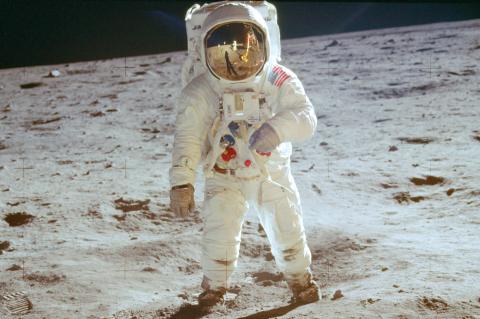
Photo :AP
NASA has been in overdrive for several weeks to mark the anniversary, with exhibits and events across the US, but most notably at the Kennedy Space Center in Cape Canaveral, Florida, and the Johnson Space Center in Houston, Texas.
US Vice President Mike Pence was yesterday due to deliver a speech from the space center, from where Armstrong, Aldrin and Michael Collins, the third crew member, took off. All three men were born in 1930.
Pence sent shockwaves through the industry in his last major space speech in March, when he advanced the deadline to return humans to the moon by four years, from 2028 to 2024.
It is within this charged context, with US President Donald Trump publicly questioning NASA’s plans to return to the moon to test technology for Mars, that the US is celebrating the anniversary of the epoch-making Apollo 11 mission.
Collins, 88, has remained the more active of the surviving Apollo veterans, and frequently shares lyrical recollections of the mission.
Speaking at a Washington event on Thursday, he said that while the moon itself was breathtaking seen up close, it was the view of Earth that has stayed with him and shaped his perspective.
“When we rolled out and looked at [the moon], oh, it was an awesome sphere,” he said.
“The sun was behind it, so it was illuminated by a rim of gold which made the strangest appearances of the craters and crater pits, the contrast between the whiter than white and darker than dark,” he added.
As magnificent as that view was, it was “nothing compared to this other window out there,” Collins said.
“Out there was this little pea about the size of your thumbnail at arm’s length: Blue, white, very shiny, you get the blue of the oceans, white of the clouds, streaks of rust we call continents, such a beautiful gorgeous tiny thing, nestled into this black velvet of the rest of the universe,” he said.
While Armstrong and Aldrin were on the surface, ex-fighter pilot Collins remained in lunar orbit, where he was in touch with ground control, providing them updates on his position.
“I said to mission control: ‘Hey, Houston, I’ve got the world in my window,’” he said.
Collins, who served as an assistant secretary of state after Apollo 11, added that the world tour he made after the mission helped him realize how the crew’s accomplishments did not belong to the US alone.
“Wherever we went, I thought people would say, well: ‘You Americans finally did it,’” he said. “And instead of that, everywhere, people said: ‘We did it, we humanity finally got off this little dinky planet and set foot elsewhere.’”
“I think the United States has to be a power in the world, but a very friendly power and not an overbearing power, not a power that tries to be dominant,” Collins said as he called for a new era of global cooperation in space.
By placing men on the moon, the US achieved the ultimate victory in the space race after losing the initial heats to the Soviet Union, which was first to put a satellite and then a man in space.
The undertaking, announced by then-president John F. Kennedy in 1961 and partly spurred by the Bay of Pigs crisis, involved enormous spending rivaled in scope only by the construction of the Panama Canal and the Manhattan Project.
It was a resounding achievement not just from a technical perspective, but also diplomatic, as the two superpowers jostled for global prestige in the Cold War.
Trump has relaunched the race to reconquer the moon — this time with the first woman — and to journey onward to the Red Planet.
However, the deadlines — 2024 and 2033 respectively — appear unrealistic and have caused turbulence within NASA.
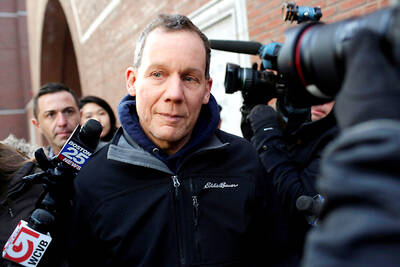
An American scientist convicted of lying to US authorities about payments from China while he was at Harvard University has rebuilt his research lab in Shenzhen, China, to pursue technology the Chinese government has identified as a national priority: embedding electronics into the human brain. Charles Lieber, 67, is among the world’s leading researchers in brain-computer interfaces. The technology has shown promise in treating conditions such as amyotrophic lateral sclerosis and restoring movement in paralyzed people. It also has potential military applications: Scientists at the Chinese People’s Liberation Army have investigated brain interfaces as a way to engineer super soldiers by boosting

Indonesian police have arrested 13 people after shocking images of alleged abuse against small children at a daycare center went viral, sparking outrage across the nation, officials said on Monday. Police on Friday last week raided Little Aresha, a daycare center in Yogyakarta on Java island, following a report from a former employee. CCTV footage circulating on social media showed children, most younger than two, lying on the floor wearing only diapers, their hands and feet bound with rags. The police have confirmed that the footage is authentic. Police said they also found 20 children crammed into a room just 3m by 3m. “So
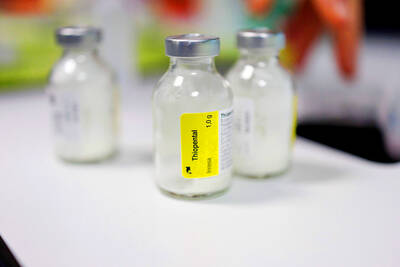
A grieving mother has ended her life at a clinic in Switzerland four years after the death of her only child. Wendy Duffy, 56, a physically healthy woman, died at the Pegasos clinic in Basel after struggling to cope with the death of her 23-year-old son, Marcus. The former care worker, from the West Midlands, England, had previously attempted to take her own life. The case comes as assisted dying would not become law in England and Wales after proposed legislation, branded “hopelessly flawed” by opponents, ran out of time. Ruedi Habegger, the founder of Pegasos, described Duffy’s death as

From post offices and parks to stations and even the summit of Mount Fuji, Japan’s vending machines are ubiquitous, but with the rapid pace of inflation cooling demand for their drinks, operators are being forced to rethink the business. Last month beverage giant DyDo Group Holdings announced it would remove about 20,000 vending machines — about 7 percent of their stock nationwide — by January next year, to “reconstruct a profitable network.” Pokka Sapporo Food & Beverage, based in Nagoya, also said last month it would sell its 40,000-machine operation to Osaka-based Lifedrink Co. “The strength of the vending machine


 RSS
RSS