


“Together everything is possible.”
So read the pro-government banners on buses that ferried hundreds of children to a beach outside the Venezuelan capital on Friday, part of an official effort to celebrate the carnival season, despite the country’s political and humanitarian crisis.
Elsewhere along the coastline near Caracas, workers assembled a drum set on a newly erected stage and colorful bunting fluttered in the breeze ahead of the scheduled festivities in Venezuela, which is buckling under shortages of food and medicine.
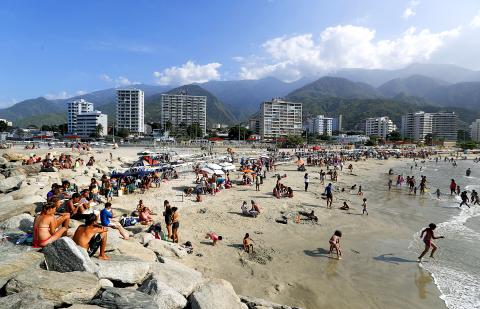
Photo: AP
Many Venezuelans are not in a mood to party and even the timing of the holiday is in dispute. The government of Venezuelan President Nicolas Maduro declared that the carnival period started on Thursday, several days early.
However, the Latin American country’s opposition-controlled parliament asked legislative workers to stay on the job until the weekend, saying that this is hardly a time for celebration.
“Carnival without dreams,” read a sign at a protest against Venezuela’s dire economic situation.
Venezuela is gripped by a political crisis that pits Maduro against Juan Guaido, an opposition leader who is touring Latin America as part of a campaign to build international pressure on his rival to quit.
The US has imposed oil sanctions on Venezuela in an attempt to oust Maduro, and on Friday slapped sanctions on six high-ranking Venezuelan security officials for obstructing the delivery of humanitarian aid into the country.
Maduro had denounced the attempt to deliver aid from Colombia and Brazil last weekend as a scheme to overthrow him.
Despite border clashes between Venezuelan security forces and protesters that killed several people, the municipal leader who organized buses to take children to the Camuri Chico beach near Caracas said that Venezuela was peaceful.
“Venezuela is totally calm,” said Jose Vicente Rangel Avalos, the pro-Maduro mayor of the Caracas municipality of Sucre.
Venezuelans can resolve their differences through dialogue and the electoral process, he said.
The opposition rejects such assertions, saying that Maduro was re-elected last year in a vote marred by irregularities and that his government has become increasingly authoritarian as conditions deteriorate in the oil-rich country.
At Camuri Chico beach, children splashed in the surf and played in the sand. A few hoisted kites.
However, many Venezuelans are struggling to get basic necessities and do not have the resources for leisure trips.
A woman renting plastic chairs at the beach said that the crowds were smaller than in past years, even if some people were determined to celebrate the carnival, “despite everything that we’re going through.”
The woman spoke on condition of anonymity, saying that Venezuela’s political problems made her nervous about being identified.
Venezuelan television tried to drum up a festive mood with footage of people dancing and a screen caption saying music is a way to reduce stress and anxiety.
Another caption described the carnival season, which runs through Tuesday, as one of the year’s most “entertaining and colorful” times.
Guaido has announced that he plans to return home in coming days to lead protests against Maduro, an arrival that could coincide with the end of the carnival season.
Maduro’s government said that the opposition leader had left Venezuela illegally, stirring speculation about whether it will attempt to arrest or block him from entering the country.
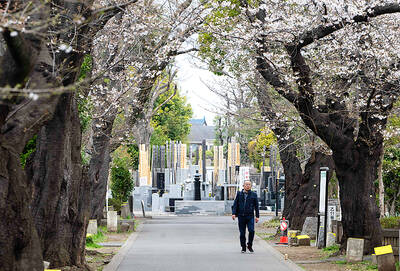
ROCKY RELATIONS: The figures on residents come as Chinese tourist numbers drop following Beijing’s warnings to avoid traveling to Japan The number of Chinese residents in Japan has continued to rise, even as ties between the two countries have become increasingly fractious, data released on Friday showed. As of the end of December last year, the number of Chinese residents had increased by 6.5 percent from the previous year to 930,428. Chinese people accounted for 22.6 percent of all foreign residents in Japan, making them by far the largest group, Japanese Ministry of Justice data showed. Beijing has criticized Tokyo in increasingly strident terms since Japanese Prime Minister Sanae Takaichi last year suggested that a military conflict around Taiwan could
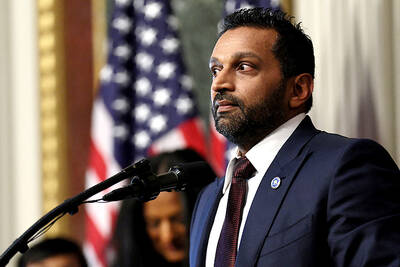
A pro-Iran hacking group claimed to breach FBI Director Kash Patel’s personal e-mail inbox and posted some of the contents online. The e-mails provided by the hacking group include travel details, correspondence with leasing agents in Washington and global entry, and loyalty account numbers. The e-mail address the hackers claim to have compromised has been previously tied to Patel’s personal details, and the leaked e-mails contain photos of Patel and others, in addition to correspondence with family members and colleagues. “The FBI is aware of malicious actors targeting Director Patel’s personal email information,” the agency said in a statement on
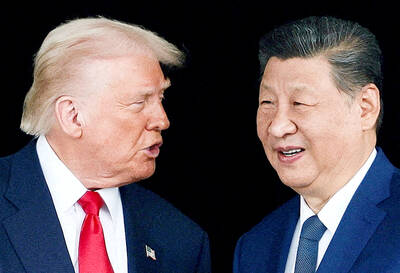
RIVALRY: ‘We know that these are merely symbolic investigations initiated by China, which is in fact the world’s most profligate disrupter of supply chains,’ a US official said China has started a pair of investigations into US trade practices, retaliating against similar probes by US President Donald Trump’s administration as the superpowers stake out positions before an expected presidential summit in May. The move, announced by the Chinese Ministry of Commerce on Friday, is a direct mirror of steps Trump took to revive his tariff agenda after the US Supreme Court last month struck down some of his duties. “China expresses its strong dissatisfaction and firm opposition to these actions,” a ministry spokesperson said in a statement, referring to the so-called Section 301 investigations initiated on March 11.
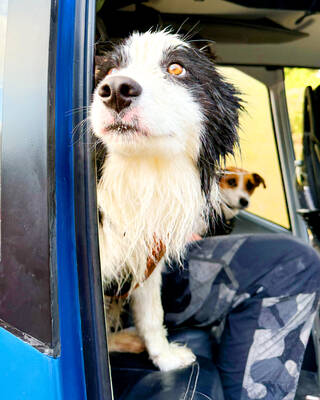
When a hiker fell from a 55m waterfall in wild New Zealand bush, rescuers were forced to evacuate the badly hurt woman without her dog, which could not be found. After strangers raised thousands of dollars for a search, border collie Molly was flown to safety by a helicopter pilot who was determined to reunite the pet and the owner. A week earlier, an emergency rescue helicopter found the woman with bruises and lacerations after a fall at a rocky spot at the waterfall on the South Island’s West Coast. She was airlifted on March 24, but they were forced to


 RSS
RSS