


Cambodia has agreed to resume a search effort with the US for the remains of Americans killed in the Vietnam War, the Cambodian Ministry of Foreign Affairs said yesterday, after suspending the program a year ago as tension rose between the two countries.
Cambodian Prime Minister Hun Sen suspended the POW/MIA program when Washington stopped issuing some visas after Cambodia refused to accept citizens deported from the US following their convictions for crimes there.
Ministry spokesman Ket Sophann said Hun Sen had offered to resume cooperation in a letter on Friday to US Senator Doug Ericksen and US Representative Vincent Buys.
“The letter talks to this itself, especially the words: It is the reflection of our deep empathy with the families,” Ket Sophann told reporters.
Hun Sen said the search program, which had run for 30 years until being suspended last year, would resume even though the visa curbs had “unjustly sanctioned” Cambodia.
“As we have discussed before, and at your personal request, as well as that made by other US organizations, my government, in the same compassionate spirit, agreed to resume this important POW/MIA field mission, regardless [of] the United States visa restriction in place,” Hun Sen wrote.
The US Embassy in the Cambodian capital of Phnom Penh declined to comment.
Hun Sen has said that the remains of half of the 80 US soldiers who went missing in Cambodia during the war in neighboring Vietnam have been found.
Even after it ended in 1975, the Vietnam War remains an emotive issue in Cambodia.
Hun Sen’s ruling party won all 125 parliamentary seats in a July election that the UN and Western countries have described as flawed.
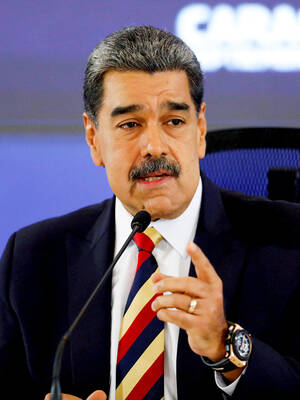
VENEZUELAN ACTION: Marco Rubio said that previous US interdiction efforts have not stemmed the flow of illicit drugs into the US and that ‘blowing them up’ would US President Donald Trump on Wednesday justified a lethal military strike that his administration said was carried out a day earlier against a Venezuelan gang as a necessary effort by the US to send a message to Latin American cartels. Asked why the military did not instead interdict the vessel and capture those on board, Trump said that the operation would cause drug smugglers to think twice about trying to move drugs into the US. “There was massive amounts of drugs coming into our country to kill a lot of people and everybody fully understands that,” Trump said while hosting Polish President

China on Monday announced its first ever sanctions against an individual Japanese lawmaker, targeting China-born Hei Seki for “spreading fallacies” on issues such as Taiwan, Hong Kong and disputed islands, prompting a protest from Tokyo. Beijing has an ongoing spat with Tokyo over islands in the East China Sea claimed by both countries, and considers foreign criticism on sensitive political topics to be acts of interference. Seki, a naturalised Japanese citizen, “spread false information, colluded with Japanese anti-China forces, and wantonly attacked and smeared China”, foreign ministry spokesman Lin Jian told reporters on Monday. “For his own selfish interests, (Seki)

Japan yesterday heralded the coming-of-age of Japanese Prince Hisahito with an elaborate ceremony at the Imperial Palace, where a succession crisis is brewing. The nephew of Japanese Emperor Naruhito, Hisahito received a black silk-and-lacquer crown at the ceremony, which marks the beginning of his royal adult life. “Thank you very much for bestowing the crown today at the coming-of-age ceremony,” Hisahito said. “I will fulfill my duties, being aware of my responsibilities as an adult member of the imperial family.” Although the emperor has a daughter — Princess Aiko — the 23-year-old has been sidelined by the royal family’s male-only
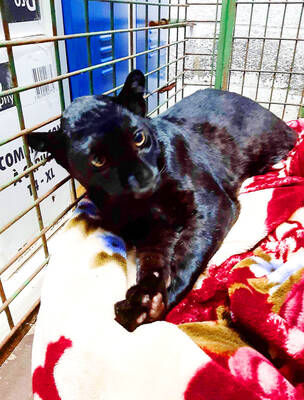
A French couple kept Louise, a playful black panther, in an apartment in northern France, triggering panic when she was spotted roaming nearby rooftops. The pair were were handed suspended jail sentences on Thursday for illegally keeping a wild animal, despite protesting that they saw Louise as their baby. The ruling follows a September 2019 incident when the months-old feline was seen roaming a rooftop in Armentieres after slipping out of the couple’s window. Authorities captured the panther by sedating her with anesthetic darts after she entered a home. No injuries were reported during the animal’s time on the loose. The court in the


 RSS
RSS