


South Korea would never tolerate North Korea as a nuclear state, nor would Seoul have nuclear weapons, South Korean President Moon Jae-in said yesterday, as China pledged to work on denuclearization after setting aside a dispute with Seoul over an anti-missile system.
The North Korea nuclear crisis is likely to take center stage when US President Donald Trump begins a trip to Asia at the end of the week and diplomacy has being ramping up ahead of that visit.
A series of weapons tests by Pyongyang and a string of increasingly bellicose exchanges between Trump and North Korean leader Kim Jong-un in recent months has raised fears about an armed conflict.
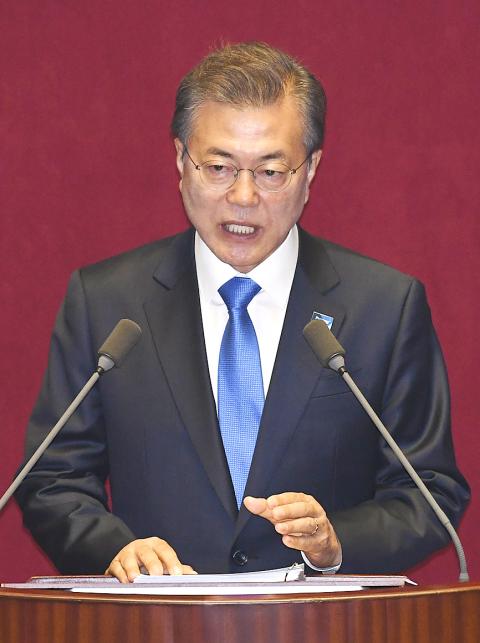
Photo: EPA
Speaking to parliament, Moon said there can be no military action on the Korean Peninsula without the South’s consent, adding the government would continue working for peace on the peninsula.
“According to the joint denuclearization declaration made by North and South Korea, we cannot tolerate or recognize North Korea as a nuclear state. We too, will not develop nuclear [weapons] or own them,” he said. “Our government was launched in the most serious of times in terms of security. The government is making efforts to stably manage the situation it faces as well as to bring about peace on the Korean Peninsula.”
The Chinese Ministry of Foreign Affairs said Beijing and Seoul would continue to use diplomatic means to address the Korean Peninsula issue, after a meeting in Beijing between Lee Do-hoon, South Korea’s representative at stalled six-party nuclear talks, and his Chinese counterpart, Kong Xuanyou (孔鉉佑).
Moon’s remarks and China’s statement came a day after China and South Korea agreed to normalize relations to end a year-long standoff over the deployment of the US’ Terminal High Altitude Area Defense (THAAD) system.
The installation of THAAD had angered China, which feared its powerful radar could see deep into China. South Korea’s tourism, cosmetics and entertainment industries bore the brunt of a Chinese backlash, although Beijing has never specifically linked that to the THAAD deployment.
North Korea’s state media had no comment on the shift in ties between South Korea and China as of midday yesterday. It has not engaged in missile tests since the middle of September or any nuclear tests since its biggest one early that month.
A senior Blue House official had said warmer bilateral ties had seemed to come about from better trust in Seoul by Beijing, which has expressed concerns regarding possible additional deployments of a US anti-missile defense system and military cooperation among South Korea, the US and Japan.
Earlier this week, South Korean Minister of Foreign Affairs Kang Kyung-hwa had said South Korea has no intention at joining a US missile-defense system in the region and would not host additional THAAD batteries.
South Korea would not enter any trilateral military alliance with the US and Japan, Kang added.
The US is deciding whether three aircraft carriers in the Asia-Pacific region would carry out an exercise to coincide with Trump’s trip to the region, two US officials said.
Japan’s navy is considering sending one or more ships to the exercise if it is held, a Japanese government source said.
Trump’s trip includes Tokyo, Seoul and Beijing, but he will not go to the heavily fortified demilitarized zone on the border of North Korea and South Korea, a senior White House official said.
China’s People’s Daily yesterday wrote in a commentary that China expected South Korea to take seriously its responsibility to protect regional peace now that they had set relations back on the correct track.
“The appropriate handling of the THAAD issue by China and South Korea can provide an opportunity for both countries to increase cooperation and communication on the peninsula issue,” it said.
However, influential state-run tabloid the Global Times warned there would not be an immediate improvement in cultural and business ties, with South Korean firms having to make an effort to win back Chinese customers.
“Whether or not Chinese consumers buy South Korean products is not totally up the Chinese government,” it said in an editorial.
The rapprochement meant both countries were able to walk away with gains, said John Delury, a professor at Seoul’s Yonsei University.
“It is arguably Moon’s first foreign policy breakthrough, giving South Korea’s economy a boost and enhancing his geopolitical leverage by strengthening the relationship with China,” Delury said.
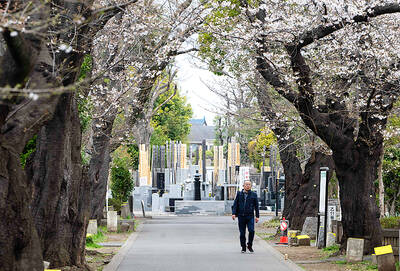
ROCKY RELATIONS: The figures on residents come as Chinese tourist numbers drop following Beijing’s warnings to avoid traveling to Japan The number of Chinese residents in Japan has continued to rise, even as ties between the two countries have become increasingly fractious, data released on Friday showed. As of the end of December last year, the number of Chinese residents had increased by 6.5 percent from the previous year to 930,428. Chinese people accounted for 22.6 percent of all foreign residents in Japan, making them by far the largest group, Japanese Ministry of Justice data showed. Beijing has criticized Tokyo in increasingly strident terms since Japanese Prime Minister Sanae Takaichi last year suggested that a military conflict around Taiwan could
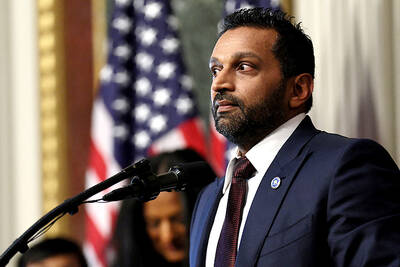
A pro-Iran hacking group claimed to breach FBI Director Kash Patel’s personal e-mail inbox and posted some of the contents online. The e-mails provided by the hacking group include travel details, correspondence with leasing agents in Washington and global entry, and loyalty account numbers. The e-mail address the hackers claim to have compromised has been previously tied to Patel’s personal details, and the leaked e-mails contain photos of Patel and others, in addition to correspondence with family members and colleagues. “The FBI is aware of malicious actors targeting Director Patel’s personal email information,” the agency said in a statement on
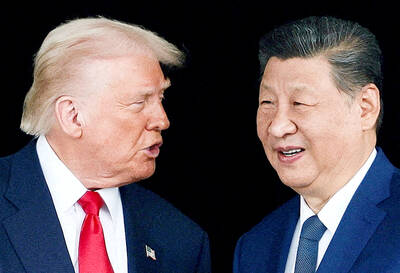
RIVALRY: ‘We know that these are merely symbolic investigations initiated by China, which is in fact the world’s most profligate disrupter of supply chains,’ a US official said China has started a pair of investigations into US trade practices, retaliating against similar probes by US President Donald Trump’s administration as the superpowers stake out positions before an expected presidential summit in May. The move, announced by the Chinese Ministry of Commerce on Friday, is a direct mirror of steps Trump took to revive his tariff agenda after the US Supreme Court last month struck down some of his duties. “China expresses its strong dissatisfaction and firm opposition to these actions,” a ministry spokesperson said in a statement, referring to the so-called Section 301 investigations initiated on March 11.

When a hiker fell from a 55m waterfall in wild New Zealand bush, rescuers were forced to evacuate the badly hurt woman without her dog, which could not be found. After strangers raised thousands of dollars for a search, border collie Molly was flown to safety by a helicopter pilot who was determined to reunite the pet and the owner. A week earlier, an emergency rescue helicopter found the woman with bruises and lacerations after a fall at a rocky spot at the waterfall on the South Island’s West Coast. She was airlifted on March 24, but they were forced to


 RSS
RSS