


More than six years after a deadly earthquake struck Christchurch and the city’s iconic cathedral, the Anglican Church in New Zealand yesterday made the decision to rebuild the landmark.
For many locals, the wreck has become a visual reminder of the infighting that has slowed the city’s broader rebuild.
The Gothic Revival-style cathedral was once one of the city’s top tourist attractions. When the magnitude 6.3 quake struck in February 2011, it killed 185 people and destroyed thousands of buildings. It toppled the cathedral’s spire and ruined much of its structure.
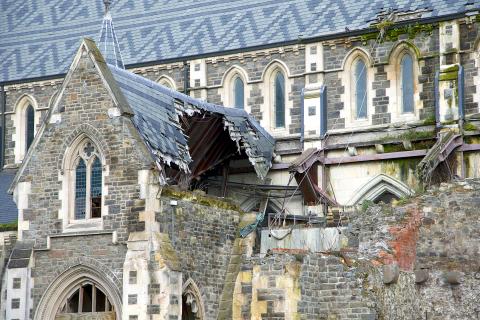
Photo: AP
Since then, the cathedral’s future has been the subject of intrigue and legal action. The basic points of dispute have been over whether the remains should be rebuilt or cleared away to make room for a new design, and who should pay.
Those questions have finally been resolved.
The Anglican Church said the Christchurch Cathedral is to be strengthened for future quakes and improved with better heating and seating, but otherwise rebuilt to its basic design.
The rebuild is expected to take 10 years and cost NZ$104 million (US$75.6 million). The tab is to be picked up by the church, taxpayers and donors.
The decision was welcomed by the government.
New Zealand Lawmaker Nicky Wagner said it was the best possible outcome for the city.
“For many years, the cathedral has sat broken and neglected, detracting from all the amazing work taking place in Christchurch,” Wagner said in a release. “This decision gives the church, the community, businesses and tourism bodies the certainty they’ve been looking for.”
The decision came after three days of meetings by the 225 members of the Anglican’s local governing synod.
They voted about 55 percent in favor of the rebuild, after also considering building a new cathedral or handing over the ruins to the government as a gift.
Anglican Bishop Victoria Matthews said making a final call had not been easy, but “the overwhelming message Christchurch people told us was to ‘just get on with it’ and make a decision.”
ROCKY RELATIONS: The figures on residents come as Chinese tourist numbers drop following Beijing’s warnings to avoid traveling to Japan The number of Chinese residents in Japan has continued to rise, even as ties between the two countries have become increasingly fractious, data released on Friday showed. As of the end of December last year, the number of Chinese residents had increased by 6.5 percent from the previous year to 930,428. Chinese people accounted for 22.6 percent of all foreign residents in Japan, making them by far the largest group, Japanese Ministry of Justice data showed. Beijing has criticized Tokyo in increasingly strident terms since Japanese Prime Minister Sanae Takaichi last year suggested that a military conflict around Taiwan could

A pro-Iran hacking group claimed to breach FBI Director Kash Patel’s personal e-mail inbox and posted some of the contents online. The e-mails provided by the hacking group include travel details, correspondence with leasing agents in Washington and global entry, and loyalty account numbers. The e-mail address the hackers claim to have compromised has been previously tied to Patel’s personal details, and the leaked e-mails contain photos of Patel and others, in addition to correspondence with family members and colleagues. “The FBI is aware of malicious actors targeting Director Patel’s personal email information,” the agency said in a statement on

RIVALRY: ‘We know that these are merely symbolic investigations initiated by China, which is in fact the world’s most profligate disrupter of supply chains,’ a US official said China has started a pair of investigations into US trade practices, retaliating against similar probes by US President Donald Trump’s administration as the superpowers stake out positions before an expected presidential summit in May. The move, announced by the Chinese Ministry of Commerce on Friday, is a direct mirror of steps Trump took to revive his tariff agenda after the US Supreme Court last month struck down some of his duties. “China expresses its strong dissatisfaction and firm opposition to these actions,” a ministry spokesperson said in a statement, referring to the so-called Section 301 investigations initiated on March 11.

When a hiker fell from a 55m waterfall in wild New Zealand bush, rescuers were forced to evacuate the badly hurt woman without her dog, which could not be found. After strangers raised thousands of dollars for a search, border collie Molly was flown to safety by a helicopter pilot who was determined to reunite the pet and the owner. A week earlier, an emergency rescue helicopter found the woman with bruises and lacerations after a fall at a rocky spot at the waterfall on the South Island’s West Coast. She was airlifted on March 24, but they were forced to


 RSS
RSS