


Former president Nicolas Sarkozy, one of the most divisive figures in French politics, calmly took to the podium to accept defeat, vowing to spend less time on the “passions of public life” after France humiliatingly rejected his attempt to run again as the right’s candidate for next year’s presidential election.
His thwarted bid to reconquer the French presidency and avenge his 2012
defeat by the Socialist President Francois Hollande had been driven by a lifelong addiction to elections and a conviction that he could read the public mood.
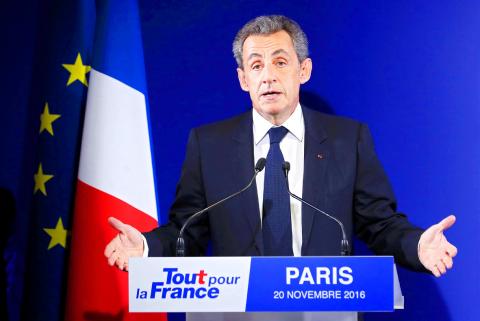
Photo: Reuters
He once said of politics that “you have to withdraw the needle slowly,” but he never managed to kick the habit. Now, aged 62 and after 40 years in politics, he might have to finally bow out.
During the right’s primary race, Sarkozy ran a ferociously hardline campaign on French national identity, stealing the mantle of the far-right and targeting Muslims and minorities with proposals such as banning the hijab from universities and Burqinis from the nation’s beaches.
His divisive and extreme approach will leave its mark on the rest of the presidential campaign in the run up next May’s vote.
Sarkozy had already veered to the far-right during his failed re-election bid in 2012, convinced he lost that election because he did not go quite far-right enough.
This time, he went all out — saying that France’s identity and unity was threatened, targeting Islam and immigrants, promising to limit the French nationality rights of children born of foreign parents, saying that the only true ancestors of France were the Gauls, insisting that children who do not eat pork should lose their special school dinner options and instead eat French fries.
Despite having supported Democratic presidential candidate Hilary Rodham Clinton in the US election, Sarkozy quickly turned his attentions to a victorious president-elect Donald Trump, attempting to style himself as a similar anti-elite figure and promising to rail against the politically correct.
The former French president failed to win the right’s nomination largely because of his enduringly unpopular personality after five years in power between 2007 and 2012.
A very large majority of French voters on both the left and right clearly did not want to see him in power again.
However, his vehement appropriation of the ideas of the far-right Front National’s Marine Le Pen have only served to give her more credibility and legitimacy. Le Pen will benefit from that for the rest of the campaign. She is easily tipped to make it through to the final round of next year’s presidential race.
It remains to be seen what Sarkozy does next. In 2014, two years after he first promised to retire from politics, he returned to lead the rightwing Les Republicains party, which he renamed, in order to position himself as the right’s natural candidate for next year’s presidential race.
His primary campaign in recent months was shaken when he was forced to protest his innocence in the face of a series of legal investigations.
The French state prosecutor recommended he should face a criminal trial over alleged illegal campaign funding over the vast, costly stadium rallies of his failed reelection campaign in 2012.
Then a French-Lebanese businessman this month publicly repeated claims that the former Libyan leader Muammar Qaddafi gave 50 million euros (US$53.1 million) to fund Sarkozy’s 2007 campaign for the French presidency.
The businessman said he personally handed over cases stuffed with Libyan cash to Sarkozy and his chief of staff.
Sarkozy denied the charges outright but lost his cool in the last television debate calling a question over the case “disgraceful.”
France knows better than to presume Sarkozy will now retire. He is still angered at criticism of his five years in power, which were dominated by the 2008 financial crisis and its fallout. He claims that, while in office, he “saved Europe, if not the world, from a major crisis.”
However, this time he said he felt “no bitterness, no sadness” and simply wished France “good luck.”
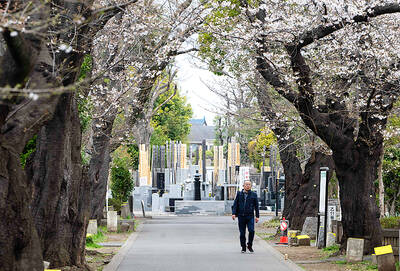
ROCKY RELATIONS: The figures on residents come as Chinese tourist numbers drop following Beijing’s warnings to avoid traveling to Japan The number of Chinese residents in Japan has continued to rise, even as ties between the two countries have become increasingly fractious, data released on Friday showed. As of the end of December last year, the number of Chinese residents had increased by 6.5 percent from the previous year to 930,428. Chinese people accounted for 22.6 percent of all foreign residents in Japan, making them by far the largest group, Japanese Ministry of Justice data showed. Beijing has criticized Tokyo in increasingly strident terms since Japanese Prime Minister Sanae Takaichi last year suggested that a military conflict around Taiwan could
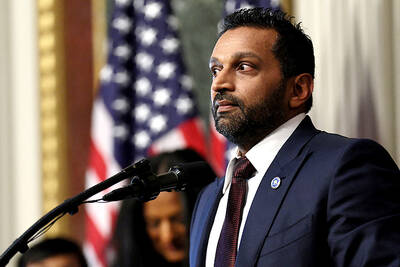
A pro-Iran hacking group claimed to breach FBI Director Kash Patel’s personal e-mail inbox and posted some of the contents online. The e-mails provided by the hacking group include travel details, correspondence with leasing agents in Washington and global entry, and loyalty account numbers. The e-mail address the hackers claim to have compromised has been previously tied to Patel’s personal details, and the leaked e-mails contain photos of Patel and others, in addition to correspondence with family members and colleagues. “The FBI is aware of malicious actors targeting Director Patel’s personal email information,” the agency said in a statement on
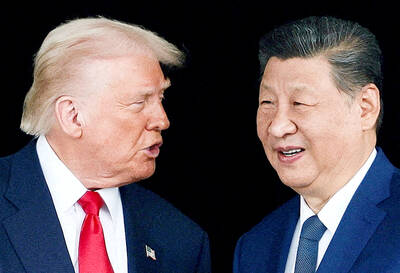
RIVALRY: ‘We know that these are merely symbolic investigations initiated by China, which is in fact the world’s most profligate disrupter of supply chains,’ a US official said China has started a pair of investigations into US trade practices, retaliating against similar probes by US President Donald Trump’s administration as the superpowers stake out positions before an expected presidential summit in May. The move, announced by the Chinese Ministry of Commerce on Friday, is a direct mirror of steps Trump took to revive his tariff agenda after the US Supreme Court last month struck down some of his duties. “China expresses its strong dissatisfaction and firm opposition to these actions,” a ministry spokesperson said in a statement, referring to the so-called Section 301 investigations initiated on March 11.

When a hiker fell from a 55m waterfall in wild New Zealand bush, rescuers were forced to evacuate the badly hurt woman without her dog, which could not be found. After strangers raised thousands of dollars for a search, border collie Molly was flown to safety by a helicopter pilot who was determined to reunite the pet and the owner. A week earlier, an emergency rescue helicopter found the woman with bruises and lacerations after a fall at a rocky spot at the waterfall on the South Island’s West Coast. She was airlifted on March 24, but they were forced to


 RSS
RSS