


Tens of thousands of people took to the streets in Brazil on Sunday to support former Brazilian president Dilma Rousseff and protest the government of new Brazilian President Michel Temer, who took power when Rousseff was removed from office on Wednesday last week following her impeachment by the Brazilian Senate.
Demonstration organizers — who have rejected Temer’s ascendancy as a “coup” — said about 100,000 protestors filled the major artery Paulista Avenue, many holding banners that read “Out with Temer,” and “Direct elections now.”
The Brazilian Senate on Wednesday last week voted to convict Rousseff on charges of having illegally manipulated government accounts, stripping her of her office and replacing her with Temer, her bitter enemy and former vice president.
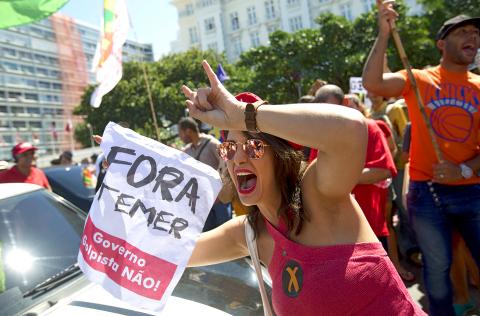
Photo: AP
The protest ended with clashes between demonstrators and police, who fired gas bombs, according to the news Web site G1.
Temer, who after being sworn in promptly traveled to China for the G20 summit, said the protests were done by “small groups and predators.”
“These are small groups ... I do not have it numerically, but they are 40, 50, 100 people. It is nothing more than that. Out of 204 million Brazilians, I do not think it means much,” media outlets quoted Temer as saying.
The opposition dismissed the president’s figures: “The coup president of Brazil said that our demonstration would have 40 people. Here are those 40 people — we are already almost 100,000 on Paulista Avenue,” said Guilherme Boulos, a member of one of the opposition groups that organized the protest.
The demonstration was held in the late afternoon so as not to interfere with the passing of the torch from the Paralympic Games, an event in Rio de Janeiro due to start within three days — where another 2,000 people had demonstrated.
Rousseff was Brazil’s first female president.
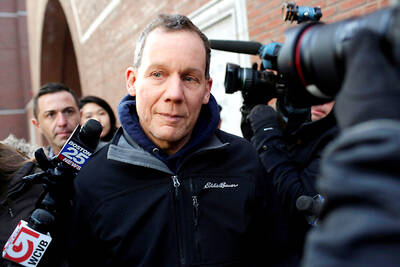
An American scientist convicted of lying to US authorities about payments from China while he was at Harvard University has rebuilt his research lab in Shenzhen, China, to pursue technology the Chinese government has identified as a national priority: embedding electronics into the human brain. Charles Lieber, 67, is among the world’s leading researchers in brain-computer interfaces. The technology has shown promise in treating conditions such as amyotrophic lateral sclerosis and restoring movement in paralyzed people. It also has potential military applications: Scientists at the Chinese People’s Liberation Army have investigated brain interfaces as a way to engineer super soldiers by boosting
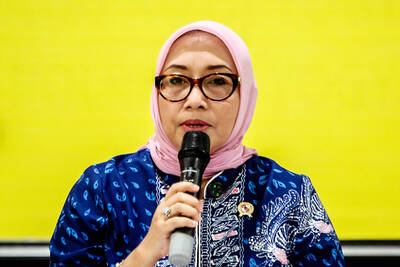
Indonesian police have arrested 13 people after shocking images of alleged abuse against small children at a daycare center went viral, sparking outrage across the nation, officials said on Monday. Police on Friday last week raided Little Aresha, a daycare center in Yogyakarta on Java island, following a report from a former employee. CCTV footage circulating on social media showed children, most younger than two, lying on the floor wearing only diapers, their hands and feet bound with rags. The police have confirmed that the footage is authentic. Police said they also found 20 children crammed into a room just 3m by 3m. “So
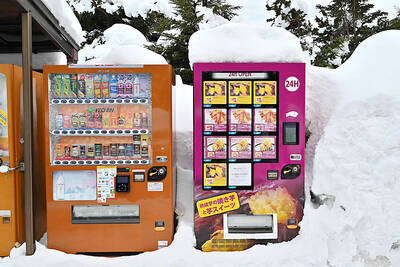
From post offices and parks to stations and even the summit of Mount Fuji, Japan’s vending machines are ubiquitous, but with the rapid pace of inflation cooling demand for their drinks, operators are being forced to rethink the business. Last month beverage giant DyDo Group Holdings announced it would remove about 20,000 vending machines — about 7 percent of their stock nationwide — by January next year, to “reconstruct a profitable network.” Pokka Sapporo Food & Beverage, based in Nagoya, also said last month it would sell its 40,000-machine operation to Osaka-based Lifedrink Co. “The strength of the vending machine
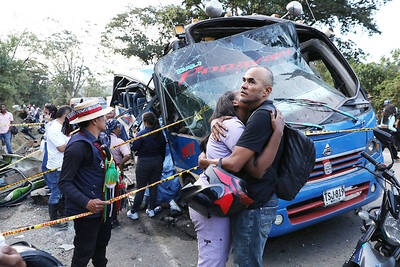
A highway bomb attack in a restive region of southwestern Colombia on Saturday killed 14 people and injured at least 38, the latest spate of violence ahead of next month’s presidential election. Authorities blamed the attack in the Cauca department — a conflict-ridden, coca-growing region — on dissidents of the now-disbanded FARC guerrilla army, who have been sowing violence across the country. “Those who carried out this attack ... are terrorists, fascists and drug traffickers,” Colombian President Gustavo Petro said on social media. “I want our very best soldiers to confront them,” he added. The leftist leader blamed the bombing


 RSS
RSS