


A Chinese real-estate tycoon has said that relatives of Chinese President Xi Jinping (習近平) sold their shares in his company two months before its initial public offering, missing out on a “fortune” in capital gains and, he said, proving there was no corruption involved.
The remarks by the tycoon, Wang Jianlin (王健林), at Harvard University on Thursday were his first public response to a New York Times investigation published in April that documented his company’s financial ties to business associates and relatives of top Chinese leaders.
The article said that the elder sister and brother-in-law of Xi had acquired large stakes in Wang’s flagship company, Dalian Wanda Commercial Properties (大連萬達商業地產), before it went public. The shares they purchased through a holding company for US$28.6 million in 2009 are now worth US$201 million.
However, at Harvard, Wang said that Xi’s sister, Qi Qiaoqiao (齊橋橋), and her husband, Deng Jiagui (鄧家貴), had sold their shares before the initial public offering and rejected insinuations that his business success had anything to do with his political ties.
“Deng Jiagui gave up huge gains,” he said, according to a report on the speech by Caixin, a Chinese news magazine.
“The investment endured for six years, and in the blink of an eye he could make a huge fortune, but he did not,” Wang said.
“This actually proves that it is not corruption, but that President Xi Jinping governs the country strictly, and he manages his family even more strictly,” he added.
It is extremely rare for Chinese business executives to comment on the financial holdings of the country’s top leaders, and Caixin’s account of Wang’s remarks was taken off the Internet several hours after it was posted.
Wanda Group subsequently sent reporters an English-language transcript of the remarks, confirming them.
In defending the company’s ties with Xi’s relatives, Wang might have inadvertently drawn attention to a common practice among wealthy and powerful Chinese: the transfer of shares, sometimes to distant relatives or business associates, to mask business interests.
Corporate records show that Qi and Deng transferred ownership of the holding company to an employee in October 2013. Wang said they had sold their stake two months before the initial public offering, which would have been October last year.
If true, his statement suggested that Qi and Deng still somehow owned the shares after they had, on paper, been transferred to the employee.
Wanda’s pre-intial public offering documents show that the holding company, Qinchuan Dadi Investment, held shares in Wanda as of mid-August last year.
It is not clear from available public records whether the holding company sold the shares. At the end of 2013, the holding company listed three companies that it held stakes in, including Dalian Wanda Group Co (大連萬達集團). In its annual report last year, the company did not list any investments.
The holding company was still listed on Friday as being owned by the employee, Xu Zaisheng (徐再勝).
Deng and Qi did not respond to a request for comment faxed to their office in the southern city of Shenzhen.
Wanda spokesman David Connolly in Beijing said that his connection was bad and that he could not hear a reporter’s questions.
When property is transferred on paper to hide its ownership, the new putative owner is known in China as a “white glove.”
So-called white gloves have bedeviled the work of China’s own corruption investigators as they seek to document the wealth of Chinese Communist Party members suspected of graft, according to the party’s Central Commission for Discipline Inspection.
“White gloves are accompanied by power’s black hands,” the commission wrote in a report in May.
In addition to the shares in Wanda held by Xi’s sister and brother-in-law, the New York Times article documented holdings in two of Wang’s companies by relatives and business associates of three other top Chinese leaders. The holdings tied to all four leaders’ families were valued at more than US$1.1 billion at the time the two companies held their share sales in December last year and January this year. The shares were worth US$1.25 billion during midday trading on Friday in Hong Kong and Shenzhen.
Wang did not discuss the holdings of the three other officials’ relatives and business associates.
In many instances, they appear to have made capital gains far in excess of those that Deng and Qi stood to make.
The family of Wang Zhaoguo (王兆國), who retired from the politburo in 2012, acquired a stake in a Wanda company in 2007 for less than US$500,000 that, by the time of the initial public offering, was worth more than US$500 million, a thousand-fold gain.
Business associates of relatives of former Chinese premier Wen Jiabao (溫家寶) and former Chinese Communist Party secretary Jia Qinglin (賈慶林) also held stakes worth more than US$200 million at the time of the initial public offering.
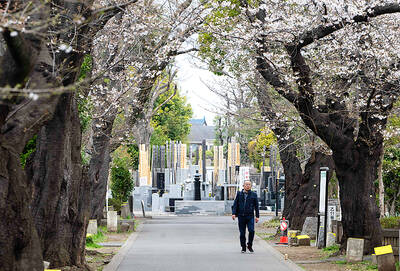
ROCKY RELATIONS: The figures on residents come as Chinese tourist numbers drop following Beijing’s warnings to avoid traveling to Japan The number of Chinese residents in Japan has continued to rise, even as ties between the two countries have become increasingly fractious, data released on Friday showed. As of the end of December last year, the number of Chinese residents had increased by 6.5 percent from the previous year to 930,428. Chinese people accounted for 22.6 percent of all foreign residents in Japan, making them by far the largest group, Japanese Ministry of Justice data showed. Beijing has criticized Tokyo in increasingly strident terms since Japanese Prime Minister Sanae Takaichi last year suggested that a military conflict around Taiwan could
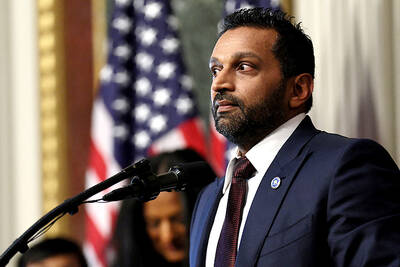
A pro-Iran hacking group claimed to breach FBI Director Kash Patel’s personal e-mail inbox and posted some of the contents online. The e-mails provided by the hacking group include travel details, correspondence with leasing agents in Washington and global entry, and loyalty account numbers. The e-mail address the hackers claim to have compromised has been previously tied to Patel’s personal details, and the leaked e-mails contain photos of Patel and others, in addition to correspondence with family members and colleagues. “The FBI is aware of malicious actors targeting Director Patel’s personal email information,” the agency said in a statement on
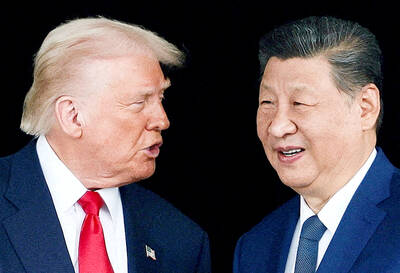
RIVALRY: ‘We know that these are merely symbolic investigations initiated by China, which is in fact the world’s most profligate disrupter of supply chains,’ a US official said China has started a pair of investigations into US trade practices, retaliating against similar probes by US President Donald Trump’s administration as the superpowers stake out positions before an expected presidential summit in May. The move, announced by the Chinese Ministry of Commerce on Friday, is a direct mirror of steps Trump took to revive his tariff agenda after the US Supreme Court last month struck down some of his duties. “China expresses its strong dissatisfaction and firm opposition to these actions,” a ministry spokesperson said in a statement, referring to the so-called Section 301 investigations initiated on March 11.

When a hiker fell from a 55m waterfall in wild New Zealand bush, rescuers were forced to evacuate the badly hurt woman without her dog, which could not be found. After strangers raised thousands of dollars for a search, border collie Molly was flown to safety by a helicopter pilot who was determined to reunite the pet and the owner. A week earlier, an emergency rescue helicopter found the woman with bruises and lacerations after a fall at a rocky spot at the waterfall on the South Island’s West Coast. She was airlifted on March 24, but they were forced to


 RSS
RSS