


Argentines were scheduled to vote for a new president yesterday with outgoing outgoing Argentine President Cristina Fernandez’s candidate the favorite to win despite deep divisions over her brand of left-wing populism, which has driven up inflation and shackled the economy.
Polls show Argentine presidential candidate Daniel Scioli of the left-wing Front for Victory ruling party with a clear lead over his rivals, although he cannot be sure of an outright win and might be forced into a runoff vote next month.
Fernandez is due to step down with approval ratings near 50 percent, yet her eight years in power have polarized the nation. The fiery nationalist is adored by the poor and working class for generous welfare handouts and protectionist policies but reviled by others for suffocating the economy.
The outcome of the election is set to determine the speed and depth of reforms needed to kick-start growth, restore the central bank’s near-empty liquid reserves, narrow a yawning fiscal deficit and tame high inflation.
Scioli plans to unravel some of Fernandez’s policies but pledges only gradual change and has said he is to stick with her popular welfare programs.
“We are what’s known, and people are not in the mood for experiments,” Scioli said on Thursday, the last day of campaigning.
His rivals, center-right Buenos Aires Mayor Mauricio Macri and centrist Argentine Congressman Sergio Massa both promise to move faster to open up Latin America’s No. 3 economy.
To win outright, Scioli needs 45 percent of votes, or 40 percent with a 10-percentage-point lead over his closest challenger. Polls show him hovering near the 40 percent threshold and Macri approaching 30 percent.
Scioli owes much of his support to Fernandez loyalists. However, a year ago the ruling party was mired in trouble. Argentina had defaulted again on its debt, economic growth was in a tailspin and hard currency was flying out the door in black-market trade.
In January, the murky death of prosecutor Alberto Nisman who had leveled grave allegations against Fernandez shook the government. She bounced back after a court threw out the dead prosecutor’s case and she spent heavily to reboot growth.
Wary of alienating Fernandez’s supporters, Scioli warns against abrupt change.
He rejects fiscal austerity and a shock devaluation and has said monetary reform should be slow to avoid hurting the poor. Privately, his close advisers sell a more investor-friendly message.
Macri and Massa both promise to start work quickly on dismantling trade and currency controls, and to improve the accuracy of government economic data that experts say is often fudged. It is a message that resonates with many voters, in particular among the urban middle and upper classes.
All three candidates have tip-toed around the subject of negotiations with US creditors whose legal battle over unpaid debt tipped Argentina back into default last year. However, each team said their candidate wants a deal that does not sell Argentina short.
Voters are also set to elect some regional governors, half of the lower house of Congress and a third of the Senate.
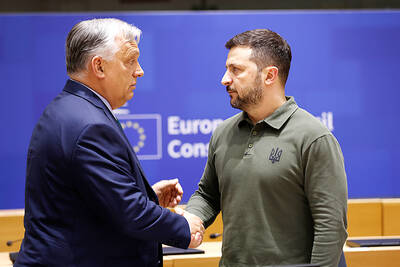
Hungarian authorities temporarily detained seven Ukrainian citizens and seized two armored cars carrying tens of millions of euros in cash across Hungary on suspicion of money laundering, officials said on Friday. The Ukrainians were released on Friday, following their detention on Thursday, but Hungarian officials held onto the cash, prompting Ukraine to accuse Hungary’s Russia-friendly government of illegally seizing the money. “We will not tolerate this state banditism,” Ukrainian Minister of Foreign Affairs Andrii Sybiha said. The seven detained Ukrainians were employees of the Ukrainian state-owned Oschadbank, who were traveling in the two armored cars that were carrying the money between Austria and
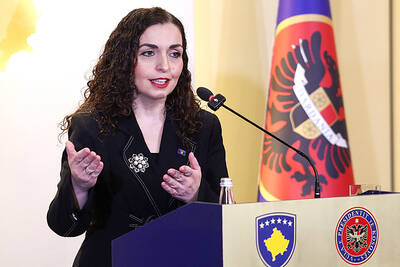
Kosovar President Vjosa Osmani on Friday after dissolving the Kosovar parliament said a snap election should be held as soon as possible to avoid another prolonged political crisis in the Balkan country at a time of global turmoil. Osmani said it is important for Kosovo to wrap up the upcoming election process and form functional institutions for political stability as the war rages in the Middle East. “Precisely because the geopolitical situation is that complex, it is important to finish this electoral process which is coming up,” she said. “It is very hard now to imagine what will happen next.” Kosovo, which declared

MORE BANS: Australia last year required sites to remove accounts held by under-16s, with a few countries pushing for similar action at an EU level and India considering its own ban Indonesia on Friday said it would ban social media access for children under 16, citing threats from online pornography, cyberbullying, online fraud and Internet addiction. “Accounts belonging to children under 16 on high-risk platforms will start to be deactivated, beginning with YouTube, TikTok, Facebook, Instagram, Threads, X, Bigo Live and Roblox,” Indonesian Minister of Communications and Digital Meutya Hafid said. “The government is stepping in so that parents no longer have to fight alone against the giants of the algorithm. Implementation will begin on March 28, 2026,” she said. The social media ban would be introduced in stages “until all platforms fulfill their
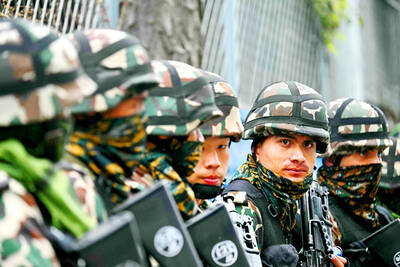
Counting was under way in Nepal yesterday, after a high-stakes parliamentary election to reshape the country’s leadership following protests last year that toppled the government. Key figures vying for power include former Nepalese prime minister K. P. Sharma Oli, rapper-turned-mayor Balendra Shah, who is bidding for the youth vote, and newly elected Nepali Congress party leader Gagan Thapa. In Kathmandu’s tea shops and city squares, people were glued to their phones, checking results as early trends flashed up — suggesting Shah’s centrist Rastriya Swatantra Party (RSP) was ahead. Nepalese Election Commission spokesman Prakash Nyupane said the counting was ongoing “in a peaceful manner”


 RSS
RSS