


More than 450 people were killed in China’s restive mainly Muslim Xinjiang region last year, a rights group said — with three times as many deaths among members of the Uighur minority than ethnic Han Chinese.
Xinjiang has seen a wave of unrest, labeled by authorities as “terrorism” and blamed on “separatists,” which has sometimes spread to other parts of China.
Information in the area is strictly controlled by authorities, and the Washington-based Uyghur Human Rights Project (UHRP) used data from Chinese and overseas media reports for its analysis, giving ranges for most of its figures.
Between 457 and 478 people died last year, it said, adding it had been able to identify between 235 and 240 as Uighur and between 80 and 86 as Han, China’s ethnic majority.
The total was more than double that for 2013, when it put deaths between 199 and 237, specifying between 116 and 151 as Uighur and between 32 and 38 as Han.
The rising toll highlights the “excessive force” used by China and a “deterioration in the security environment” since Chinese President Xi Jinping (習近平) took office two years ago, the report said.
The findings were “alarming in a number of aspects,” project director Alim Seytoff said.
“It tells us that China’s crackdown on Uighurs is only exacerbating the violence ... and killing more Uighurs,” he said.
The report did not include incidents outside Xinjiang, such as a mass stabbing at a railway station in Kunming in March last year, when 31 people were killed and four attackers died.
Chinese authorities usually differentiate between state personnel, civilian victims and attackers in their statements.
The report found that over the two-year period, more alleged assailants — between 229 and 333 — were killed than official employees (between 53 and 108) and civilians (between 125 and 194) combined.
“In a troubling number of incidents police killed all alleged ‘perpetrators,’” the project said in a statement late on Tuesday. “The possibility exists that excessive force and extrajudicial killings are a feature of the Chinese state’s security approach to incidents.”
Almost half the Xinjiang deaths over the two-year period — 327 — were in Kashgar, the report said, with Shache, or Yarkand in the Uighur language, accounting for 199.
The next most violent prefectures were Aksu, with 79 fatalities, and Hotan, at 76. All three are in southeastern Xinjiang, where Uighurs are concentrated.
It was likely the number of fatalities “will never be known due to the lack of transparency the Chinese authorities employ when reporting violent incidents,” the report said.
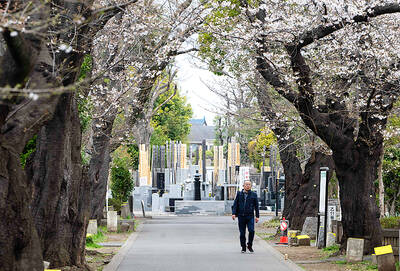
ROCKY RELATIONS: The figures on residents come as Chinese tourist numbers drop following Beijing’s warnings to avoid traveling to Japan The number of Chinese residents in Japan has continued to rise, even as ties between the two countries have become increasingly fractious, data released on Friday showed. As of the end of December last year, the number of Chinese residents had increased by 6.5 percent from the previous year to 930,428. Chinese people accounted for 22.6 percent of all foreign residents in Japan, making them by far the largest group, Japanese Ministry of Justice data showed. Beijing has criticized Tokyo in increasingly strident terms since Japanese Prime Minister Sanae Takaichi last year suggested that a military conflict around Taiwan could

A pro-Iran hacking group claimed to breach FBI Director Kash Patel’s personal e-mail inbox and posted some of the contents online. The e-mails provided by the hacking group include travel details, correspondence with leasing agents in Washington and global entry, and loyalty account numbers. The e-mail address the hackers claim to have compromised has been previously tied to Patel’s personal details, and the leaked e-mails contain photos of Patel and others, in addition to correspondence with family members and colleagues. “The FBI is aware of malicious actors targeting Director Patel’s personal email information,” the agency said in a statement on
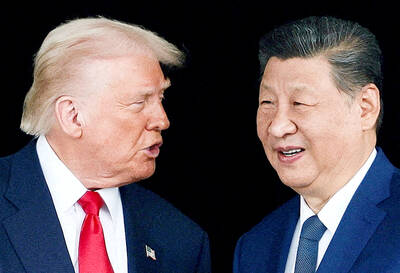
RIVALRY: ‘We know that these are merely symbolic investigations initiated by China, which is in fact the world’s most profligate disrupter of supply chains,’ a US official said China has started a pair of investigations into US trade practices, retaliating against similar probes by US President Donald Trump’s administration as the superpowers stake out positions before an expected presidential summit in May. The move, announced by the Chinese Ministry of Commerce on Friday, is a direct mirror of steps Trump took to revive his tariff agenda after the US Supreme Court last month struck down some of his duties. “China expresses its strong dissatisfaction and firm opposition to these actions,” a ministry spokesperson said in a statement, referring to the so-called Section 301 investigations initiated on March 11.

When a hiker fell from a 55m waterfall in wild New Zealand bush, rescuers were forced to evacuate the badly hurt woman without her dog, which could not be found. After strangers raised thousands of dollars for a search, border collie Molly was flown to safety by a helicopter pilot who was determined to reunite the pet and the owner. A week earlier, an emergency rescue helicopter found the woman with bruises and lacerations after a fall at a rocky spot at the waterfall on the South Island’s West Coast. She was airlifted on March 24, but they were forced to


 RSS
RSS