


The fallout from Europe’s horsemeat scandal has spread far outside the continent, with an imported lasagna brand pulled from shelves in Hong Kong and a new row over the treatment of horses farmed in the Americas.
A host of top players have been caught up in the spiralling scandal, including Nestle, the world’s biggest food company, top beef producer JBS of Brazil and British supermarket chain Tesco.
Hong Kong authorities ordered ParknShop, one of the biggest supermarket chains in the Chinese territory, to remove lasagna made by frozen food giant Findus, one of the firms at the center of the scandal.
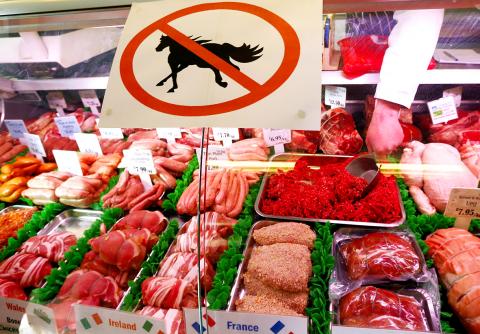
Photo: Reuters
The product was imported from Britain and made by French firm Comigel.
Hong Kong’s Centre for Food Safety said on Wednesday that the item “might be adulterated with horsemeat which has not undergone tests for veterinary drugs.”
The chain, owned by tycoon Li Ka-shing (李嘉誠), has about 280 stores in Hong Kong and the neighboring gaming hub of Macau.
In Europe, the Czech Republic became the latest country embroiled in the horsemeat affair, with food inspectors ordering Tesco to withdraw Nowaco brand frozen “beef” lasagna after detecting horsemeat.
The Czech Agriculture and Food Inspection Authority said it had found horse DNA in two samples of the Nowaco meals manufactured by the Tavola company in Luxembourg.
Croatian company Ledo, which imported beef lasagna containing horsemeat into Slovenia, on Wednesday also accused Tavola of being responsible.
Supermarkets in Belgium, Britain, Denmark, Ireland, Finland, France, Austria, Norway, the Netherlands, Germany, Italy, Spain, Portugal, Sweden and Slovenia have all removed meals from shelves.
The Czech authority said that horsemeat is sold for human consumption in the country, but that if not mentioned on the product label it was misleading to consumers and could lead to a fine of up to 3 million koruny (US$159,000).
Spanghero, the French firm that sparked the food alert by allegedly passing off 750 tonnes of horsemeat as beef, was on Monday allowed to resume production of minced meat, sausages and ready-to-eat meals.
However, the company, whose horsemeat found its way into 4.5 million “beef” products sold across Europe, will no longer be allowed to stock frozen meat.
The firm’s sanitary licence was suspended on Thursday last week after it was accused of passing off huge quantities of mislabeled meat over a period of six months.
Investigators on Wednesday conducted a second day of raids on Spanghero’s headquarters in Castelnaudary in southern France, a source close to the probe said, adding they had already seized several documents and copied computer records.
About 60 workers from French company Fraisnor, which produces fresh lasagna, demonstrated on Wednesday in the northern town of Feuchy for state financial aid, saying their sales had dived 70 percent after the scandal.
The company, which manufactures about 700 tonnes of fresh lasagna a month, is on the point of laying off some of its employees.
Most Swiss supermarkets on Wednesday withdrew horsemeat products from their shelves, not due to the spiraling fake labeling scandal, but over allegations of cruel conditions on farms where horses are bred for meat.
German discount chain Lidl said it had removed all horsemeat products from its shelves in Switzerland, while the country’s second-largest supermarket chain, Coop, said it had withdrawn about 20 horsemeat sausage products.
The move came amid outcry over an investigative consumer show that aired Tuesday evening on Swiss public television, featuring images taken by animal protection activists showing starving and visibly sick and suffering horses on farms in a number of countries that provide meat to Swiss stores.
The Zurich-based Animal Protection Association had sent investigators to large horsemeat producing countries Canada, the US, Mexico and Argentina to probe how the animals were kept, transported and slaughtered.
“Our investigators found that the horses were bred in conditions that did not meet any of the norms in place in Switzerland and the European Union,” project leader Sabrina Gurtner said.
Coop, however, said it would continue to sell fresh horsemeat, adding that it receives 70 percent of that meat from France and the remaining 30 percent from Poland.

School bullies in Singapore are to face caning under new guidelines, but the education minister on Tuesday said it would be meted out only as a last resort with strict safeguards. Human rights groups regularly criticize Singapore for the use of corporal punishment, which remains part of the school and criminal justice systems, but authorities have defended it as a deterrent to crime and serious misconduct. Caning was discussed in the parliament after legislators asked how it would be used in relation to bullying in schools. The debate followed stricter guidelines on serious student misconduct, including bullying, unveiled by the Singaporean Ministry of
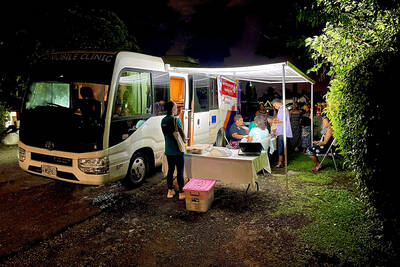
As evening falls in Fiji’s capital, a steady stream of people approaches a makeshift clinic that is a first line of defense against one of the world’s fastest-growing HIV epidemics. In the South Pacific nation — a popular tourist destination of just under a million people — more than 2,000 new HIV cases were recorded last year, a 26 percent increase from 2024. The government has declared an HIV outbreak and described it as a national crisis. “It’s spreading like wildfire,” said Siteri Dinawai, 46, who came to be tested. The Moonlight Clinic, a converted minibus parked in a suburban cul-de-sac in Suva, is
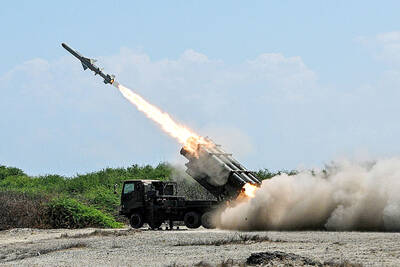
A MESSAGE: Japan’s participation in the Balikatan drills is a clear deterrence signal to China not to attack Taiwan while the US is busy in the Middle East, an analyst said The Japan Self-Defense Forces yesterday fired a Type 88 anti-ship missile during a joint maritime exercise with US, Australian and Philippine forces, hitting a decommissioned Philippine Navy ship in waters facing the disputed South China Sea, in drills that underscore Tokyo’s rising willingness to project military power on China’s doorstep. The drill took place as Manila and Tokyo began talks on a potential defense equipment transfer, made possible by Japan’s decision to scrap restrictions on military exports. The discussions include the possible early transfer of Abukuma-class destroyers and TC-90 aircraft to the Philippines, Japanese Minister of Defense Shinjiro Koizumi said. Philippine Secretary of
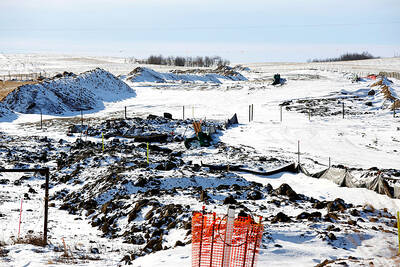
Separatists in Alberta are preparing to submit a petition tomorrow that they said has enough signatures to force a referendum on independence for the oil-rich Canadian province. Polls indicate the pro-independence camp remains a minority among Alberta’s 5 million people, but has hit a historic high of roughly 30 percent. Alberta separatists are also closer than ever to forcing a referendum, riding momentum fueled by intensifying grievances over Ottawa’s control of the provincial oil industry. They have also undeniably gotten a boost from the return to power of US President Donald Trump. After launching a petition in January, Stay Free Alberta, the group


 RSS
RSS