


A genetically modified cow whose milk lacks a substance that causes allergic reactions in people has been created by scientists in New Zealand.
In their first year of life, two or three in every hundred infants are allergic to a whey protein in milk called BLG, or beta-lactoglobulin protein. The researchers engineered the cow, called Daisy, to produce milk that does not contain BLG.
The genetic alteration slashed levels of BLG protein in the cow’s milk to undetectable levels.
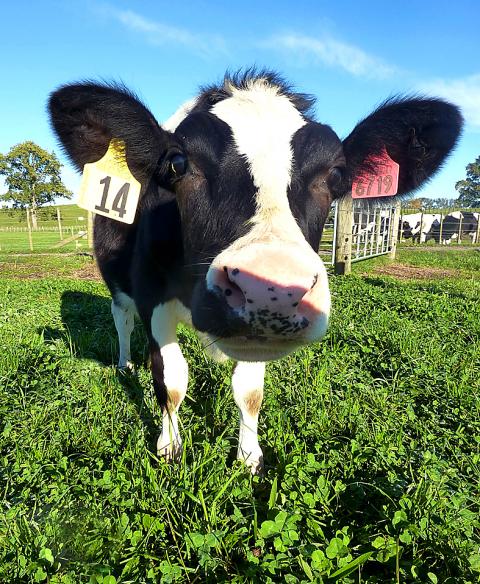
Photo: AFP / Agresearch
The cow was created with the same cloning procedure that led to the creation of Dolly the sheep in 1996 and was delivered by caesarean at a government-owned AgResearch lab in Hamilton.
Stefan Wagner, a scientist on the team, said they now plan to investigate whether or not the BLG-free milk causes allergic reactions.
The work also drew on a technique that gives scientists control over which genes are active in an animal and gives fresh momentum to plans to engineer animals that are more resilient to diseases.
To make Daisy, scientists took a cow skin cell and genetically modified it to produce molecules that block the manufacture of BLG protein. The nucleus of this cell was then transferred into a cow egg that had its own nucleus removed.
The reconstituted egg was grown in the lab until it formed what is called a blastocyst, a ball of around 100 cells, and then transplanted into the womb of a foster cow.
The cloning technique is not efficient. Of around 100 blastocysts the scientists implanted into cows, more than half of the pregnancies failed early on, and only one live calf, Daisy, was born.
Bruce Whitelaw, professor of animal biotechnology at the Roslin Institute at Edinburgh University, said the major advance was demonstrating that the genetic procedure, called RNA interference, works in large animals.
One question the New Zealand team is working on now is why Daisy was born without a tail. The cloning process, not the extra genes, is most likely to blame.

An American scientist convicted of lying to US authorities about payments from China while he was at Harvard University has rebuilt his research lab in Shenzhen, China, to pursue technology the Chinese government has identified as a national priority: embedding electronics into the human brain. Charles Lieber, 67, is among the world’s leading researchers in brain-computer interfaces. The technology has shown promise in treating conditions such as amyotrophic lateral sclerosis and restoring movement in paralyzed people. It also has potential military applications: Scientists at the Chinese People’s Liberation Army have investigated brain interfaces as a way to engineer super soldiers by boosting
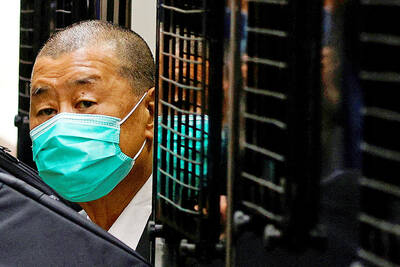
Jailed media entrepreneur Jimmy Lai (黎智英) has been awarded Deutsche Welle’s (DW) freedom of speech award for his contribution to Hong Kong’s pro-democracy movement. The German public broadcaster on Thursday said Lai would be presented in absentia with the 12th iteration of the award on June 23 at the DW Global Media Forum in Bonn. Deutsche Welle director-general Barbara Massing praised the 78-year-old founder of the now-shuttered news outlet Apple Daily for standing “unwaveringly for press freedom in Hong Kong at great personal risk.” “With Apple Daily, he gave journalists a platform for free reporting and a voice to the democracy movement in
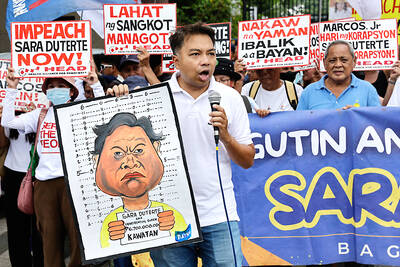
PHILIPPINE COMMITTEE: The head of the committee that made the decision said: ‘If there is nothing to hide, there is no reason to hide, there is no reason to obstruct’ A Philippine congressional committee on Wednesday ruled that there was “probable cause” to impeach Philippine Vice President Sara Duterte after hearing allegations of unexplained wealth, misuse of state funds and threats to have the president assassinated. The unanimous decision of the 53-member committee in the Philippine House of Representatives sends the two impeachment complaints to deliberations and voting by the entire lower chamber, which has more than 300 lawmakers. The complaints centered on Duterte’s alleged illegal use and mishandling of intelligence funds from the vice president’s office, and from her time as education secretary under Philippine President Ferdinand Marcos Jr. Duterte and the

Burmese President Min Aung Hlaing yesterday cut all prisoners’ sentences by one-sixth, a blanket measure that a source close to deposed leader Aung San Suu Kyi said would further shorten her detention. Aung San Suu Kyi has been sequestered since a 2021 military coup, but the senior member of her dissolved National League for Democracy (NLD) party said that while her term had been reduced, her remaining sentence is still unclear. “We also don’t know exactly how many years she has left,” the source told reporters, speaking on condition of anonymity for security reasons. The military toppled Aung San Suu Kyi’s elected government


 RSS
RSS