


Afghanistan said yesterday it had taken control of a controversial prison set up by US troops, but has yet to iron out disagreements over the fate of hundreds of inmates.
A move hailed by Kabul as a victory for sovereignty, analysts say it is largely symbolic as NATO prepares to leave Afghanistan after more than a decade fighting the Taliban, leaving Afghan security personnel in charge in late 2014.
Major questions remain over the immediate and long-term fate of more than 3,100 inmates, which include Taliban fighters and terror suspects, held at Bagram, sometimes referred to as the Guantanamo Bay of Afghanistan.
About 50 foreigners are not covered by the agreement, and hundreds of other Afghans arrested since the transfer deal was signed on March 9 are also being held at the Parwan Detention Facility, outside the Bagram US airbase north of Kabul.
Afghan officials yesterday presided over a small handover ceremony, which was marked by low attendance by US and NATO officers.
“I’m happy that today we are witnessing a glorious ceremony that marks the handing over of responsibilities of Afghan prisoners to Afghans themselves,” Afghan Acting Minister of Defense Enayatullah Nazari told the ceremony.
Afghan military police commander Safiullah Safi said that 3,182 prisoners had been formally handed over to Afghan military police, following a six-month transition.
Afghan President Hamid Karzai demanded authority over the prison as conditional to addressing long-term Afghan-US relations and possible legal immunity for US troops — the key to troops remaining in the country after 2014.
However, the Memorandum of Understanding (MOU) governing the handover of the prison is not legally binding.
Karzai spokesman Aimal Faizi said there were disagreements over the interpretation of the deal and that more than 600 people detained since March 9 have not yet been transferred to Afghan custody.
He said that talks on Saturday between Karzai, the US ambassador and the US commander in Afghanistan had been “tough” and said the 600 yet to be transferred were being held illegally in contradiction of the MOU.
NATO spokesman Jamie Graybeal said 99 percent of detainees held before March 9 were under Afghan authority and that the transfer of the rest has been put on hold, pending concerns about the intentions of the government to fulfill the terms of the MOU.
Graybeal said the US retained the authority to capture and detain suspects, but intended to continue to transfer Afghan detainees to Afghans.
Foreign detainees will remain under US control and US advisers will also stay at the prison until March 9 next year, he added.
Afghan officials dispute NATO’s right to hold detainees, saying that anyone arrested in extenuating circumstances has to be handed over within 72 hours.
Advocacy group the Open Society Foundations last week raised concerns about holes in the March agreement, the risk of indefinite detention and voiced fears that Afghan detention without judicial review could be subject to abuse.
In March, Afghanistan’s human rights commission detailed torture in prisons run by the Afghanistan’s intelligence service and police force.
NDS intelligence service spokesman Shafiqullah Taheri rejected the claims, saying that rights activists regularly visit detention centers.
In January, Afghan investigators said inmates at Bagram had been tortured, although a report made public gave few details of the allegations made by prisoners.
Interestingly, former inmates and relatives of detainees currently at the prison have expressed concern that conditions may worsen.
A former mujahidin commander who was arrested in 2003 and held at Bagram and Guantanamo Bay in Cuba said the Americans treat their prisoners better than the Afghans.
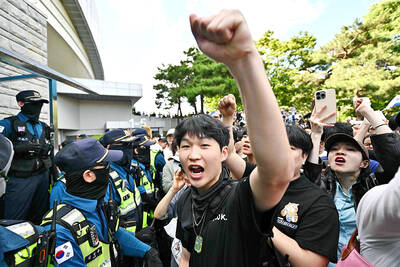
‘ABSURD MISTAKE’: The election commission said that there had been a failure to anticipate turnout after 14 polling stations ran short of ballot papers South Korean riot police yesterday cleared protesters from a Seoul polling station after a 35-hour blockade sparked by a shortage of ballot papers during local elections earlier this week. Wednesday’s election was the first nationwide vote since South Korean President Lee Jae-myung took office following the ouster of Yoon Suk-yeol over his short-lived martial law declaration. Lee’s ruling Democratic Party swept most races, but failed to flip the crucial Seoul mayoral seat. The South Korean National Election Commission apologized, blaming a failure to anticipate turnout after 14 polling stations in Seoul ran short of ballot papers. Some polling stations stayed open until 10pm to

France experienced its hottest spring on record, the French weather service said on Tuesday, after an exceptional early heat wave that also broke highs for the season in England and Wales. Meteo-France said the average nationwide temperature over March to May was 13.8°C — about 1.7°C above the norm, and surpassing records set in 2011 and 2020. “The warmest spring since records began in 1900,” it said in a bulletin. All three months were warmer than average, but the onset of an “unprecedented heatwave” late last month pushed the mercury to highs typically seen at the height of the summer. “Our country had never

A Sherpa guide was found crawling to base camp on Mount Everest a week after he went missing and was reunited with his family, who had given up hope he would return. Dawa Sherpa was last seen on Friday last week descending the mountain, but he did not reach base camp even though his client did. The pair were among the last climbers on the mountain as the climbing season came to an end and the route was dismantled. Dawa was located by a cleaning crew on Thursday morning as he was crawling down the snowy slopes around the Khumbu Icefall, just above
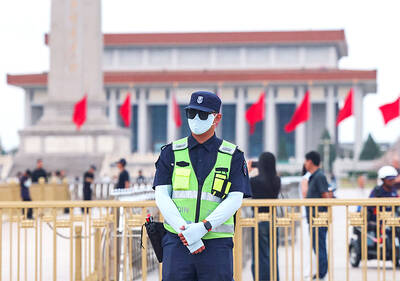
Chinese authorities are snuffing out any remembrance of the deadly 1989 military crackdown on student-led pro-democracy protests in Tiananmen Square, which happened 37 years ago yesterday, in a further tightening of a years-long campaign to erase what happened from public memory. Police told relatives of the victims they would not be allowed to visit a cemetery in Beijing on the anniversary of the crackdown, a person with knowledge of the matter said. Relatives of the victims visited the cemetery on the anniversary for more than 30 years to read memorial statements with police keeping watch, Amnesty International said. Hundreds of people,


 RSS
RSS