


A Japanese chef who personally catered to Kim Jong-il’s taste for fine sushi and fled North Korea a decade ago to live in disguise, has just returned to his former adoptive home at the invitation of the country’s new leader.
During his time there, Kenji Fujimoto was an invaluable source of information about the dynasty that has ruled North Korea for more than 60 years, but after 13 years with the Kims, the sushi chef, who goes by a pseudonym, reckoned he had learned too much about the family that controls one of the most enigmatic countries on earth.
In 2001, he fled to his native Japan — while he was supposed to be shopping for sushi ingredients — and built a second career writing bestselling books about his former employers.
Despite claiming that his life was in danger, Fujimoto, who disguises himself with a bandana and sunglasses in public, returned to Tokyo from a two-week trip to North Korea, reportedly at the behest of Kim Jong-un.
On his arrival in Beijing from Pyongyang, Fujimoto offered Japanese reporters a glowing appraisal of life in the north under Kim Jong-un, who came to power after his father, Kim Jong-il, died from a heart attack in December.
Kim Jong-un, he said, had “grown tremendously as a person,” and told Fujimoto he was “always welcome whenever I visited North Korea,” according to a report in South Korea’s Hankyoreh newspaper.
Fujimoto said that Kim Jong-un and his wife, Ri Sol-ju — who he described as “pretty and charming” — had organized a reception for him, but added that they had not discussed politics.
He was also reunited with family members, possibly including his North Korean wife, with whom he had a son and daughter.
Fujimoto, who is thought to be in his mid-60s, gained credibility a few years ago when he correctly predicted that Kim Jong-un, the youngest son of Kim Jong-il, would be favored over his two elder brothers to succeed his father.
In his bestselling 2003 book, Kim Jong-il’s Chef, Fujimoto described his first meeting with a seven-year-old Kim Jong-un, who was dressed in a military uniform.
The boy “resembled his father in every way, including his physical frame,” he wrote. “He glared at me with a menacing look when we shook hands. I can never forget the look in his eyes, which seemed to be saying, ‘This is one despicable Japanese guy.’”
Fujimoto would not be drawn on the purpose of the visit, and there is no way, at this point, that his account of the trip can be verified. That will have to wait until TBS, a Japanese TV network that reportedly funded the visit, releases a documentary about the trip.
In Japan, the Mainichi Shimbun speculated that the purpose of the trip was twofold: to reinforce the idea that, under Kim Jong-un, North Korea is opening up; and to issue a gentle warning to Fujimoto not to divulge any more secrets about the communist world’s only dynasty.
Far from being declared an enemy of the North Korean state for his loquaciousness, Fujimoto at times sounded like a spokesman for the regime.
“Stores in Pyongyang were brimming with products and people in the streets looked cheerful,” he said. “North Korea has changed a lot since Kim Jong-un assumed power. All of this is because of leader Kim Jong-un.”
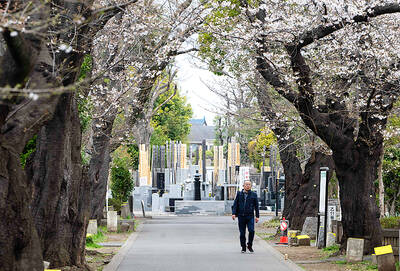
ROCKY RELATIONS: The figures on residents come as Chinese tourist numbers drop following Beijing’s warnings to avoid traveling to Japan The number of Chinese residents in Japan has continued to rise, even as ties between the two countries have become increasingly fractious, data released on Friday showed. As of the end of December last year, the number of Chinese residents had increased by 6.5 percent from the previous year to 930,428. Chinese people accounted for 22.6 percent of all foreign residents in Japan, making them by far the largest group, Japanese Ministry of Justice data showed. Beijing has criticized Tokyo in increasingly strident terms since Japanese Prime Minister Sanae Takaichi last year suggested that a military conflict around Taiwan could
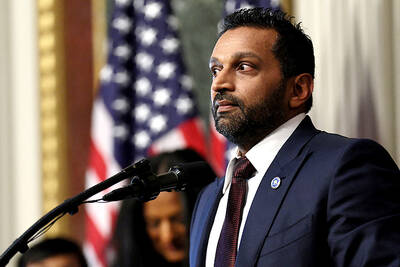
A pro-Iran hacking group claimed to breach FBI Director Kash Patel’s personal e-mail inbox and posted some of the contents online. The e-mails provided by the hacking group include travel details, correspondence with leasing agents in Washington and global entry, and loyalty account numbers. The e-mail address the hackers claim to have compromised has been previously tied to Patel’s personal details, and the leaked e-mails contain photos of Patel and others, in addition to correspondence with family members and colleagues. “The FBI is aware of malicious actors targeting Director Patel’s personal email information,” the agency said in a statement on
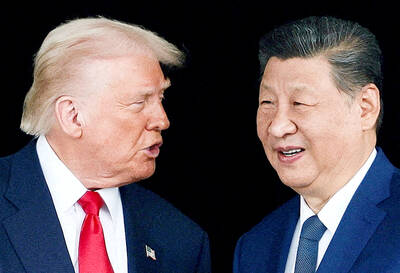
RIVALRY: ‘We know that these are merely symbolic investigations initiated by China, which is in fact the world’s most profligate disrupter of supply chains,’ a US official said China has started a pair of investigations into US trade practices, retaliating against similar probes by US President Donald Trump’s administration as the superpowers stake out positions before an expected presidential summit in May. The move, announced by the Chinese Ministry of Commerce on Friday, is a direct mirror of steps Trump took to revive his tariff agenda after the US Supreme Court last month struck down some of his duties. “China expresses its strong dissatisfaction and firm opposition to these actions,” a ministry spokesperson said in a statement, referring to the so-called Section 301 investigations initiated on March 11.
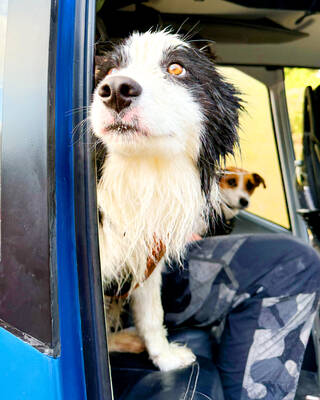
When a hiker fell from a 55m waterfall in wild New Zealand bush, rescuers were forced to evacuate the badly hurt woman without her dog, which could not be found. After strangers raised thousands of dollars for a search, border collie Molly was flown to safety by a helicopter pilot who was determined to reunite the pet and the owner. A week earlier, an emergency rescue helicopter found the woman with bruises and lacerations after a fall at a rocky spot at the waterfall on the South Island’s West Coast. She was airlifted on March 24, but they were forced to


 RSS
RSS