


As the mercury plunges in Japan’s disaster-hit northeast, thousands of people in temporary homes are digging in for what could be a long, hard and very cold winter.
Swirling snow and driving winds will add to the misery of tsunami survivors in a region where the temperature frequently dips below freezing through December, January and February.
Many lost their homes when the monster waves of March 11 last year swept ashore, killing 20,000 people and grinding whole neighborhoods into matchwood.
In Ishinomaki, one of the hardest-hit coastal settlements, more than half of the city’s 61,000 houses were either swept away completely or severely damaged by the towering tsunami.
City authorities have built more than 7,000 temporary homes that are now providing shelter for about 6,800 families.
Heaters, insulation, new tatami straw mats and even electrically heated toilet seats have all been provided, a city official said.
A further 6,500 families have moved into apartments rented by the local government on their behalf.
However, thousands of others are not so fortunate.
Ishinomaki officials concede they are unsure how up to 20,000 families will be keeping warm this winter.
“They must be either staying with relatives far away or living in their own house if the damage was not so bad,” an official told said. “But we don’t have much information about them.”
Hideko Kamiyama and her family were confined to the upper floor of their partially destroyed home for months, as they patiently waited for craftsmen to transform the downstairs from a fetid mess of broken and rotting timbers.
“Our house was almost completely destroyed in the disaster, but many volunteers and carpenters worked hard to repair it,” she said, wrapping her jacket tighter against the cold. “It’s 80 percent repaired now and volunteers gave us heaters and carpets.
“[They also] gave me various things such as patches you can stick on your back to warm you up. I think I can handle the winter now, no matter how cold it gets,” Kamiyama said.
In a town that registered a low of minus-8?C in February, Kamiyama will need all the warmth she can get.
However, she is not going to find it from her neighbors.
“There was a house here before,” she said pointing to a vacant lot next to her own which was torn down after suffering irreparable damage when the waves hit.
People allocated temporary homes have few complaints about the austere conditions in which they live, but are desperately hoping a more permanent solution can soon be found.
Ishio Abe and his family of five have been living in just three rooms since May.
The homes are intended to be used for just two years, but, says Abe, he does not know if this will be long enough.
“We were given a stove as well as electric carpets. I think we are good for now, but I have no job and I wonder what I am going to do next,” he said.
Yoshinori Sato of the Ishinomaki city council said authorities are working hard, but they know that real recovery will only come when residents have a sense of long-term security.
“Rebuilding houses takes time, we don’t really know how long yet,” he said. “Once we have some idea, we can start telling the people when they can move back into real houses.”

PHISHING: The con might appear convincing, as the scam e-mails can coincide with genuine messages from Apple saying you have run out of storage For a while you have been getting messages from Apple saying “your iCloud storage is full.” They say you have exceeded your storage plan, so documents are no longer being backed up, and photos you take are not being uploaded. You have been resisting Apple’s efforts to get you to pay a minimum of £0.99 (US$1.33) a month for more storage, but it seems that you cannot keep putting off the inevitable: You have received an e-mail which says your iCloud account has been blocked, and your photos and videos would be deleted very soon. To keep them you need
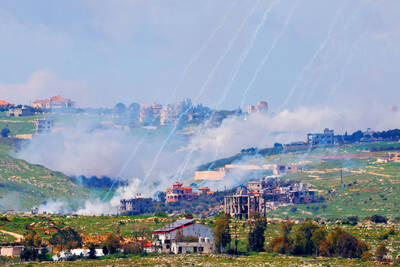
The Israeli military has demolished entire villages as part of its invasion of south Lebanon, rigging homes with explosives and razing them to the ground in massive remote detonations. The Guardian reviewed three videos posted by the Israeli military and on social media, which showed Israel carrying out mass detonations in the villages of Taybeh, Naqoura and Deir Seryan along the Israel-Lebanon border. Lebanese media has reported more mass detonations in other border villages, but satellite imagery was not readily available to verify these claims. The demolitions came after Israeli Minister of Defense Israel Katz called for the destruction of

A US YouTuber who caused outrage for filming himself kissing a statue commemorating Korean wartime sex slaves has been sentenced to six months in prison, a court in Seoul said yesterday. Johnny Somali, 25, gained notoriety several years ago for recording himself doing a series of provocative stunts in South Korea and Japan, and streaming them on platforms such as YouTube and Twitch. South Korean authorities indicted Somali — whose real name is Ramsey Khalid Ismael — in 2024 on public order violations and obstruction of business, and banned him from leaving the country. “The court has sentenced him to six months in
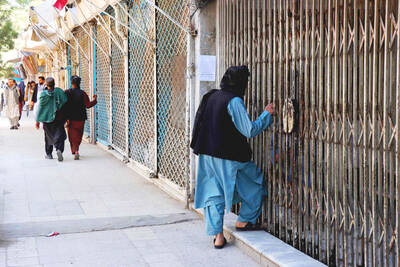
The death toll from a shooting in western Afghanistan rose to 11 on Saturday, after gunmen targeted civilians at a picnic spot in Herat, the provincial authority said. Bullet marks were visible on a wall of the Sayed Mohammad Agha Shia shrine, while bloodstains marked a blanket abandoned at the scene. “Eleven people have been recorded dead and eight others wounded from Friday’s incident, with the condition of two of the wounded reported as critical,” Herat’s information office said in a statement. The update raises a toll of seven killed provided on Friday by the Afghan Ministry of Interior Affairs


 RSS
RSS