


It is a queasy experience, viewing chained tribal dancers do a white man’s bidding or African women stripped and photographed to feed European curiosity.
Until just a few generations ago, this is how most white people learned about those with skin of a different shade. A new Paris exhibit examines how for centuries, colonizers plucked villagers from Africa, the Americas or the South Pacific and put them on display half a world away. The demeaning tradition shaped racist attitudes that linger today.
Curator Lilian Thuram, a former soccer star and now anti-racism advocate, hopes the exhibit at the Quai Branly Museum in Paris makes people question deep-held beliefs about the “other.”
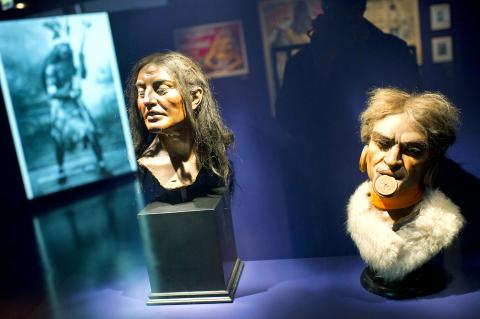
Photo: AFP
“You have to have the courage to say that each of us has prejudices and these prejudices have a history,” he said in an interview.
Thuram is an ideal public face for this unusual exhibit. A pensive black man with a ready smile, he has suffered racist insults on and off the field.
It is a delicate undertaking for a museum: Exhibiting offensive images without glorifying them, urging visitors to look closer and be repulsed.
Scientific curator Nanette Jacomijn Snoep said the exhibit is not about blaming viewers of the past for their curiosity.
“For the visitors of this era, it was a way ... to see what was happening elsewhere in the world. Except that visitors weren’t totally aware that was a spectacle, that it was a fabricated difference,” fabricated to make the viewer feel superior, she said in an interview.
Many of the subjects of this colonial cruelty remain nameless and forgotten to history. An old film reel shows a Frenchman peppering commands at two dark-skinned dancers in headdress so cumbersome their faces are barely visible.
However, some have been identified, including the great-grandparents of Thuram’s 1998 World cup teammate Christian Karembeu, shipped to Paris from the French Pacific territory of New Caledonia and exhibited as “cannibals.”
The Quai Branly exhibit includes a projected silhouette of South African Saartje Baartman, known to 19th-century viewers as the Hottentot Venus, and a naked, backside-only photograph of another African woman with similarly generous buttocks.
Just when you think the exhibit is all about the past, a familiar venue jumps out: New York’s Coney Island features in an old “freak show” poster. Zulus were put on display at Buckingham Palace. Paris’ Jardin d’Acclimatation, today one of the French capital’s most popular amusement parks, once hosted human “zoos.”
Such displays bolstered 19th century scientists who sought to prove that different races were biologically distinct — and whites biologically superior.
“There is only one species of Homo sapiens,” Thuram said, standing defiantly in front of a metallic contraption once used to measure skulls.
It resembles a torture device or mutant sextant, and is accompanied by sculpted busts meant to illustrate racial distinctions.
“This ‘scientific racism’ was introduced to the population. Visitors of the time could come to the Jardin d’Acclimatation and see people from Asia, Africa, Oceania behind an enclosure and they were presented as savages,” Thuram said. “You can see that there is a history and unfortunately today we have the consequences of this history.”
France itself struggles daily with racism toward immigrants from former colonies, stretching from stadium violence to the unfounded fear among some that Muslims intend to supplant French culture with Islamic traditions.
Like much at the Quai Branly Museum — a spacious modern venue at the foot of the Eiffel Tower, former French president Jacques Chirac’s ode to colonized cultures — this exhibit is under-lit. The somber atmosphere augments the feeling that this part of history was anything but enlightened.
It elicits questions about disability and disease and how entertainers profited from them, exhibiting families with overwhelming facial hair, humans exceptionally tall or exceptionally tiny. These questions remain largely unanswered by a show that focuses instead on the racist aspect of putting other humans on display.
A triptych of funhouse mirrors and a video projection at the end of the labyrinthine exhibit offer moments to reflect: How tolerant are you? How do you feel watching two men in the video kissing? A white woman and black woman holding hands? A Muslim man praying?
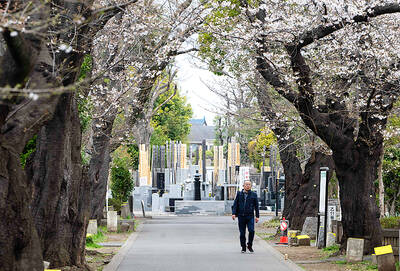
ROCKY RELATIONS: The figures on residents come as Chinese tourist numbers drop following Beijing’s warnings to avoid traveling to Japan The number of Chinese residents in Japan has continued to rise, even as ties between the two countries have become increasingly fractious, data released on Friday showed. As of the end of December last year, the number of Chinese residents had increased by 6.5 percent from the previous year to 930,428. Chinese people accounted for 22.6 percent of all foreign residents in Japan, making them by far the largest group, Japanese Ministry of Justice data showed. Beijing has criticized Tokyo in increasingly strident terms since Japanese Prime Minister Sanae Takaichi last year suggested that a military conflict around Taiwan could
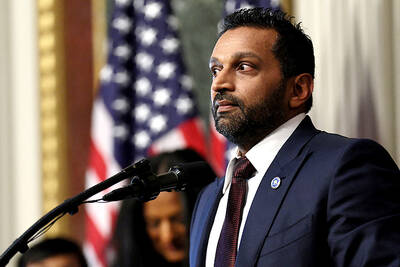
A pro-Iran hacking group claimed to breach FBI Director Kash Patel’s personal e-mail inbox and posted some of the contents online. The e-mails provided by the hacking group include travel details, correspondence with leasing agents in Washington and global entry, and loyalty account numbers. The e-mail address the hackers claim to have compromised has been previously tied to Patel’s personal details, and the leaked e-mails contain photos of Patel and others, in addition to correspondence with family members and colleagues. “The FBI is aware of malicious actors targeting Director Patel’s personal email information,” the agency said in a statement on
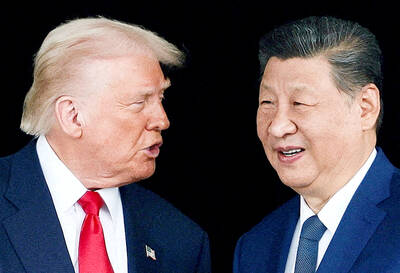
RIVALRY: ‘We know that these are merely symbolic investigations initiated by China, which is in fact the world’s most profligate disrupter of supply chains,’ a US official said China has started a pair of investigations into US trade practices, retaliating against similar probes by US President Donald Trump’s administration as the superpowers stake out positions before an expected presidential summit in May. The move, announced by the Chinese Ministry of Commerce on Friday, is a direct mirror of steps Trump took to revive his tariff agenda after the US Supreme Court last month struck down some of his duties. “China expresses its strong dissatisfaction and firm opposition to these actions,” a ministry spokesperson said in a statement, referring to the so-called Section 301 investigations initiated on March 11.

When a hiker fell from a 55m waterfall in wild New Zealand bush, rescuers were forced to evacuate the badly hurt woman without her dog, which could not be found. After strangers raised thousands of dollars for a search, border collie Molly was flown to safety by a helicopter pilot who was determined to reunite the pet and the owner. A week earlier, an emergency rescue helicopter found the woman with bruises and lacerations after a fall at a rocky spot at the waterfall on the South Island’s West Coast. She was airlifted on March 24, but they were forced to


 RSS
RSS