


They may look like real tanks and missiles, but some of the weapons in Russia’s arsenal may not all be what they seem.
Russia is making increasing use of inflatable replicas — decoys deployed in a cunning attempt to deceive potential enemies.
In a workshop in Moscow’s suburb Khotkovo, employees of inflatable equipment company Rusbal sew the fabric used to create fake weapons for their main customer — the Russian army. Established in 1993, Rusbal replicates military equipment, such as T-80 tanks, S-300 missiles or fighter jets, for an undisclosed price, but also manufactures inflatable castles and other toys for children.
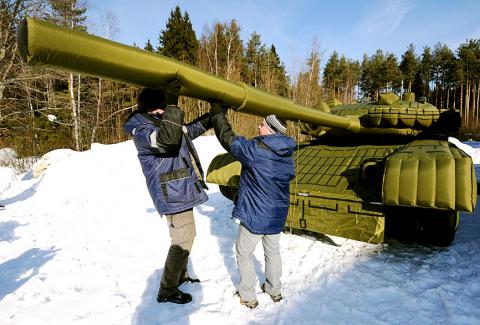
Photo: AFP
“These machines are effective in deceiving the enemy and they protect the real equipment,” Rusbal plant director Victor Talanov said. “This kind of technology has existed in the army for a long time, since World War II.”
In another recent example, the Serbian army used similar decoys during the country’s bombardment by NATO forces in 1999 and the Alliance actually destroyed fewer genuine targets than it thought.
Talanov said the idea to work for the military belonged to his father, Rusbal’s CEO, who worked in the Soviet era for the military-industrial complex and later developed links with the Russian army.
“He realized that with these technologies, we can solve problems in the military field,” he said.
Rusbal’s proud employees said it was very difficult to distinguish a real tank from a fake one. For example, the equipment they produce has the same thermal footprint as the weapons it imitates.
“From the height of a 10-story building, if a real tank and a false one stand side by side, they make almost no difference. Our machines emit the same heat and reflect radio waves in the same way as real ones,” said Lyudmila Stepanova, Rusbal’s chief technology expert.
Another bonus is that they are easy to deploy — a tank inflates in minutes.
According to Rusbal, Russian technology of manufacturing fake weapons is far more innovative and developed than in other countries, such as China or Canada, which also use similar equipment.
A Russian-manufactured mock tank weighs only 90kg against 300kg for its European analogue.
“Before, we had to inflate a model and to bung it up like a mattress. Now, air is blown continuously into the tank. This allows us to use lighter materials, which inflate faster and are more resistant to cuts,” Talanov said.
He has admitted having no information on how and where exactly the fake tanks are used by the military, but said he believes they are indeed used in conflict situations.
The Kremlin has vowed -repeatedly to modernize its dilapidated military, equipped with aging and obsolete equipment. Last month, Russia launched a US$650 billion rearmament plan to counter the West’s military dominance by adding eight nuclear submarines and hundreds of warplanes to its creaking armed forces.
Last year, Russia announced plans to triple its defense spending to 19 trillion rubles (US$613 billion) over the next decade.

An American scientist convicted of lying to US authorities about payments from China while he was at Harvard University has rebuilt his research lab in Shenzhen, China, to pursue technology the Chinese government has identified as a national priority: embedding electronics into the human brain. Charles Lieber, 67, is among the world’s leading researchers in brain-computer interfaces. The technology has shown promise in treating conditions such as amyotrophic lateral sclerosis and restoring movement in paralyzed people. It also has potential military applications: Scientists at the Chinese People’s Liberation Army have investigated brain interfaces as a way to engineer super soldiers by boosting
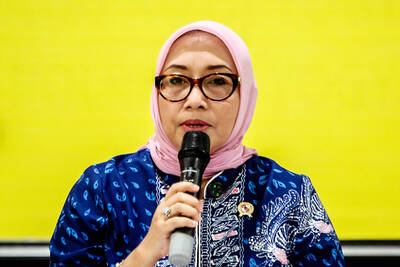
Indonesian police have arrested 13 people after shocking images of alleged abuse against small children at a daycare center went viral, sparking outrage across the nation, officials said on Monday. Police on Friday last week raided Little Aresha, a daycare center in Yogyakarta on Java island, following a report from a former employee. CCTV footage circulating on social media showed children, most younger than two, lying on the floor wearing only diapers, their hands and feet bound with rags. The police have confirmed that the footage is authentic. Police said they also found 20 children crammed into a room just 3m by 3m. “So
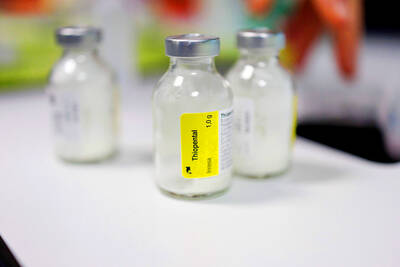
A grieving mother has ended her life at a clinic in Switzerland four years after the death of her only child. Wendy Duffy, 56, a physically healthy woman, died at the Pegasos clinic in Basel after struggling to cope with the death of her 23-year-old son, Marcus. The former care worker, from the West Midlands, England, had previously attempted to take her own life. The case comes as assisted dying would not become law in England and Wales after proposed legislation, branded “hopelessly flawed” by opponents, ran out of time. Ruedi Habegger, the founder of Pegasos, described Duffy’s death as
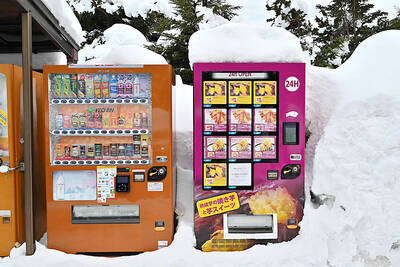
From post offices and parks to stations and even the summit of Mount Fuji, Japan’s vending machines are ubiquitous, but with the rapid pace of inflation cooling demand for their drinks, operators are being forced to rethink the business. Last month beverage giant DyDo Group Holdings announced it would remove about 20,000 vending machines — about 7 percent of their stock nationwide — by January next year, to “reconstruct a profitable network.” Pokka Sapporo Food & Beverage, based in Nagoya, also said last month it would sell its 40,000-machine operation to Osaka-based Lifedrink Co. “The strength of the vending machine


 RSS
RSS