


Muslim militants from the remote southern Philippines may have been behind a bus bomb attack in Manila’s financial hub that killed five people, authorities said yesterday.
A mortar bomb triggered by a cellphone caused Tuesday’s explosion that ripped apart a bus traveling along one of Manila’s main roads, the city’s police chief and Philippine President Benigno Aquino III’s national security adviser Cesar Garcia said.
“A Nokia cellphone is the device they used to trigger the explosion. It acts like a command-detonated explosive,” Garcia said on ABS-CBN television.
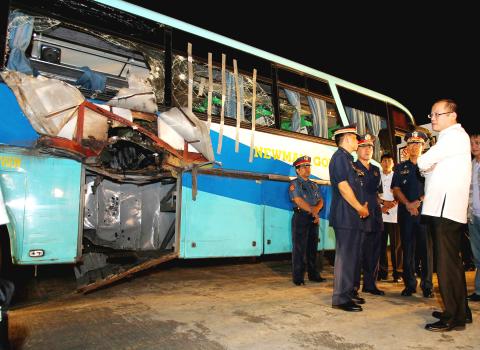
Photo: EPA
“The fact that ... the device used was an improvised explosive device similar to the ones used by terrorist organizations in the southern Philippines raises the possibility it was a terrorist attack,” he said.
While Garcia said it was too early to say who was behind the blast, he pointed out it was similar to a bus bombing on the same road in Manila that killed four people and injured 36 on Feb. 14, 2005.
“Investigations into the 2005 Valentine’s Day bombing showed the suspects rode the bus, carried the [bomb] in a backpack, left the backpack, got off ... [and] detonated the bomb with the use of a cellphone,” he said.
The Abu Sayyaf, a small group of Islamic militants blamed for the nation’s worst terrorist attacks and a string of kidnappings, claimed credit for the 2005 attack, although it has remained silent following Tuesday’s explosion.
Garcia said that militant groups from the south had long coveted attacks on Manila.
“Metro Manila has always been a long-term aspirational target of the organizations operating in the southern Philippines,” he said.
Philippine Interior Secretary Jesse Robredo said that authorities had no reason to believe more attacks were coming, but that extra security measures had been put in place at bus and rail stations, as well as other public places.
“There will be some extra inconveniences, but our public transport system will be safe,” he said.
Aquino said on Tuesday after the attack his government was warned last year that unnamed Muslim militants had been planning to stage a bombing in Manila. He said he did not make the report public then because his officials did not believe the militants were capable of carrying it out.
“The assessment at the time was that there was a lack of resources to be able to carry it out and a lack of support base,” he said.
His admission came after he repeatedly denounced the US and five other Western governments last November when they issued travel advisories warning that a terrorist attack was imminent in Manila.
The 12,000-strong Moro Islamic Liberation Front (MILF) denied any involvement in the Manila bombing.
The group is set to restart peace talks shortly with the government. It has waged a decades-old rebellion in the south that has claimed an estimated 150,000 lives.
“We are preparing for the peace talks. We are not involved,” Mohagher Iqbal, the group’s chief peace negotiator, said over Roman Catholic radio in an interview.
Robredo said the number of people killed in Tuesday’s attack rose from four to five yesterday, with 14 people injured.
Media reports said the latest fatality was a 22-year-old female call center worker who died in hospital yesterday morning from head injuries sustained in the blast.
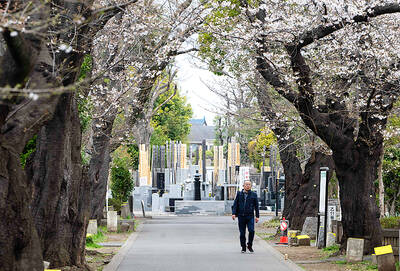
ROCKY RELATIONS: The figures on residents come as Chinese tourist numbers drop following Beijing’s warnings to avoid traveling to Japan The number of Chinese residents in Japan has continued to rise, even as ties between the two countries have become increasingly fractious, data released on Friday showed. As of the end of December last year, the number of Chinese residents had increased by 6.5 percent from the previous year to 930,428. Chinese people accounted for 22.6 percent of all foreign residents in Japan, making them by far the largest group, Japanese Ministry of Justice data showed. Beijing has criticized Tokyo in increasingly strident terms since Japanese Prime Minister Sanae Takaichi last year suggested that a military conflict around Taiwan could
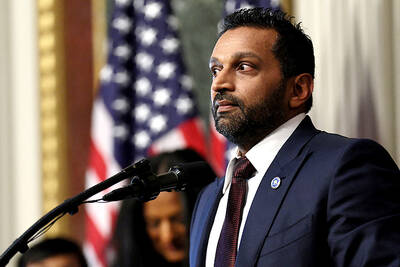
A pro-Iran hacking group claimed to breach FBI Director Kash Patel’s personal e-mail inbox and posted some of the contents online. The e-mails provided by the hacking group include travel details, correspondence with leasing agents in Washington and global entry, and loyalty account numbers. The e-mail address the hackers claim to have compromised has been previously tied to Patel’s personal details, and the leaked e-mails contain photos of Patel and others, in addition to correspondence with family members and colleagues. “The FBI is aware of malicious actors targeting Director Patel’s personal email information,” the agency said in a statement on
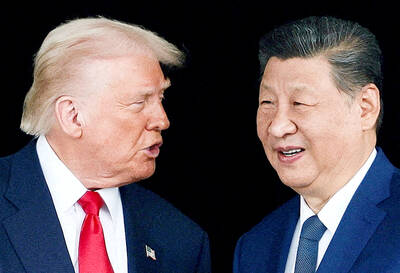
RIVALRY: ‘We know that these are merely symbolic investigations initiated by China, which is in fact the world’s most profligate disrupter of supply chains,’ a US official said China has started a pair of investigations into US trade practices, retaliating against similar probes by US President Donald Trump’s administration as the superpowers stake out positions before an expected presidential summit in May. The move, announced by the Chinese Ministry of Commerce on Friday, is a direct mirror of steps Trump took to revive his tariff agenda after the US Supreme Court last month struck down some of his duties. “China expresses its strong dissatisfaction and firm opposition to these actions,” a ministry spokesperson said in a statement, referring to the so-called Section 301 investigations initiated on March 11.

When a hiker fell from a 55m waterfall in wild New Zealand bush, rescuers were forced to evacuate the badly hurt woman without her dog, which could not be found. After strangers raised thousands of dollars for a search, border collie Molly was flown to safety by a helicopter pilot who was determined to reunite the pet and the owner. A week earlier, an emergency rescue helicopter found the woman with bruises and lacerations after a fall at a rocky spot at the waterfall on the South Island’s West Coast. She was airlifted on March 24, but they were forced to


 RSS
RSS