


Ireland began two nervous weeks of political maneuvering yesterday as the government dares the opposition to block an austerity budget on which a multibillion-euro EU-IMF bailout is riding.
Irish Prime Minister Brian Cowen defied mounting pressure to quit on Monday, saying he would stay in office until parliament passed the budget, then call an early election.
Public anger at his handling of Ireland’s economic and banking crisis has only grown since he announced the bailout and his chances of passing the budget fell dramatically when two independent members of parliament said they were likely to withhold their support.

PHOTO: EPA
However, Cowen said the national interest required that he press on to unveil a promised four-year austerity package today and next year’s budget on Dec. 7.
The government is expected to announce that it will cut the minimum wage, slash social welfare spending, reduce the number of public employees and add a new property tax and higher income taxes in a package intended to slash 6 billion euros (US$8.14 billion) off next year’s budget and 15 billion euros off the annual budget by 2014.
Trade unions have warned that the austerity plan could provoke civil unrest: A student demonstration over planned fee increases turned violent this month and unions have organized a march to protest at the planned measures on Saturday in Dublin.
“We have entered into discussions with European partners on the basis that we are going to implement a budget that will have a 6 billion euro adjustment,” Cowen told a news conference after emergency talks with his Cabinet. “We believe that there’s a clear duty on all members of Dail Eireann [parliament] to facilitate the passage of these measures in the uniquely serious circumstances in which we find ourselves.”
As EU and IMF negotiators thrash out details of the rescue package, Theresa Reidy, politics lecturer at University College Cork, said Cowen’s Fianna Fail party seemed to be planning to cajole the opposition into abstaining on the budget.
“What we will see in the next fortnight is growing pressure on the opposition parties for the sake of political stability to abstain on the major votes,” she said.
Both the main opposition parties, Fine Gael and Labour, who are likely to come to power in a coalition after next year’s election, had demanded that an election take place before the budget and seemed unlikely to fall in line soon, if at all.
“The Taoiseach [prime minister] thinks he has a majority so let him go ahead and exercise his majority,” Fine Gael finance spokesman Michael Noonan said. “Do you seriously think he is looking for our support? I don’t think so. I have no idea what’s going to be in the budget ... There is a [Fine Gael] front bench meeting tomorrow and we will consider whether we will put down a vote of no confidence.”
The Irish Times reported yesterday that Cowen had called Fine Gael leader Enda Kenny and Labour leader Eamon Gilmore late on Monday night to offer to make the financial advice underpinning the budget available to them.
The Times said it understood that both opposition leaders reiterated their desire for immediate parliamentary dissolution.
Analysts say most Irish people, who have endured two years of austerity and recession and now face four more years of cuts on foreign lenders’ terms, would prefer an immediate election.

ROCKY RELATIONS: The figures on residents come as Chinese tourist numbers drop following Beijing’s warnings to avoid traveling to Japan The number of Chinese residents in Japan has continued to rise, even as ties between the two countries have become increasingly fractious, data released on Friday showed. As of the end of December last year, the number of Chinese residents had increased by 6.5 percent from the previous year to 930,428. Chinese people accounted for 22.6 percent of all foreign residents in Japan, making them by far the largest group, Japanese Ministry of Justice data showed. Beijing has criticized Tokyo in increasingly strident terms since Japanese Prime Minister Sanae Takaichi last year suggested that a military conflict around Taiwan could
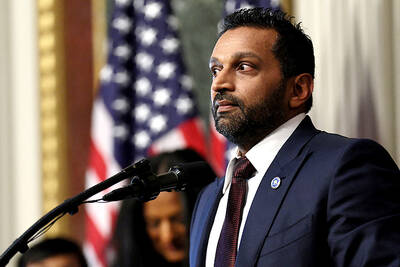
A pro-Iran hacking group claimed to breach FBI Director Kash Patel’s personal e-mail inbox and posted some of the contents online. The e-mails provided by the hacking group include travel details, correspondence with leasing agents in Washington and global entry, and loyalty account numbers. The e-mail address the hackers claim to have compromised has been previously tied to Patel’s personal details, and the leaked e-mails contain photos of Patel and others, in addition to correspondence with family members and colleagues. “The FBI is aware of malicious actors targeting Director Patel’s personal email information,” the agency said in a statement on
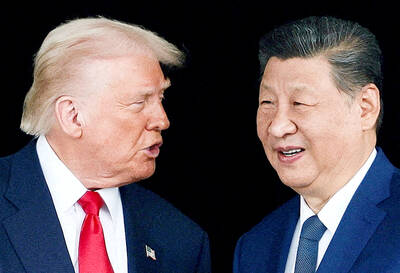
RIVALRY: ‘We know that these are merely symbolic investigations initiated by China, which is in fact the world’s most profligate disrupter of supply chains,’ a US official said China has started a pair of investigations into US trade practices, retaliating against similar probes by US President Donald Trump’s administration as the superpowers stake out positions before an expected presidential summit in May. The move, announced by the Chinese Ministry of Commerce on Friday, is a direct mirror of steps Trump took to revive his tariff agenda after the US Supreme Court last month struck down some of his duties. “China expresses its strong dissatisfaction and firm opposition to these actions,” a ministry spokesperson said in a statement, referring to the so-called Section 301 investigations initiated on March 11.

When a hiker fell from a 55m waterfall in wild New Zealand bush, rescuers were forced to evacuate the badly hurt woman without her dog, which could not be found. After strangers raised thousands of dollars for a search, border collie Molly was flown to safety by a helicopter pilot who was determined to reunite the pet and the owner. A week earlier, an emergency rescue helicopter found the woman with bruises and lacerations after a fall at a rocky spot at the waterfall on the South Island’s West Coast. She was airlifted on March 24, but they were forced to


 RSS
RSS