


A major blackout left most of Chile without power for hours on Sunday, two weeks after a massive earthquake that killed hundreds and weakened infrastructure.
Electricity was restored quickly, but the failure of the South American country’s main power grid was another test for Chilean President Sebastian Pinera, who took office last week and must rebuild after the huge earthquake.
The power cut rattled the nerves of Chileans still living with aftershocks following the deadly magnitude 8.8 quake on Feb. 27 that triggered tsunamis, and tore up roads and towns, causing an estimated US$20 billion to US$30 billion in damage.
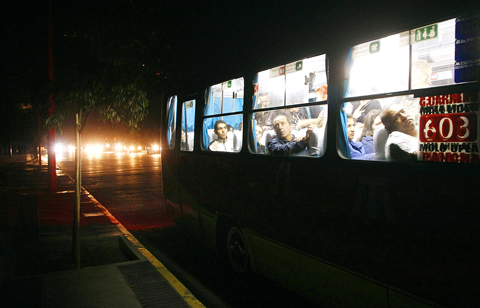
PHOTO: REUTERS
The lights went out at 8:50pm, affecting millions of people and most of Chile’s main cities in a stretch of territory more than 2,000km long from north of the capital Santiago to Puerto Montt in the south.
The quake-devastated city of Concepcion was among those plunged into darkness and some of the country’s key copper mines briefly halted production.
Soon after midnight, power had returned to about 90 percent of Chile, a long, narrow country that produces copper, fruit and wine, and is one of the most developed in the region.
Claudia Morales, a 32-year-old nanny, was on the Santiago subway when the power cut hit, stranding commuters in the dark for about 15 minutes. Phones were down too, so they could not call anyone.
“Everyone started to say aloud maybe there had been another quake,” Morales said. “Everyone was really panicked.”
Passengers had to be evacuated from several subway cars, officials said.
Interior Minister Rodrigo Hinzpeter said the blackout was because of a problem with a 500 kilowatt transformer.
“Fortunately, the reason for the failure has been identified,” Hinzpeter said.
Hinzpeter said that while the power outage was not directly related to the big earthquake last month — which knocked out power at the time — there would be an investigation to see whether there was an indirect cause.
State mining giant Codelco, the world’s top copper producer, said the disruption briefly shut its mines in central Chile. Its Teniente division operated with emergency equipment and output was partially affected, a mine official said, though power was returning to normal.
Most of Chile’s copper mines are on the northern power grid, so they were not affected.
Some Chileans took the power outage in their stride.
“To be honest, I’m not scared,” 24-year-old mechanic Francisco Silva said. “They say it was a power cut because the earthquake left the electricity lines weakened. I am calm, because I think the government can solve the problems. We have no option but to trust in it.”
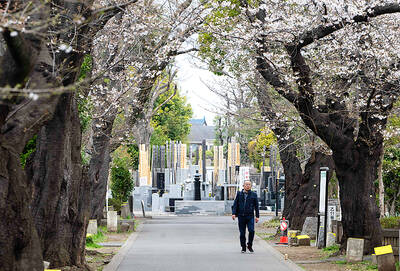
ROCKY RELATIONS: The figures on residents come as Chinese tourist numbers drop following Beijing’s warnings to avoid traveling to Japan The number of Chinese residents in Japan has continued to rise, even as ties between the two countries have become increasingly fractious, data released on Friday showed. As of the end of December last year, the number of Chinese residents had increased by 6.5 percent from the previous year to 930,428. Chinese people accounted for 22.6 percent of all foreign residents in Japan, making them by far the largest group, Japanese Ministry of Justice data showed. Beijing has criticized Tokyo in increasingly strident terms since Japanese Prime Minister Sanae Takaichi last year suggested that a military conflict around Taiwan could

A pro-Iran hacking group claimed to breach FBI Director Kash Patel’s personal e-mail inbox and posted some of the contents online. The e-mails provided by the hacking group include travel details, correspondence with leasing agents in Washington and global entry, and loyalty account numbers. The e-mail address the hackers claim to have compromised has been previously tied to Patel’s personal details, and the leaked e-mails contain photos of Patel and others, in addition to correspondence with family members and colleagues. “The FBI is aware of malicious actors targeting Director Patel’s personal email information,” the agency said in a statement on
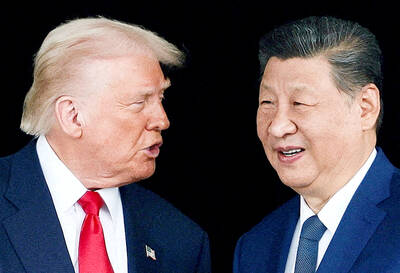
RIVALRY: ‘We know that these are merely symbolic investigations initiated by China, which is in fact the world’s most profligate disrupter of supply chains,’ a US official said China has started a pair of investigations into US trade practices, retaliating against similar probes by US President Donald Trump’s administration as the superpowers stake out positions before an expected presidential summit in May. The move, announced by the Chinese Ministry of Commerce on Friday, is a direct mirror of steps Trump took to revive his tariff agenda after the US Supreme Court last month struck down some of his duties. “China expresses its strong dissatisfaction and firm opposition to these actions,” a ministry spokesperson said in a statement, referring to the so-called Section 301 investigations initiated on March 11.

When a hiker fell from a 55m waterfall in wild New Zealand bush, rescuers were forced to evacuate the badly hurt woman without her dog, which could not be found. After strangers raised thousands of dollars for a search, border collie Molly was flown to safety by a helicopter pilot who was determined to reunite the pet and the owner. A week earlier, an emergency rescue helicopter found the woman with bruises and lacerations after a fall at a rocky spot at the waterfall on the South Island’s West Coast. She was airlifted on March 24, but they were forced to


 RSS
RSS