


Drug addicts are denied proper treatment in China’s state-run rehabilitation centers and are sometimes beaten and forced to work without pay, a human rights group said on Thursday.
A 2008 law demanding humanitarian treatment and banning punishment of drug users in detention has been poorly implemented, leading to continuing — sometimes lethal — abuse, Human Rights Watch said in a report.
“Warehousing large numbers of drug users and subjecting them to forced labor and physical abuse is not rehabilitation,” Joe Amon, the New York-based group’s director of health and human rights, said in a statement.
“The Chinese government should stop these abuses and ensure that the rights of suspected drug users are fully respected,” Amon said.
The report examines China’s centers for “compulsory isolation and detoxification” and includes interviews with 33 current and former detainees and 25 workers for private groups dealing with AIDS and drug-use issues.
Chinese drug addicts are routinely sent to such detention houses for terms of at least two years, without charge or trial. At any given time, about half a million addicts are believed to be held, the report said. Most are heroin users.
The 2008 law ended the practice of sending drug users to labor camps, ordering them instead to be sent for community rehabilitation or to specialized drug rehabilitation centers. It also banned physical and verbal abuse and required that they be provided with proper treatment and paid for any work they performed.
However, Human Rights Watch said the law was vaguely defined and has been largely ignored, resulting in a continuation of past practices under a different legal rubric.
Virtually wiped out after the 1949 Communist revolution, drug use came roaring back in the 1980s following the relaxation of economic and social strictures. China now has about 1.2 million registered drug addicts, although the actual number of users is believed to be far higher.
Giovanni Nicotera, who heads the UN Office on Drugs and Crime’s China office, said the government knows the system doesn’t work — addicts going through rehabilitation at these centers very often return to drugs — and is working to address the problems.
“Being detained in these centers not only does not help drug users to recover, as evidenced by the high rates of relapse, but also increases the likelihood that an individual will become infected with HIV,” said Nicotera, who had not seen the Human Rights Watch report.
Recent advances include the setting up of methadone clinics and adoption of new laws and regulations, he said.
Despite that, AIDS activist Wan Yanhai (萬延海), founder of the Beijing-based Aizhixing Institute, said many addicts remain fearful of the rehabilitation system.
“Many drug users, when caught by police, would rather admit that they are trafficking drugs than using drugs because at least there is some kind of legal procedure involved in a drug trafficking charge,” Wan said.

ROCKY RELATIONS: The figures on residents come as Chinese tourist numbers drop following Beijing’s warnings to avoid traveling to Japan The number of Chinese residents in Japan has continued to rise, even as ties between the two countries have become increasingly fractious, data released on Friday showed. As of the end of December last year, the number of Chinese residents had increased by 6.5 percent from the previous year to 930,428. Chinese people accounted for 22.6 percent of all foreign residents in Japan, making them by far the largest group, Japanese Ministry of Justice data showed. Beijing has criticized Tokyo in increasingly strident terms since Japanese Prime Minister Sanae Takaichi last year suggested that a military conflict around Taiwan could

A pro-Iran hacking group claimed to breach FBI Director Kash Patel’s personal e-mail inbox and posted some of the contents online. The e-mails provided by the hacking group include travel details, correspondence with leasing agents in Washington and global entry, and loyalty account numbers. The e-mail address the hackers claim to have compromised has been previously tied to Patel’s personal details, and the leaked e-mails contain photos of Patel and others, in addition to correspondence with family members and colleagues. “The FBI is aware of malicious actors targeting Director Patel’s personal email information,” the agency said in a statement on
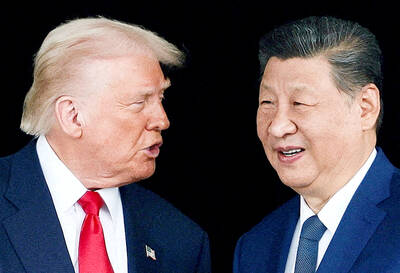
RIVALRY: ‘We know that these are merely symbolic investigations initiated by China, which is in fact the world’s most profligate disrupter of supply chains,’ a US official said China has started a pair of investigations into US trade practices, retaliating against similar probes by US President Donald Trump’s administration as the superpowers stake out positions before an expected presidential summit in May. The move, announced by the Chinese Ministry of Commerce on Friday, is a direct mirror of steps Trump took to revive his tariff agenda after the US Supreme Court last month struck down some of his duties. “China expresses its strong dissatisfaction and firm opposition to these actions,” a ministry spokesperson said in a statement, referring to the so-called Section 301 investigations initiated on March 11.

When a hiker fell from a 55m waterfall in wild New Zealand bush, rescuers were forced to evacuate the badly hurt woman without her dog, which could not be found. After strangers raised thousands of dollars for a search, border collie Molly was flown to safety by a helicopter pilot who was determined to reunite the pet and the owner. A week earlier, an emergency rescue helicopter found the woman with bruises and lacerations after a fall at a rocky spot at the waterfall on the South Island’s West Coast. She was airlifted on March 24, but they were forced to


 RSS
RSS