


The attacker who killed his former girlfriend and four other people during a shooting rampage in Finland on New Year’s Eve day apparently chose his victims and did not fire at random, police said.
Chief investigator Esa Gronlund of the National Bureau of Investigation told reporters on Friday that a preliminary investigation has indicated that Ibrahim Shkupolli’s method of shooting the five Finns, most of them at a shopping mall in the town of Espoo, suggest that he had planned Thursday’s slayings, though the investigator declined to provide details.
The 43-year-old Shkupolli, an ethnic Albanian immigrant from Kosovo, committed suicide after the attack.
Investigator Henrik Niklander said police are examining the relationship between Shkupolli and the people he gunned down in Espoo, which is a few kilometers outside the Finnish capital, Helsinki.
“The fact all victims were employees of the [same] Prisma store seems to indicate that we’re not dealing with a coincidence,” Niklander said.
Previously police had been reluctant to speculate whether the killer fired his handgun randomly in the Sello mall in Espoo, Finland’s second biggest city, or if he had chosen his victims.
Four of those slain — three men and one woman — were working in the Prisma grocery store when they were shot. The fifth victim — Shkupolli’s former Finnish girlfriend — had been an employee at the same store, though she was found dead in a nearby apartment. She had won a restraining order against Shkupolli, who allegedly had stalked her for years.
After killing his victims, Shkupolli returned home and committed suicide. Police found his body after launching a citywide manhunt.
Shkupolli arrived in Finland in 1992, the Interior Ministry said.
He applied for Finnish citizenship but was rejected because of his criminal past, which included assault, traffic violations and an arrest in 2003 for carrying an unlicensed gun.
During Thursday’s rampage, Shkupolli used an unlicensed handgun, a fact that has stirred intense debate in the Nordic country after two deadly school shooting over the past two years. Finland has a long tradition of hunting and ranks among the top five countries in the world regarding civilian gun ownership. The country of 5.3 million people has 1.6 million firearms in private hands.
In a condolence message, Finnish Prime Minister Matti Vanhanen noted the large number handguns in Finland and said the probe into Thursday’s shooting would “focus on the unlicensed gun and how the shooter obtained it.”
In September 2008, a lone gunman killed nine fellow students and a teacher at a vocational college before shooting himself to death in the western town of Kauhajoki.
In November 2007, an 18-year-old student fatally shot eight people and himself at a high school in southern Finland.
Finland’s 5,000 Kosovar Albanians have expressed concern that Shkupolli’s rampage will increase public anger against foreigners during a debate now taking place among lawmakers and the media regarding immigration and the social benefits immigrants receive and their overall status in the Nordic country.
Driton Nushi, a Kosovar Albanian community leader in Finland, said he hoped the public won’t misunderstand the crime.
“Do they take it as an individual case or do they think wrongly — as some of them already do — that all the foreigners are behind this?” Nushi said in an interview.
“It’s only an individual, a family case, a crime of passion. Nothing else, nothing more,” Nushi said.
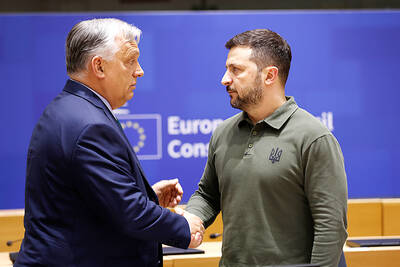
Hungarian authorities temporarily detained seven Ukrainian citizens and seized two armored cars carrying tens of millions of euros in cash across Hungary on suspicion of money laundering, officials said on Friday. The Ukrainians were released on Friday, following their detention on Thursday, but Hungarian officials held onto the cash, prompting Ukraine to accuse Hungary’s Russia-friendly government of illegally seizing the money. “We will not tolerate this state banditism,” Ukrainian Minister of Foreign Affairs Andrii Sybiha said. The seven detained Ukrainians were employees of the Ukrainian state-owned Oschadbank, who were traveling in the two armored cars that were carrying the money between Austria and
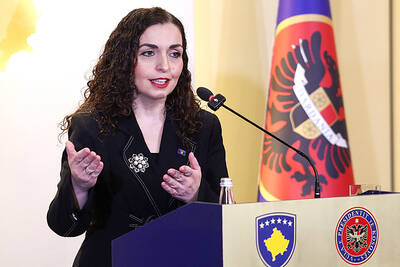
Kosovar President Vjosa Osmani on Friday after dissolving the Kosovar parliament said a snap election should be held as soon as possible to avoid another prolonged political crisis in the Balkan country at a time of global turmoil. Osmani said it is important for Kosovo to wrap up the upcoming election process and form functional institutions for political stability as the war rages in the Middle East. “Precisely because the geopolitical situation is that complex, it is important to finish this electoral process which is coming up,” she said. “It is very hard now to imagine what will happen next.” Kosovo, which declared

MORE BANS: Australia last year required sites to remove accounts held by under-16s, with a few countries pushing for similar action at an EU level and India considering its own ban Indonesia on Friday said it would ban social media access for children under 16, citing threats from online pornography, cyberbullying, online fraud and Internet addiction. “Accounts belonging to children under 16 on high-risk platforms will start to be deactivated, beginning with YouTube, TikTok, Facebook, Instagram, Threads, X, Bigo Live and Roblox,” Indonesian Minister of Communications and Digital Meutya Hafid said. “The government is stepping in so that parents no longer have to fight alone against the giants of the algorithm. Implementation will begin on March 28, 2026,” she said. The social media ban would be introduced in stages “until all platforms fulfill their
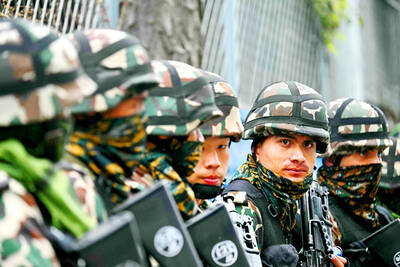
Counting was under way in Nepal yesterday, after a high-stakes parliamentary election to reshape the country’s leadership following protests last year that toppled the government. Key figures vying for power include former Nepalese prime minister K. P. Sharma Oli, rapper-turned-mayor Balendra Shah, who is bidding for the youth vote, and newly elected Nepali Congress party leader Gagan Thapa. In Kathmandu’s tea shops and city squares, people were glued to their phones, checking results as early trends flashed up — suggesting Shah’s centrist Rastriya Swatantra Party (RSP) was ahead. Nepalese Election Commission spokesman Prakash Nyupane said the counting was ongoing “in a peaceful manner”


 RSS
RSS