


It’s not exactly diplomatic — details of what British ambassadors really think about their foreign hosts were disclosed on Sunday following the release of a series of frank, and sometimes outright rude, letters to London from embassies around the world.
Nigerians are maddening, Nicaraguans often dishonest, Canadians deeply unimpressive and Thais commonly lewd, British diplomats claim in notes sent to Britain’s Foreign Office over the last five decades.
The letters, disclosed to the BBC under Freedom of Information laws, also reveal how diplomats were bored by endless rounds of cocktail parties, and exasperated by the British government’s failure to shake off its stuffy image overseas.
Until 2006, ambassadors retiring from their post or moving country traditionally sent a valedictory dispatch to London, offering their candid personal assessment of the country in which they had served.
In a 1967 memo, Roger Pinsent, Britain’s outgoing ambassador to Nicaragua, was scathing in his criticism.
“There is, I fear, no question that the average Nicaraguan is one of the most dishonest, unreliable, violent and alcoholic of the Latin Americans,” Pinsent wrote.
Two years later, David Hunt — then high commissioner to Nigeria — said the West African country’s leaders had “a maddening habit of always choosing the course of action which will do the maximum damage to their own interests.”
“Africans as a whole are not only not averse to cutting off their nose to spite their face; they regard such an operation as a triumph of cosmetic surgery,” Hunt wrote in his letter.
Lord Moran, high commissioner in Ottawa, Canada, between 1981 and 1984, claimed Canadians had limited talents.
“Anyone who is even moderately good at what they do — in literature, the theater, skiing or whatever — tends to become a national figure. And anyone who stands out at all from the crowd tends to be praised to the skies and given the Order of Canada at once,” Moran wrote in his letter, files released to the BBC show.
Anthony Rumbold, Britain’s ambassador to Thailand from 1965 to 1967, mocked his hosts for an apparent lack of culture.
“They have no literature, no painting and only a very odd kind of music; their sculpture, ceramics and dancing are borrowed from others, and their architecture is monotonous and interior decoration hideous,” Rumbold wrote.
“Nobody can deny that gambling and golf are the chief pleasures of the rich, and that licentiousness is the main pleasure of them all,” he said.
Other diplomats used their letters to criticize British bureaucracy, and the sometimes dull world of international relations.
“One of the great failures of the diplomatic service has been its inability to cast off its image as bowler-hatted, pinstriped and chinless with a fondness for champagne,” David Gore-Booth wrote in 1999, as he prepared to leave a posting in New Delhi.
“Indeed cocktail parties are death as, I am sure 99 percent of diplomatic service colleagues would agree,” Gore-Booth wrote, bemoaning the countless receptions ambassadors are expected to host, or attend.
The Foreign Office ended the tradition of valedictory letters in 2006, after a message from Ivor Roberts — the departing ambassador to Italy — was leaked to the media.
Roberts criticized the ministry’s management culture, and fondness for buzzwords.
“Can it be that in wading through the plethora of business plans, capability reviews ... and other excrescences of the management age, we have indeed forgotten what diplomacy is all about,” he wrote.
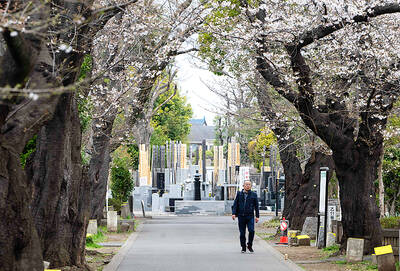
ROCKY RELATIONS: The figures on residents come as Chinese tourist numbers drop following Beijing’s warnings to avoid traveling to Japan The number of Chinese residents in Japan has continued to rise, even as ties between the two countries have become increasingly fractious, data released on Friday showed. As of the end of December last year, the number of Chinese residents had increased by 6.5 percent from the previous year to 930,428. Chinese people accounted for 22.6 percent of all foreign residents in Japan, making them by far the largest group, Japanese Ministry of Justice data showed. Beijing has criticized Tokyo in increasingly strident terms since Japanese Prime Minister Sanae Takaichi last year suggested that a military conflict around Taiwan could
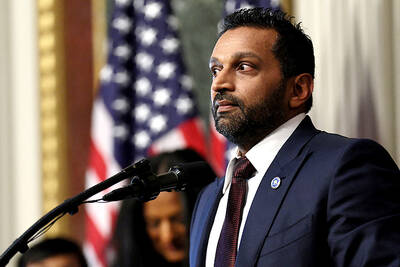
A pro-Iran hacking group claimed to breach FBI Director Kash Patel’s personal e-mail inbox and posted some of the contents online. The e-mails provided by the hacking group include travel details, correspondence with leasing agents in Washington and global entry, and loyalty account numbers. The e-mail address the hackers claim to have compromised has been previously tied to Patel’s personal details, and the leaked e-mails contain photos of Patel and others, in addition to correspondence with family members and colleagues. “The FBI is aware of malicious actors targeting Director Patel’s personal email information,” the agency said in a statement on
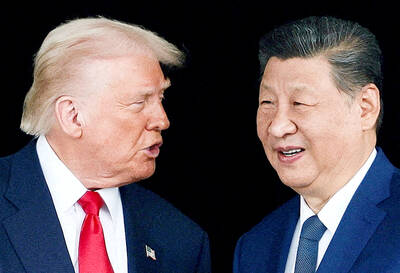
RIVALRY: ‘We know that these are merely symbolic investigations initiated by China, which is in fact the world’s most profligate disrupter of supply chains,’ a US official said China has started a pair of investigations into US trade practices, retaliating against similar probes by US President Donald Trump’s administration as the superpowers stake out positions before an expected presidential summit in May. The move, announced by the Chinese Ministry of Commerce on Friday, is a direct mirror of steps Trump took to revive his tariff agenda after the US Supreme Court last month struck down some of his duties. “China expresses its strong dissatisfaction and firm opposition to these actions,” a ministry spokesperson said in a statement, referring to the so-called Section 301 investigations initiated on March 11.

When a hiker fell from a 55m waterfall in wild New Zealand bush, rescuers were forced to evacuate the badly hurt woman without her dog, which could not be found. After strangers raised thousands of dollars for a search, border collie Molly was flown to safety by a helicopter pilot who was determined to reunite the pet and the owner. A week earlier, an emergency rescue helicopter found the woman with bruises and lacerations after a fall at a rocky spot at the waterfall on the South Island’s West Coast. She was airlifted on March 24, but they were forced to


 RSS
RSS