


All four women were prostitutes. And all four were killed in rented apartments where they were working alone.
The back-to-back killings have drawn attention to a peculiarity in Hong Kong law: Prostitution is legal, but brothels are not. As a result, many prostitutes work alone in apartments, leaving them vulnerable to attack. The law also bans others from making money off prostitution — a rule meant to keep out pimps, but which also prevents sex workers from hiring security guards.
“Prostitutes are our city’s most vulnerable workers because of the ambiguities,” Hong Kong’s leading English language newspaper, the South China Morning Post, said in a recent editorial urging the government to reconsider the laws. “They deserve, and must be allowed to receive, better protection.”
So far, the government has rebuffed such appeals. The laws “strike a reasonable balance between the human rights and privacy of sex workers, the well-being of other members of the community and the prevailing moral values of the community,” the Hong Kong Security Bureau said in a statement.
The latest government estimate, in 2001, put the number of prostitutes at 200,000 in this region of 7 million.
Prostitution has long been common at night clubs, karaoke bars, massage parlors and hair salons, despite being illegal: The law defines brothels as locations housing two or more prostitutes.
A relatively small but growing number of prostitutes — known as “phoenix sisters” in Chinese — work on their own. The number of one-woman operations has grown five or six-fold since a decade ago to about 2,500, said Elaine Lam from Zi Teng, an advocacy group for prostitutes.
“Why do people target sex workers? They are isolated. Nobody cares about what happens to them. People also take out their frustrations on sex workers. People think, ‘These women are bad women anyway. We can treat them however we like to,’” she said.
By contrast, in China, the authoritarian government bans prostitution and paying for sex, although the sex trade is rampant.
Police frequently round up prostitutes and place them in detention centers. Any discussion of legalization is rare, if not unthinkable, and recent immigrants from China are among the prostitutes of Hong Kong.
A report by the group Action for Reach Out, based on a survey of 113 Hong Kong sex workers from March 2006 to March 2007, found that 41 percent said customers have forced them to have sex without condoms. Another 18.6 percent ran into customers who refused to pay, and 13.3 percent said customers were violent.
The gory details of the three murders in January, along with an earlier one in November, captivated the media and public. They followed four similar killings last March, including one in which the victim was strangled with a shower hose.
“New killer appears, anxiety spreads among phoenix sisters,” blared a headline in the Ming Pao Daily News, a Chinese-language newspaper said.
The most recent victims included a 43-year-old divorced mother and a 47-year-old woman, reportedly found naked with a silk scarf tied around her neck. All eight victims worked alone out of rented apartments, known locally as “one room, one phoenix.”
Activists want the government to allow prostitutes to work together in small groups, in effect legalizing brothels. But any such move promises to be politically sensitive in a city where many hold conservative social values.
“Most people may not accept it. Traditional Chinese society views sex work as immoral,” said 52-year-old driver Ho Kwok-pun.
He said he supports legalization: “This way we can protect them.”
Even if the government isn’t budging, police were quick to make an arrest. Officers, with media in tow, made an unusually public visit to one of the crime scenes with a 24-year-old suspect. Live footage showed the man, charged with two of the January murders, walking with a hood over his head into a dark, narrow stairwell next to a shuttered storefront.
Meanwhile, activists are helping sex workers pay for safety alarms and surveillance cameras. Prostitutes say they are checking on each other more regularly.
“Why do we keep working? Because we need to eat. We need to support our children,” a prostitute who only gave the name Mimi said.
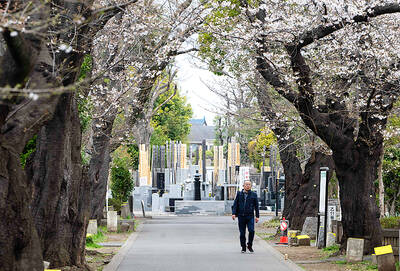
ROCKY RELATIONS: The figures on residents come as Chinese tourist numbers drop following Beijing’s warnings to avoid traveling to Japan The number of Chinese residents in Japan has continued to rise, even as ties between the two countries have become increasingly fractious, data released on Friday showed. As of the end of December last year, the number of Chinese residents had increased by 6.5 percent from the previous year to 930,428. Chinese people accounted for 22.6 percent of all foreign residents in Japan, making them by far the largest group, Japanese Ministry of Justice data showed. Beijing has criticized Tokyo in increasingly strident terms since Japanese Prime Minister Sanae Takaichi last year suggested that a military conflict around Taiwan could

A pro-Iran hacking group claimed to breach FBI Director Kash Patel’s personal e-mail inbox and posted some of the contents online. The e-mails provided by the hacking group include travel details, correspondence with leasing agents in Washington and global entry, and loyalty account numbers. The e-mail address the hackers claim to have compromised has been previously tied to Patel’s personal details, and the leaked e-mails contain photos of Patel and others, in addition to correspondence with family members and colleagues. “The FBI is aware of malicious actors targeting Director Patel’s personal email information,” the agency said in a statement on
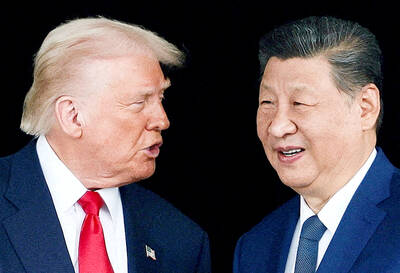
RIVALRY: ‘We know that these are merely symbolic investigations initiated by China, which is in fact the world’s most profligate disrupter of supply chains,’ a US official said China has started a pair of investigations into US trade practices, retaliating against similar probes by US President Donald Trump’s administration as the superpowers stake out positions before an expected presidential summit in May. The move, announced by the Chinese Ministry of Commerce on Friday, is a direct mirror of steps Trump took to revive his tariff agenda after the US Supreme Court last month struck down some of his duties. “China expresses its strong dissatisfaction and firm opposition to these actions,” a ministry spokesperson said in a statement, referring to the so-called Section 301 investigations initiated on March 11.

When a hiker fell from a 55m waterfall in wild New Zealand bush, rescuers were forced to evacuate the badly hurt woman without her dog, which could not be found. After strangers raised thousands of dollars for a search, border collie Molly was flown to safety by a helicopter pilot who was determined to reunite the pet and the owner. A week earlier, an emergency rescue helicopter found the woman with bruises and lacerations after a fall at a rocky spot at the waterfall on the South Island’s West Coast. She was airlifted on March 24, but they were forced to


 RSS
RSS