


South Korea bade farewell yesterday to the country’s first Roman Catholic cardinal in a funeral Mass at the church where he criticized dictatorship and promoted democracy and human rights.
Cardinal Stephen Kim Sou-hwan, who died on Monday at the age of 86, was a spiritual icon in South Korea for his opposition to the military-backed authoritarian rule that ended two decades ago.
“He was a saint-like candlelight among us,” Cardinal Nicholas Cheong Jin-suk said during rites at Myeongdong Cathedral in central Seoul. “We remember Cardinal Kim as a priest who gave up his life to love, for God and for his people.”
The church was packed with about 1,000 mourners, including South Korean Prime Minister Han Seung-soo, as well as ambassadors from Britain, Australia, Spain, Germany and France. Thousands more listened outside.
Kim was “a great pillar” of South Korea, President Lee Myung-bak said in a message read by Han. “Though the cardinal leaves us, he will be with us in our hearts forever.”
US Secretary of State Hillary Clinton, who arrived in Seoul late on Thursday for talks with officials as part of an Asian tour, also praised Kim.
“He was a great spiritual leader, not only for Korea and the people of Korea, but for the whole world,” Clinton said at a joint press conference with South Korean Foreign Minister Yu Myung-hwan as the funeral was under way.
Kim’s coffin was moved to a cemetery in Yongin, near Seoul, for burial.
On top of an outpouring of sentiment and emotion from ordinary citizens, Kim’s death brought forth a flow of tributes from Pope Benedict XVI, former South Korean president and Nobel Peace Prize recipient Kim Dae-jung and UN Secretary-General Ban Ki-moon.
More than 387,000 people stood in line in freezing temperatures throughout the week to pay their respects to Kim at the cathedral.
South Korea was mostly ruled by military strongmen from 1961 until the late 1980s and Kim was outspoken in calling for democratization. He used his Easter sermon in 1987 to lash out at the government of President Chun Doo-hwan, a former general, as “despotic.”
Chun, 77, was among the mourners who paid respects to Kim this week, visiting the cathedral on Wednesday.
Kim’s death leaves Cheong, the archbishop of Seoul, as the only remaining cardinal in South Korea, home to 4.8 million Catholics.
The religion was introduced to the Korean peninsula in 1784.
Kim was born in 1922 in the southeastern city of Daegu. He attended the Jesuit-run Sophia University in Tokyo, but his studies were interrupted during World War II. He attended a seminary in Seoul and was ordained a priest in 1951 during the Korean War.
“I feel like the earth has sunken and my heart too,” said Shin Chi-gu, 78, who attended the mass. “There is a tremendous sense of loss that fills my heart at this moment.”
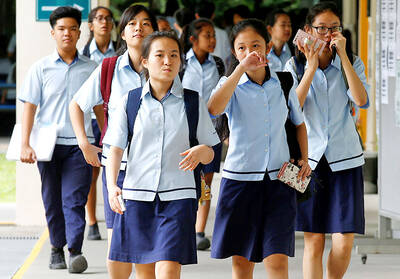
School bullies in Singapore are to face caning under new guidelines, but the education minister on Tuesday said it would be meted out only as a last resort with strict safeguards. Human rights groups regularly criticize Singapore for the use of corporal punishment, which remains part of the school and criminal justice systems, but authorities have defended it as a deterrent to crime and serious misconduct. Caning was discussed in the parliament after legislators asked how it would be used in relation to bullying in schools. The debate followed stricter guidelines on serious student misconduct, including bullying, unveiled by the Singaporean Ministry of
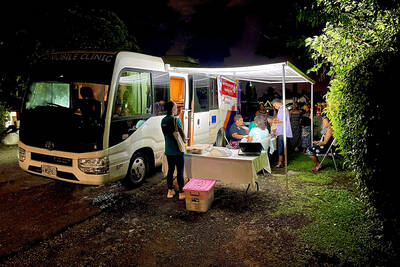
As evening falls in Fiji’s capital, a steady stream of people approaches a makeshift clinic that is a first line of defense against one of the world’s fastest-growing HIV epidemics. In the South Pacific nation — a popular tourist destination of just under a million people — more than 2,000 new HIV cases were recorded last year, a 26 percent increase from 2024. The government has declared an HIV outbreak and described it as a national crisis. “It’s spreading like wildfire,” said Siteri Dinawai, 46, who came to be tested. The Moonlight Clinic, a converted minibus parked in a suburban cul-de-sac in Suva, is
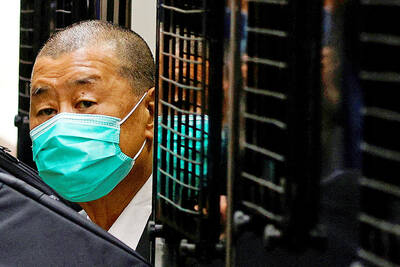
Jailed media entrepreneur Jimmy Lai (黎智英) has been awarded Deutsche Welle’s (DW) freedom of speech award for his contribution to Hong Kong’s pro-democracy movement. The German public broadcaster on Thursday said Lai would be presented in absentia with the 12th iteration of the award on June 23 at the DW Global Media Forum in Bonn. Deutsche Welle director-general Barbara Massing praised the 78-year-old founder of the now-shuttered news outlet Apple Daily for standing “unwaveringly for press freedom in Hong Kong at great personal risk.” “With Apple Daily, he gave journalists a platform for free reporting and a voice to the democracy movement in
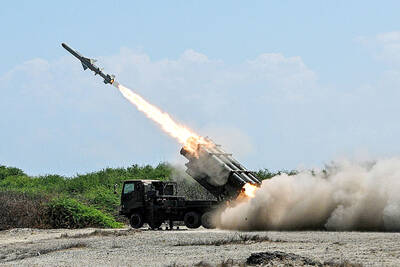
A MESSAGE: Japan’s participation in the Balikatan drills is a clear deterrence signal to China not to attack Taiwan while the US is busy in the Middle East, an analyst said The Japan Self-Defense Forces yesterday fired a Type 88 anti-ship missile during a joint maritime exercise with US, Australian and Philippine forces, hitting a decommissioned Philippine Navy ship in waters facing the disputed South China Sea, in drills that underscore Tokyo’s rising willingness to project military power on China’s doorstep. The drill took place as Manila and Tokyo began talks on a potential defense equipment transfer, made possible by Japan’s decision to scrap restrictions on military exports. The discussions include the possible early transfer of Abukuma-class destroyers and TC-90 aircraft to the Philippines, Japanese Minister of Defense Shinjiro Koizumi said. Philippine Secretary of


 RSS
RSS