


Salvage crews hoisted a battle-scarred US Airways jetliner from the Hudson River and onto a barge late on Saturday, three days after the pilot of the crippled aircraft made what he told investigators was a split-second decision to attempt a water landing to avoid a possible “catastrophic” crash in a populated neighborhood.
Much of the top half of the aircraft appeared as though it might be ready for takeoff — a stark contrast with the charred-looking right wing and the destroyed right engine, which appeared as though the outside had been peeled off.
After a day struggling with the icy waters and the immense weight of the craft, the mood on the shoreline turned festive with the successful operation. Following the long work to secure the plane, people shook hands and investigators took snapshots, while police helicopters hovered overhead.
Earlier on Saturday, Captain. Chesley “Sully” Sullenberger told investigators in the few minutes he had to decide where to set down the powerless plane on Thursday afternoon, he felt it was “too low, too slow” and near too many buildings to go anywhere else, the National Transportation Safety Board (NTSB) account of his testimony said.
Co-pilot Jeff Skiles, who was flying US Airways Flight 1549, saw the birds coming in perfect formation and made note of it.
Sullenberger looked up, and in an instant his windscreen was filled with big, dark-brown birds.
“His instinct was to duck,” said NTSB member Kitty Higgins, recounting their interview.
Then there was a thump, the smell of burning birds and silence as both aircraft engines cut out.
The account illustrated how quickly things deteriorated after the bump at 900m and the pilots’ swift realization that returning to LaGuardia or getting to another airport was impossible.
With both engines out, Higgins said, flight attendants described complete silence in the cabin “like being in a library.”
The blow had come out of nowhere. The NTSB said radar data confirmed that the aircraft intersected a group of “primary targets,” almost certainly birds, as the jet climbed over the Bronx. Those targets had not been on the radar screen of the air traffic controller who approved the departure, Higgins said.
After the bird impact, Sullenberger told investigators he immediately took over flying from his co-pilot and made a series of command decisions.
Returning to LaGuardia, he quickly realized, was out. So was nearby Teterboro Airport, where he had never flown before, and which would require him to take the jet over densely populated northern New Jersey.
“We can’t do it,” he told air traffic controllers. “We’re gonna be in the Hudson.”
The co-pilot kept trying to restart the engines, while checking off emergency landing procedures on a three-page list that the crew normally begins at 10,700m.
Sullenberger guided the gliding jet over the George Washington Bridge and looked for a place to land.
Pilots are trained to set down near a ship if they have to ditch, so they can be rescued before sinking, and Sullenberger picked a stretch of water near Manhattan’s commuter ferry terminals. Rescuers were able to arrive within minutes.
It all happened so fast, the crew never threw the aircraft’s “ditch switch,” which seals off vents and holes in the fuselage to make it more seaworthy.
After the hard landing, the crew’s third flight attendant — the only one in the rear of the aircraft — made the decision not to open the back exits, she told NTSB investigators on Saturday, the day she was released from hospital.
Before she could get the rearmost passengers headed for the front of the plane, one woman managed to open one of the doors a crack, letting water into the cabin. Only once they were by the front exit did the flight attendant feel woozy and realize she had a deep laceration in her leg.
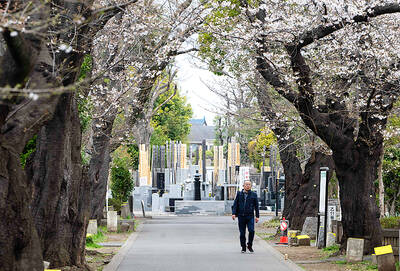
ROCKY RELATIONS: The figures on residents come as Chinese tourist numbers drop following Beijing’s warnings to avoid traveling to Japan The number of Chinese residents in Japan has continued to rise, even as ties between the two countries have become increasingly fractious, data released on Friday showed. As of the end of December last year, the number of Chinese residents had increased by 6.5 percent from the previous year to 930,428. Chinese people accounted for 22.6 percent of all foreign residents in Japan, making them by far the largest group, Japanese Ministry of Justice data showed. Beijing has criticized Tokyo in increasingly strident terms since Japanese Prime Minister Sanae Takaichi last year suggested that a military conflict around Taiwan could

A pro-Iran hacking group claimed to breach FBI Director Kash Patel’s personal e-mail inbox and posted some of the contents online. The e-mails provided by the hacking group include travel details, correspondence with leasing agents in Washington and global entry, and loyalty account numbers. The e-mail address the hackers claim to have compromised has been previously tied to Patel’s personal details, and the leaked e-mails contain photos of Patel and others, in addition to correspondence with family members and colleagues. “The FBI is aware of malicious actors targeting Director Patel’s personal email information,” the agency said in a statement on

RIVALRY: ‘We know that these are merely symbolic investigations initiated by China, which is in fact the world’s most profligate disrupter of supply chains,’ a US official said China has started a pair of investigations into US trade practices, retaliating against similar probes by US President Donald Trump’s administration as the superpowers stake out positions before an expected presidential summit in May. The move, announced by the Chinese Ministry of Commerce on Friday, is a direct mirror of steps Trump took to revive his tariff agenda after the US Supreme Court last month struck down some of his duties. “China expresses its strong dissatisfaction and firm opposition to these actions,” a ministry spokesperson said in a statement, referring to the so-called Section 301 investigations initiated on March 11.
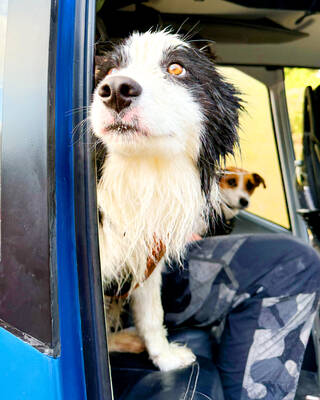
When a hiker fell from a 55m waterfall in wild New Zealand bush, rescuers were forced to evacuate the badly hurt woman without her dog, which could not be found. After strangers raised thousands of dollars for a search, border collie Molly was flown to safety by a helicopter pilot who was determined to reunite the pet and the owner. A week earlier, an emergency rescue helicopter found the woman with bruises and lacerations after a fall at a rocky spot at the waterfall on the South Island’s West Coast. She was airlifted on March 24, but they were forced to


 RSS
RSS