


The world is moving closer to the final abolition of the death penalty, the latest figures published to coincide with World Day against the Death Penalty on Thursday showed.
At present, five countries are responsible for almost all the state executions carried out in the past year.
So far, 137 countries have abolished the death penalty in law or practice, while 60 retain its use, usually for people convicted of murder. At least 1,252 people were known to have been executed in 24 countries last year. Of all the executions, 88 percent took place in China, Iran, Saudi Arabia, Pakistan and the US.

PHOTO: AFP
By the end of last year, 91 countries had abolished the death penalty for all crimes, with Albania, the Cook Islands and Rwanda all recently abandoning capital punishment, said Reprieve, which represents death-row prisoners around the world.
“The reality is that, despite the progress that has been made over the last 18 months, there are still thousands of people being executed every year around the world,” said Clive Stafford Smith, director of Reprieve.
In Europe, only Belarus retains capital punishment. Abandonment of the death penalty is a prerequisite for joining the EU. The US is the only country in the Americas to have carried out any executions since 2003, but the 53 executions in 2006 represented the lowest annual total for a decade, and death sentences continue to drop from a peak in the mid-1990s.
China makes by far the most use of the penalty.
“Asia leads the way globally as the continent that carries out the most executions,” said Amnesty International’s UK director, Kate Allen. “The number of executions carried out by China last year makes them the world’s No 1 ‘executioner.’ This year we have seen a noticeable increase in the use of the death penalty in Japan. Executions in that country are typically shrouded in secrecy. In Pakistan, there are approximately 7,500 people, including children, on death row.”
In some areas with a long tradition of executions, such as central Asia, there is a clear move toward abolition.
In Africa, only six countries carried out executions in 2006. In seven states the death penalty is applied for consensual sexual acts between adults of the same sex, while Iran retains the death penalty for a large number of offenses, among them “cursing the Prophet,” adultery and drinking alcohol. Last year, Iran executed 317 people, including eight juveniles.
India, South Korea and Taiwan should join the global trend and immediately establish a moratorium on the death penalty, rights group Amnesty International said yesterday.
Amnesty said these three nations had stopped executing criminals in recent years and should make that move official, setting an example for the rest of Asia.
Amnesty has also called for more transparency in those countries where the death penalty is entrenched, as well as improvements in legal aid and the appeals process, and a review of the crimes that warrant such a punishment.
“There is a window of hope and a chance for change in Asia,” said Irene Khan, secretary general of Amnesty International. “Today we are urging India, South Korea and Taiwan to join the global trend towards ending executions and set and example for the rest of the continent to follow.”

ROCKY RELATIONS: The figures on residents come as Chinese tourist numbers drop following Beijing’s warnings to avoid traveling to Japan The number of Chinese residents in Japan has continued to rise, even as ties between the two countries have become increasingly fractious, data released on Friday showed. As of the end of December last year, the number of Chinese residents had increased by 6.5 percent from the previous year to 930,428. Chinese people accounted for 22.6 percent of all foreign residents in Japan, making them by far the largest group, Japanese Ministry of Justice data showed. Beijing has criticized Tokyo in increasingly strident terms since Japanese Prime Minister Sanae Takaichi last year suggested that a military conflict around Taiwan could

A pro-Iran hacking group claimed to breach FBI Director Kash Patel’s personal e-mail inbox and posted some of the contents online. The e-mails provided by the hacking group include travel details, correspondence with leasing agents in Washington and global entry, and loyalty account numbers. The e-mail address the hackers claim to have compromised has been previously tied to Patel’s personal details, and the leaked e-mails contain photos of Patel and others, in addition to correspondence with family members and colleagues. “The FBI is aware of malicious actors targeting Director Patel’s personal email information,” the agency said in a statement on
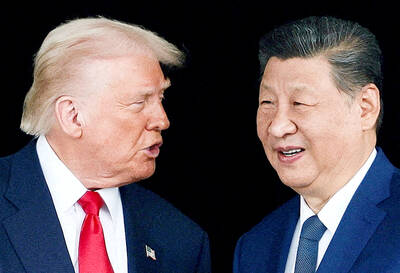
RIVALRY: ‘We know that these are merely symbolic investigations initiated by China, which is in fact the world’s most profligate disrupter of supply chains,’ a US official said China has started a pair of investigations into US trade practices, retaliating against similar probes by US President Donald Trump’s administration as the superpowers stake out positions before an expected presidential summit in May. The move, announced by the Chinese Ministry of Commerce on Friday, is a direct mirror of steps Trump took to revive his tariff agenda after the US Supreme Court last month struck down some of his duties. “China expresses its strong dissatisfaction and firm opposition to these actions,” a ministry spokesperson said in a statement, referring to the so-called Section 301 investigations initiated on March 11.

When a hiker fell from a 55m waterfall in wild New Zealand bush, rescuers were forced to evacuate the badly hurt woman without her dog, which could not be found. After strangers raised thousands of dollars for a search, border collie Molly was flown to safety by a helicopter pilot who was determined to reunite the pet and the owner. A week earlier, an emergency rescue helicopter found the woman with bruises and lacerations after a fall at a rocky spot at the waterfall on the South Island’s West Coast. She was airlifted on March 24, but they were forced to


 RSS
RSS