


A Chinese woman studying in the US says she has become the victim of threats and intimidation for her role during a recent campus protest against China’s crackdown in Tibet.
“Trying to mediate between Chinese and pro-Tibetan campus protesters, I was caught in the middle and vilified and threatened by the Chinese,” Grace Wang (王千源), a student at Duke University in Durham, North Carolina, wrote in the Washington Post on Sunday.
Wang, from the eastern Chinese city of Qingdao, had tried to mediate in a small demonstration between pro-Tibet and pro-China students at Duke University, where she is an undergraduate.

PHOTO: AFP
When she then wrote a letter to the university’s Chinese students’ association explaining her actions, it opened the floodgates to angry denunciations of her for apparently siding with the Tibetan cause.
Wang wrote that while trying to mediate between some pro-Tibet protesters and a larger gathering of pro-China students on April 9, tempers became so inflamed that she was nearly attacked by fellow Chinese students.
“The Chinese protesters thought that, being Chinese, I should be on their side,” she said. “It started to feel as though an angry mob was about to attack me,” wrote Wang, who said she was forced to leave the protest “with a police escort.”
She later became the victim of online “intimidation” by fellow students at Duke who deemed her a “traitor” to her country, as well as threatening phone calls.
“It has been a frightening and unsettling experience,” she wrote.
Nevertheless, Wang, who continues to receive police protection on the Duke campus, said she remains “determined to speak out, even in the face of threats and abuse.”
“If I stay silent,” she wrote, “then the same thing will happen to someone else someday.”
Wang said that detailed instructions to her parents’ house had appeared on-line, feces had been emptied on the doorstep and her high school had revoked her diploma.
“It was ironic: What I had tried so hard to prevent was precisely what had come to pass. And I was the target,” Wang wrote.
Her only intention was the get the two sides at the protest to talk to each other, she said.
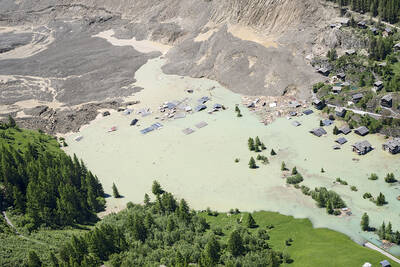
The collapse of the Swiss Birch glacier serves as a chilling warning of the escalating dangers faced by communities worldwide living under the shadow of fragile ice, particularly in Asia, experts said. Footage of the collapse on Wednesday showed a huge cloud of ice and rubble hurtling down the mountainside into the hamlet of Blatten. Swiss Development Cooperation disaster risk reduction adviser Ali Neumann said that while the role of climate change in the case of Blatten “still needs to be investigated,” the wider impacts were clear on the cryosphere — the part of the world covered by frozen water. “Climate change and

Poland is set to hold a presidential runoff election today between two candidates offering starkly different visions for the country’s future. The winner would succeed Polish President Andrzej Duda, a conservative who is finishing his second and final term. The outcome would determine whether Poland embraces a nationalist populist trajectory or pivots more fully toward liberal, pro-European policies. An exit poll by Ipsos would be released when polls close today at 9pm local time, with a margin of error of plus or minus 2 percentage points. Final results are expected tomorrow. Whoever wins can be expected to either help or hinder the

DENIAL: Musk said that the ‘New York Times was lying their ass off,’ after it reported he used so much drugs that he developed bladder problems Elon Musk on Saturday denied a report that he used ketamine and other drugs extensively last year on the US presidential campaign trail. The New York Times on Friday reported that the billionaire adviser to US President Donald Trump used so much ketamine, a powerful anesthetic, that he developed bladder problems. The newspaper said the world’s richest person also took ecstasy and mushrooms, and traveled with a pill box last year, adding that it was not known whether Musk also took drugs while heading the so-called US Department of Government Efficiency (DOGE) after Trump took power in January. In a
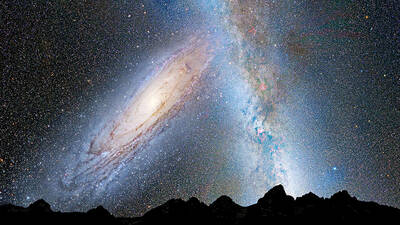
It turns out that looming collision between our Milky Way and Andromeda galaxies might not happen after all. Astronomers on Monday said that the probability of the two spiral galaxies colliding is less than previously thought, with a 50-50 chance within the next 10 billion years. That is essentially a coin flip, but still better odds than previous estimates and farther out in time. “As it stands, proclamations of the impending demise of our galaxy seem greatly exaggerated,” the Finnish-led team wrote in a study appearing in Nature Astronomy. While good news for the Milky Way galaxy, the latest forecast might be moot


 RSS
RSS