


Thai Prime Minister Samak Sundaravej said yesterday that Westerners are overly critical of Myanmar and he has newfound respect for the ruling junta after learning that they meditate like good Buddhists should.
"Westerners have a saying, `Look at both sides of the coin,' but Westerners only look at one side," Samak said in his weekly television talk show, two days after an official visit to Myanmar.
"Myanmar is a Buddhist country. Myanmar's leaders meditate. They say the country lives in peace," Samak said, noting that he has studied Myanmar for decades but just learned that the junta meditates.
Both countries are predominantly Buddhist.
Myanmar's junta has come under global criticism for its crackdown on pro-democracy protesters last year and its detention of pro-democracy leader Aung San Suu Kyi, but Samak said he preferred to talk about trade during talks with junta chief Senior General Than Shwe.
Many Western nations maintain economic and political sanctions against the regime for its poor human rights record and failure to give power to a democratically elected government.
But Thailand and most other Southeast Asian nations are less critical and encourage companies to do business there.
Samak said he discussed investment opportunities for Thai companies in Myanmar, especially in the area of production and exploitation of natural gas and hydropower projects.
"We want to do something about dams. Than Shwe told me, `You can do it here and here and here. Find the investors and do it,'" said Samak, whose coalition government took office last month. "Myanmar only uses a small amount of electricity. Thailand needs electricity."
Blackouts and power cuts are common in Myanmar, where the military regime has distributed electricity under a rationing system for the past decade, barely keeping up with rising demand.
"They found new gas resources. I negotiated with them so we can sign contracts," Samak said, adding that the junta wants to build a pipeline to Yangon. "Myanmar doesn't have money to build the pipeline. Thai companies will do that for them."
He said Thailand's approach to dealing with Myanmar was in the spirit of neighborly relations.
"We have three neighbors: Laos, Cambodia and Myanmar," he said. "We use their resources, all three of them. If we have this great relationship, why should we pick on them?"
Thailand also shares a border with Malaysia.
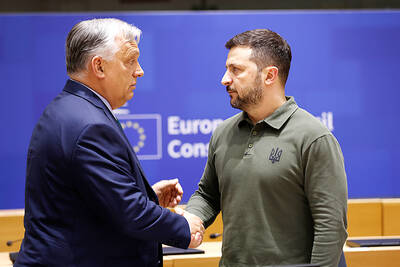
Hungarian authorities temporarily detained seven Ukrainian citizens and seized two armored cars carrying tens of millions of euros in cash across Hungary on suspicion of money laundering, officials said on Friday. The Ukrainians were released on Friday, following their detention on Thursday, but Hungarian officials held onto the cash, prompting Ukraine to accuse Hungary’s Russia-friendly government of illegally seizing the money. “We will not tolerate this state banditism,” Ukrainian Minister of Foreign Affairs Andrii Sybiha said. The seven detained Ukrainians were employees of the Ukrainian state-owned Oschadbank, who were traveling in the two armored cars that were carrying the money between Austria and
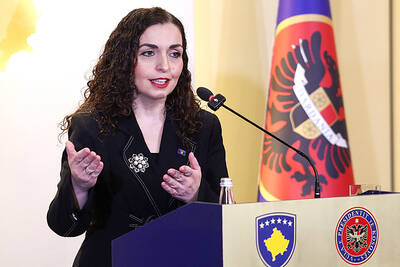
Kosovar President Vjosa Osmani on Friday after dissolving the Kosovar parliament said a snap election should be held as soon as possible to avoid another prolonged political crisis in the Balkan country at a time of global turmoil. Osmani said it is important for Kosovo to wrap up the upcoming election process and form functional institutions for political stability as the war rages in the Middle East. “Precisely because the geopolitical situation is that complex, it is important to finish this electoral process which is coming up,” she said. “It is very hard now to imagine what will happen next.” Kosovo, which declared

MORE BANS: Australia last year required sites to remove accounts held by under-16s, with a few countries pushing for similar action at an EU level and India considering its own ban Indonesia on Friday said it would ban social media access for children under 16, citing threats from online pornography, cyberbullying, online fraud and Internet addiction. “Accounts belonging to children under 16 on high-risk platforms will start to be deactivated, beginning with YouTube, TikTok, Facebook, Instagram, Threads, X, Bigo Live and Roblox,” Indonesian Minister of Communications and Digital Meutya Hafid said. “The government is stepping in so that parents no longer have to fight alone against the giants of the algorithm. Implementation will begin on March 28, 2026,” she said. The social media ban would be introduced in stages “until all platforms fulfill their
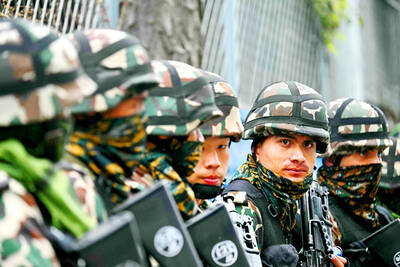
Counting was under way in Nepal yesterday, after a high-stakes parliamentary election to reshape the country’s leadership following protests last year that toppled the government. Key figures vying for power include former Nepalese prime minister K. P. Sharma Oli, rapper-turned-mayor Balendra Shah, who is bidding for the youth vote, and newly elected Nepali Congress party leader Gagan Thapa. In Kathmandu’s tea shops and city squares, people were glued to their phones, checking results as early trends flashed up — suggesting Shah’s centrist Rastriya Swatantra Party (RSP) was ahead. Nepalese Election Commission spokesman Prakash Nyupane said the counting was ongoing “in a peaceful manner”


 RSS
RSS