


The 21 South Koreans held hostage by the Taliban in Afghanistan said yesterday that the insurgents beat and threatened them with bayonets to force them to convert to Islam during their six-week ordeal, with some being forced to work like "slaves" for their captors.
"We were beaten by them many times, being forced to convert to Islam," Je Chang-hee told a news conference with 20 other fellow ex-hostages at a hospital south of Seoul, where the Christian volunteers have been receiving medical treatment since they returned home early this month.
"They kicked us and beat us with guns and tree branches. Sometimes, they aimed their bayonet-topped rifles at our necks," Je said, adding that he had been held in a mountain cave with three other hostages. "Overall, our lives were not easy."
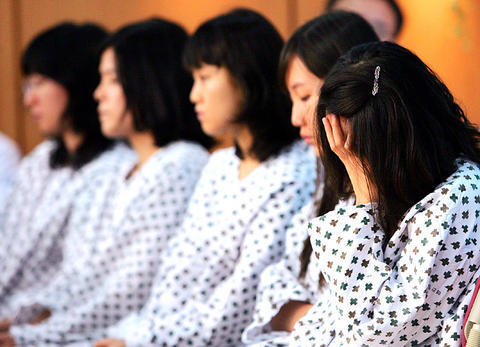
PHOTO: AP
Twenty-three South Koreans were originally seized on July 19 from a bus heading to Kandahar. Two of the male hostages were killed during the standoff, but all were eventually released late last month after direct negotiations between the South Korean government and the Taliban.
The hostages' return has been greeted with relief tempered with outrage. They have faced harsh public criticism for traveling to Afghanistan to do missionary work, although their church has insisted the trip was only to provide humanitarian aid.
One hostage recalled the last moment she saw Bae Hyung-kyu, a 42-year-old pastor and leader of the group, who was found shot dead on July 25.
"One day, a Taliban called Bae and checked his first and last names and took him out of the room," said Han Ji-young, a female hostage who was held in a small group with Bae.
"Bae didn't even look at us when he was leaving the room. He only said, `Overcome with faith,'" she said, crying.
Park Sang-eun, who has been treating the hostages, said they had recovered from physical injuries but that they needed more treatment to deal with possible depression and other mental problems.
The former captives were released from a hospital yesterday and moved to a rehabilitation center.
"The most difficult moment, when I had a big fear of death, was when the Taliban shot [the] video," Yu Jung-hwa, a female hostage, said in a trembling voice. "All 23 of us leaned against a wall and armed Taliban aimed their guns at us and a pit was before me."
"They said they will save us if we believe in Islam. I almost fainted at the time and I still cannot look at cameras," she told the news conference packed with photographers and TV cameras.
Je declined to confirm that some of the female hostages had been sexually assaulted, instead referring to earlier comments by a church pastor who mentioned the assaults.
The hostages said they were kept together for the first three days of their captivity but were later separated into several small groups and moved often. Some detailed the grim conditions they endured.
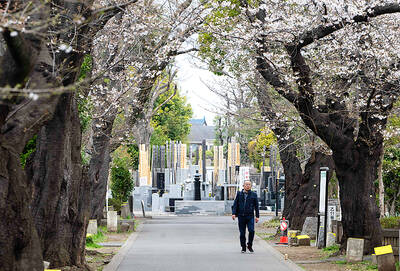
ROCKY RELATIONS: The figures on residents come as Chinese tourist numbers drop following Beijing’s warnings to avoid traveling to Japan The number of Chinese residents in Japan has continued to rise, even as ties between the two countries have become increasingly fractious, data released on Friday showed. As of the end of December last year, the number of Chinese residents had increased by 6.5 percent from the previous year to 930,428. Chinese people accounted for 22.6 percent of all foreign residents in Japan, making them by far the largest group, Japanese Ministry of Justice data showed. Beijing has criticized Tokyo in increasingly strident terms since Japanese Prime Minister Sanae Takaichi last year suggested that a military conflict around Taiwan could
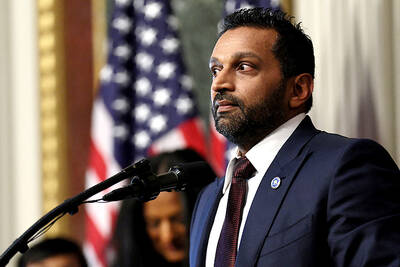
A pro-Iran hacking group claimed to breach FBI Director Kash Patel’s personal e-mail inbox and posted some of the contents online. The e-mails provided by the hacking group include travel details, correspondence with leasing agents in Washington and global entry, and loyalty account numbers. The e-mail address the hackers claim to have compromised has been previously tied to Patel’s personal details, and the leaked e-mails contain photos of Patel and others, in addition to correspondence with family members and colleagues. “The FBI is aware of malicious actors targeting Director Patel’s personal email information,” the agency said in a statement on
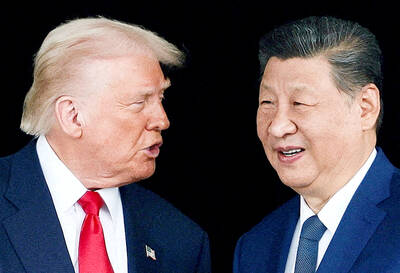
RIVALRY: ‘We know that these are merely symbolic investigations initiated by China, which is in fact the world’s most profligate disrupter of supply chains,’ a US official said China has started a pair of investigations into US trade practices, retaliating against similar probes by US President Donald Trump’s administration as the superpowers stake out positions before an expected presidential summit in May. The move, announced by the Chinese Ministry of Commerce on Friday, is a direct mirror of steps Trump took to revive his tariff agenda after the US Supreme Court last month struck down some of his duties. “China expresses its strong dissatisfaction and firm opposition to these actions,” a ministry spokesperson said in a statement, referring to the so-called Section 301 investigations initiated on March 11.

When a hiker fell from a 55m waterfall in wild New Zealand bush, rescuers were forced to evacuate the badly hurt woman without her dog, which could not be found. After strangers raised thousands of dollars for a search, border collie Molly was flown to safety by a helicopter pilot who was determined to reunite the pet and the owner. A week earlier, an emergency rescue helicopter found the woman with bruises and lacerations after a fall at a rocky spot at the waterfall on the South Island’s West Coast. She was airlifted on March 24, but they were forced to


 RSS
RSS