


In a reversal of fortunes that may say as much about Chinese power politics as it does about corruption, China's richest commercial city has come under investigation by the central government for a huge pension fraud scheme.
So far, the budding scandal, which has been written about in unusual detail in the country's news media, has ensnared the chief of the city's Labor and Social Security Bureau, or pension fund, along with the chairman of the Shanghai Electric Group, a municipal utility.
The two, along with the heads of at least two of the city's districts, including a former top aide to the city's Chinese Communist Party leader, have been taken to Nanjing, where they are being held by investigators for interrogation.
Meanwhile, the presence of more than 100 investigators from the party's Central Commission for Discipline Inspection, who have been sent from Beijing and have taken up residence in a historic old hotel, has fed widespread speculation that the arrest or demotion of others, possibly including more senior municipal and party officials, may follow.
The Chinese government routinely bans publication of articles on subjects it deems sensitive or embarrassing, so the widespread reporting on the scandal here has led many to conclude that it is the first act in what may be a long season of political jockeying leading up to the 17th Communist Party Congress next year.
In recent years Shanghai appeared to be all but immune to high-level scandals, with city leaders benefiting from the patronage of former president Jiang Zemin (江澤民),who rose to national prominence as mayor of the city and cultivated it as a power base.
Indeed, three years ago a large team of investigators descended from Beijing to look into collusion between officials and real estate developers, only to be recalled abruptly to Beijing, reportedly at Jiang's insistence.
In the current scandal, according to reports in the Chinese news media, city officials arranged for US$1.2 billion of municipal pension funds to be lent to an obscure private holding company for investment in a toll expressway between Shanghai and Hangzhou.
Chinese journalists who have reported on the case say the loan was nearly paid off when employees at the highway company informed on their superiors, bringing the arrangement to light.
Chinese news reports have said that if the investigators are allowed to pursue their work to its conclusion, the highway deal may in the end prove to be a modest piece of a much larger web of corruption linking municipal officials, banks and developers.
The newsweekly Caijing, for example, has carried detailed reports of how money from the city's Social Security Bureau was funneled into private real estate projects as long ago as the early 1990s.
"At the center of the issue is the bureau's dual role as both administrative regulator and investment manager of the fund, despite public demand to entrust the fund to market-oriented operators," Caijing wrote in a cover story on the scandal. "The monopoly it created is at the root of the fund's current problems."
Besides weakening the city's national standing, the pension scandal constitutes a blow to Shanghai's ambition to be China's financial center. The reported pension dealings highlight the lack of transparency in a system in which the media and the courts are subject to political direction.
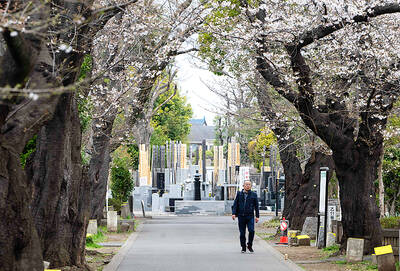
ROCKY RELATIONS: The figures on residents come as Chinese tourist numbers drop following Beijing’s warnings to avoid traveling to Japan The number of Chinese residents in Japan has continued to rise, even as ties between the two countries have become increasingly fractious, data released on Friday showed. As of the end of December last year, the number of Chinese residents had increased by 6.5 percent from the previous year to 930,428. Chinese people accounted for 22.6 percent of all foreign residents in Japan, making them by far the largest group, Japanese Ministry of Justice data showed. Beijing has criticized Tokyo in increasingly strident terms since Japanese Prime Minister Sanae Takaichi last year suggested that a military conflict around Taiwan could

A pro-Iran hacking group claimed to breach FBI Director Kash Patel’s personal e-mail inbox and posted some of the contents online. The e-mails provided by the hacking group include travel details, correspondence with leasing agents in Washington and global entry, and loyalty account numbers. The e-mail address the hackers claim to have compromised has been previously tied to Patel’s personal details, and the leaked e-mails contain photos of Patel and others, in addition to correspondence with family members and colleagues. “The FBI is aware of malicious actors targeting Director Patel’s personal email information,” the agency said in a statement on
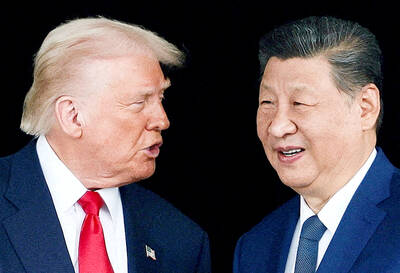
RIVALRY: ‘We know that these are merely symbolic investigations initiated by China, which is in fact the world’s most profligate disrupter of supply chains,’ a US official said China has started a pair of investigations into US trade practices, retaliating against similar probes by US President Donald Trump’s administration as the superpowers stake out positions before an expected presidential summit in May. The move, announced by the Chinese Ministry of Commerce on Friday, is a direct mirror of steps Trump took to revive his tariff agenda after the US Supreme Court last month struck down some of his duties. “China expresses its strong dissatisfaction and firm opposition to these actions,” a ministry spokesperson said in a statement, referring to the so-called Section 301 investigations initiated on March 11.

When a hiker fell from a 55m waterfall in wild New Zealand bush, rescuers were forced to evacuate the badly hurt woman without her dog, which could not be found. After strangers raised thousands of dollars for a search, border collie Molly was flown to safety by a helicopter pilot who was determined to reunite the pet and the owner. A week earlier, an emergency rescue helicopter found the woman with bruises and lacerations after a fall at a rocky spot at the waterfall on the South Island’s West Coast. She was airlifted on March 24, but they were forced to


 RSS
RSS